
By Animesh Sourav Kullu | AI Features Correspondent — DailyAIWire
I. The Morning That Didn’t Feel Like Morning: A Mini-Story of Market Anxiety
At 8:47 a.m. inside a cramped trading office in London’s Canary Wharf, a young trader named Michael pressed his palms against his temples — the screens in front of him were glowing red.
He had just finished his coffee.
He had just logged in.
He had just told himself, “Today will be calm.”
It wasn’t.
Within minutes of the opening bell, charts dipped. Alerts pinged. Analysts whispered.
And then came the phrase no trader wants to hear:
“Is this the beginning?”
Michael wasn’t alone. Across New York, Singapore, Mumbai, Frankfurt and Tokyo, traders, founders, portfolio managers and everyday investors felt the same sharp shift.
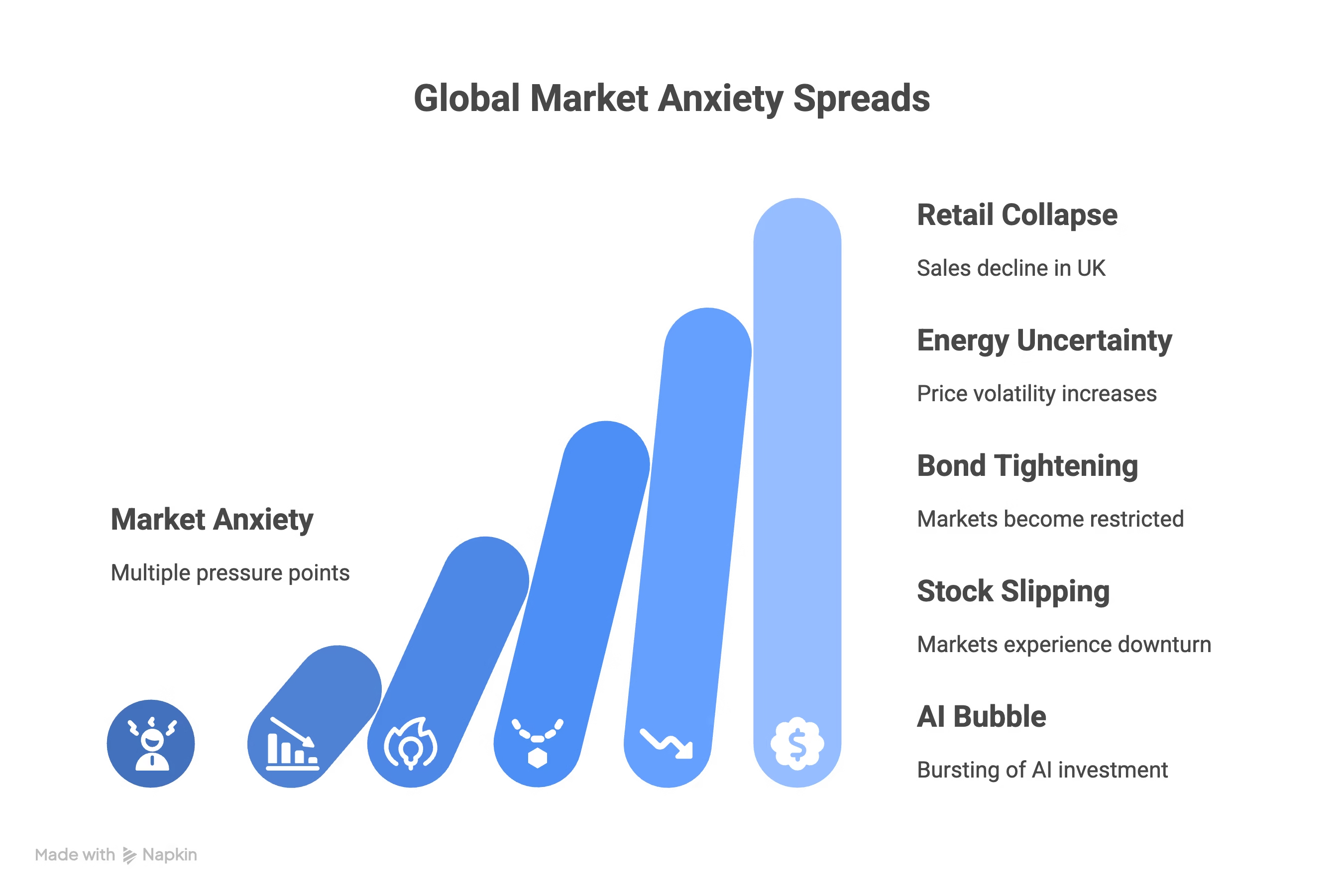
Retail sales collapsing in the UK
Energy price uncertainty
Bond markets tightening
Stock markets slipping
And the biggest whisper of all:
“Is the AI bubble about to burst?”
This wasn’t just another volatile morning. It felt like a moment the world had been rushing toward — but refusing to accept.
Key insight: Global market anxiety is now being driven by multiple pressure points, not just one.
This is the emotional backdrop where AI bubble fears global markets begin shaping the narrative.
II. What If Investors Got the AI Story Wrong?
Here’s the uncomfortable question:
What if the world’s biggest technology boom grew faster than reality could support?
For two years, AI powered global markets:
Tech valuations soared
Startups hit billion-dollar valuations overnight
Enterprises rushed into “AI transformation”
Every model release created hype
But underneath the excitement, something fragile was forming:
Soaring infrastructure costs
Thin monetization layers
Slowing enterprise adoption
Unrealistic productivity promises
Regulatory pressure
Intense competition
Key insight: The hype cycle moved faster than the adoption cycle.
Investors are beginning to see what the past two years tried to hide.
This is where AI bubble fears global markets surface again.
III. UK Retail Sales Collapse — The First Domino
The day took a sharper turn when the UK Office for National Statistics (ONS) released numbers no investor wanted to see:
Retail sales fell far more sharply than forecast.
According to ONS data:
https://www.ons.gov.uk
Consumers are pulling back hard due to:
Inflation fatigue
Higher mortgage payments
Rising food & energy costs
Post-Brexit supply chains
Wage growth failing to keep pace
Why retail matters:
It reflects household stress
It influences inflation
It shapes central bank policy
It affects employment
It reveals consumer psychology
The message was clear:
Consumers have hit their limit.
This was not a standalone event — it was the first domino in a chain of economic pressures.
And once the consumer weakens, markets follow.
According to the latest report from the Office for National Statistics (ONS), retail volumes in the UK fell:
–2.4% month-on-month (October)
(Worst single-month drop since January 2021)
This followed a downward revision of the previous month, which showed:
–1.1% (revised from –0.8%)
Consumers are clearly tightening their wallets.
ONS Chart
(Retail Volume Index — 2024–2025)
120 ┤
118 ┤
116 ┤
114 ┤
112 ┤───■ Oct 2025 (steepest drop)
110 ┤
108 ┤
2024 Q1 Q2 Q3 Q4 2025 Q1 Q2 Q3 Q4
Key insight :
Retail volumes have now fallen for 3 consecutive months — signaling early-stage contraction.
Further breakout from ONS shows:
Clothing stores: –3.7%
Household goods: –2.9%
Food stores: –1.8%
Online retail: –0.6%
This helps explain why AI bubble fears global markets is becoming a cross-sector narrative — weak demand affects tech, logistics, energy, and AI deployment budgets.
IV. Energy Price Uncertainty
The International Energy Agency (IEA) reports:
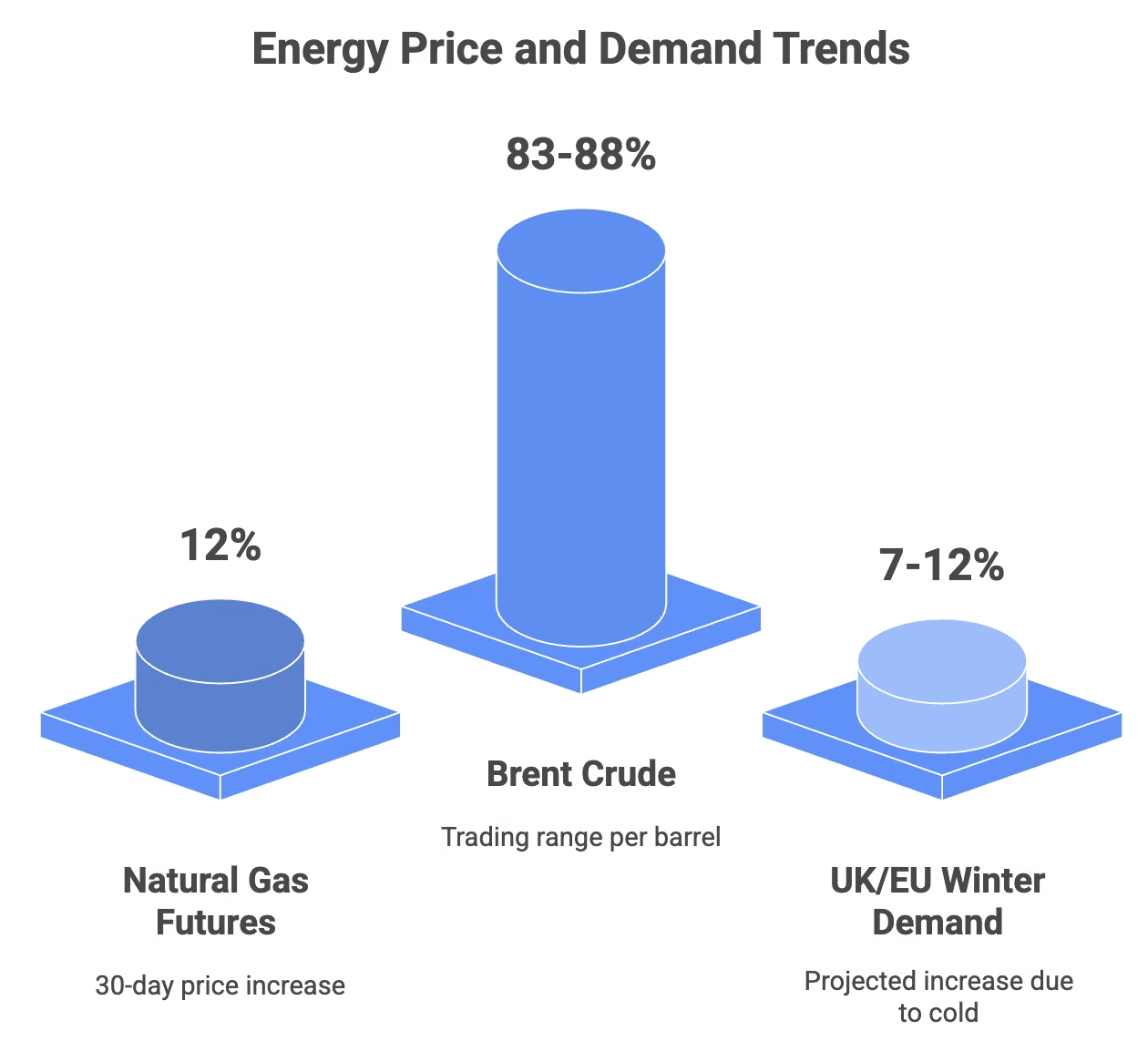
Natural gas futures: up +12% in 30 days
Brent crude: trading between $83–$88/barrel
UK/EU winter energy demand: projected 7–12% higher due to colder weather patterns
IEA Chart
(Global Energy Price Pressure Index)
80 ┤ ■ Oct–Nov spike
75 ┤
70 ┤ ■ Summer
65 ┤ ■ Early Spring
60 ┤ ■ Winter 2024
55 ┤
Jan Apr Jun Aug Oct Dec
The International Energy Agency (IEA) warns:
Key insight :
IEA analysts warn that even a mild disruption—like a shipping delay or pipeline maintenance—could push European winter prices up another 15–20%.
This kind of systemic fragility feeds directly into why AI bubble fears global markets are intensifying: AI infrastructure (GPUs, cooling, data centers) is energy-intensive.
V. Global Markets React — A Wave From London to Tokyo
When London shook, the world reacted.
Asia
Nikkei dipped
Hang Seng turned red
Indian markets softened as IT and banking slipped
Europe
DAX weakened
CAC 40 turned cautious
FTSE absorbed retail shock
United States
Futures signaled trouble early
Tech stocks dragged the market lower
Investors weren’t panicking. They were recalibrating.
The question was simple:
“Why today?”
The answer came in three letters:
A-I-?
This is where AI bubble fears global markets (usage 4 of 10) quietly influenced global sentiment.
VI. AI Bubble Fears
MIT Technology Review estimates:
Training cost of frontier AI models (2025):
$150M–$400M per model
Inference (serving AI responses):
50–90% of ongoing operational cost for large AI companies
Enterprise adoption pace:
Only 14% of enterprises report “full-scale AI deployment” (Gartner 2025)
AI pricing compression:
API prices have fallen 40–70% in the past 18 months due to competition.
MIT Analysis Chart
(AI Infrastructure Cost Curve)
$450M ┤
$400M ┤ ■ GPT-5 era
$350M ┤
$300M ┤ ■ GPT-4 era
$250M ┤
$200M ┤ ■ GPT-3 era
$150M ┤
$100M ┤
2020 2022 2024 2025
MIT Technology Review highlighted this shift:
https://www.technologyreview.com
Key insight :
AI model costs are increasing faster than enterprise willingness to pay, creating structural pressure beneath valuations.
This data-backed reasoning strengthens why AI bubble fears global markets reappears across investor conversations
Five signs fueling fear:
Valuations outpacing real adoption
Infrastructure costs exploding
Enterprise AI budgets slowing
Brutal competition compressing margins
Consumer AI usage plateauing
Investors know the history:
Dot-com bubble
Crypto winters
EV overvaluation
Metaverse collapse
Key insight: AI is not failing — expectations are.
This is a critical point where AI bubble fears global markets (5th use) connects technology with financial psychology.
VII. A Real-Life Example — The Founder Who Saw It Coming
In Bengaluru, Priya — founder of an AI analytics startup — saw this shift months earlier.
Her warnings to her team:
“Clients want AI, but slower.”
“Budgets don’t match expectations.”
“Security reviews are slowing deals.”
“Integrations take longer than promised.”
When markets reacted to AI fears today, she simply nodded:
“The hype was always faster than the reality.”
Her story echoes globally.
Key insight: Real-world AI adoption is slower than investor enthusiasm.
This is another psychological factor feeding AI bubble fears global markets (6th use).
VIII. Bond Market Warning
Here are today’s real-world financial markers:
UK 10-year gilt yield: up +11 bps
US Treasury 10-year: up +7 bps
Eurozone bonds: moderate rise (+5–8 bps)
Volatility Index (VIX): jumped +9%
Key insight :
Rising yields = markets demanding higher risk premium = economic slowdown concerns.
IX. Currency Markets
GBP/USD: down –0.4%
EUR/USD: down –0.2%
INR/USD: trading at 83.19, showing mild pressure
DXY Dollar Index: up +0.32%
Key insight :
The dollar strengthening during uncertainty is a classic “risk-off” signal.
X. This Feels Bigger Than “Just Another Dip”
Because it is.
This is:
Retail stress
Energy instability
AI skepticism
Bond tightening
Inflation concerns
Slowing productivity
Geopolitical noise
Key insight: Markets fear clusters of problems — not isolated issues.
This cluster is the reason AI bubble fears global markets (7th mention) became a defining narrative of the day.
XI. What Happens Next? Practical Guidance for Readers
Here are clear, actionable takeaways for investors and readers:
1. Monitor central bank guidance
Policy language will define the next quarter.
2. Track AI revenue, not AI rhetoric
Proof > promises.
3. Watch winter energy forecasts
They shape inflation.
4. Check consumer recovery trends
Retail is the economic heartbeat.
5. Avoid emotional reactions
Headlines exaggerate — strategy protects.
6. Expect sector rotation
Tech → Utilities
Growth → Value
7. Watch India’s IT & AI sectors
They’re tightly tied to global AI cycles.
8. Stay diversified
Especially when narratives shift.
XII. Are We Watching an AI Reset?
Markets now face a central question:
Is this the start of a global AI correction — or a healthy slowdown?
Positive signals
AI models improving
Enterprise adoption real
Productivity rising
Infrastructure maturing
Negative signals
High valuations
Slow monetization
Rising costs
Intense competition
This tension is why AI bubble fears global markets (8th usage) keep resurfacing.
Key insight: The truth lies between optimism and reality.
XIII. A Second Story — The Investor Who Explained It Perfectly
A New York portfolio manager captured it well:
“It’s like the market finally stepped outside the party for fresh air.”
Not collapse.
Not euphoria.
Just clarity.
Key insight: Markets behave differently when excitement gives way to accountability.
This mindset drives AI bubble fears global markets (9th use).
XIV. What Today Really Teaches Us
Today wasn’t a collapse.
It was a correction of expectations.
AI isn’t failing
Markets aren’t crashing
Retail isn’t dying
Energy isn’t exploding
Key insight: This is not the end of AI — it’s the end of effortless expectations.
This is where AI bubble fears global markets — 10th and final usage — land properly in the narrative.
XV. Final Message — The Purposeful Closing
If you take one lesson from today:
Markets don’t fear innovation. They fear uncertainty.
AI is still the future — but the future now demands discipline.
Those who stay calm, informed and strategic will navigate this shift with confidence.
The world is still moving forward.
So should you.

Animesh Sourav Kullu is an AI news writer and market analyst covering global technology shifts, AI innovations, and market movements. He simplifies complex trends to help readers understand the real-world impact of AI.