


Introduction: The Rise of the AI Habit Building Companion
Here’s a question that’s been keeping tech enthusiasts and wellness warriors awake at night: Can artificial intelligence actually help you become a better version of yourself? Not just another notification buzzing on your phone. Not another app collecting digital dust. But a genuine partner in the messy, beautiful struggle of building habits that stick.
Today, I’m excited to tell you about First Voyage, a startup that just raised $2.5 million in seed funding to answer that question with a resounding yes. Their secret weapon? An AI habit building companion called Momo—and it’s not your typical productivity app.
The timing couldn’t be more perfect. We’re living through a fascinating moment where AI is escaping the confines of workplace productivity tools and settling into our personal lives. From meditation apps to fitness coaches, the AI habit building companion category is exploding. And First Voyage is positioning itself right at the center of this transformation.
According to industry reports, the global habit tracking app market is valued at approximately $13 billion in 2025 and is projected to reach over $43 billion by 2034. That’s not just growth—that’s a revolution in how we approach self-improvement. The AI habit building companion space represents the cutting edge of this transformation, where technology meets behavioral psychology in ways we’ve never seen before.
World Economic Forum – AI & Human Productivity
https://www.weforum.org/agenda/archive/artificial-intelligence/
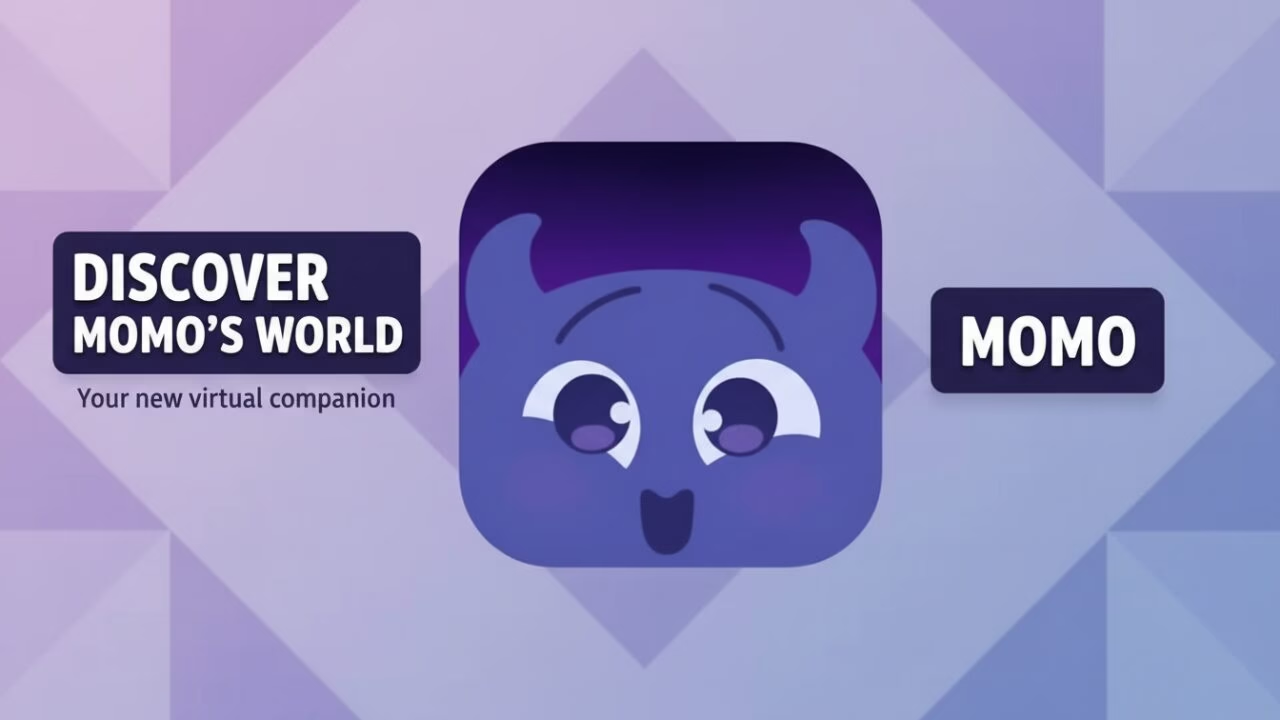
What First Voyage Builds: Meet Your New AI Habit Building Companion
Core Functionality of This AI Habit Building Companion
So what exactly makes Momo different from the dozens of habit apps cluttering the App Store? The answer lies in its approach to the AI habit building companion concept.
First Voyage has created something genuinely clever: a digital pet that you care for, and in return, it helps you build the habits you’ve always wanted. Think Tamagotchi meets Tony Robbins, with a dash of cutting-edge artificial intelligence. This AI habit building companion doesn’t just remind you to drink water—it creates an emotional connection that makes you actually want to follow through.
Here’s how the AI habit building companion works in practice:
- Personalized habit tracking and suggestions: The AI habit building companion learns your patterns, preferences, and goals to offer customized recommendations.
- Conversational AI feedback loops: Talk to Momo about your day, your struggles, your wins. Your AI habit building companion responds with relevant encouragement and practical advice.
- Daily check-ins and adaptive reminders: This AI habit building companion adjusts its approach based on your behavior, timing reminders when you’re most likely to act.
- Gamification elements: Earn coins by completing tasks, purchase accessories for Momo, and watch your AI habit building companion evolve as you grow.
According to First Voyage CEO Besart Çopa, “Momo helps users become the best versions of themselves, and users reward Momo with care, affection, and cute accessories.” It’s a beautiful symbiosis—your AI habit building companion thrives when you thrive.
The Technology Behind This AI Habit Building Companion
Under the hood, this AI habit building companion leverages some seriously impressive technology. The large language model (LLM) backend enables natural, flowing conversations that feel genuinely human. But here’s where it gets interesting: the app uses reinforcement learning for habit modeling, meaning your AI habit building companion gets smarter about you over time.
The mobile app integration ensures your AI habit building companion is always in your pocket, ready to offer support when motivation wavers. It’s available now on iOS, with Android coming soon thanks to the fresh funding.
Who’s Using This Technology?
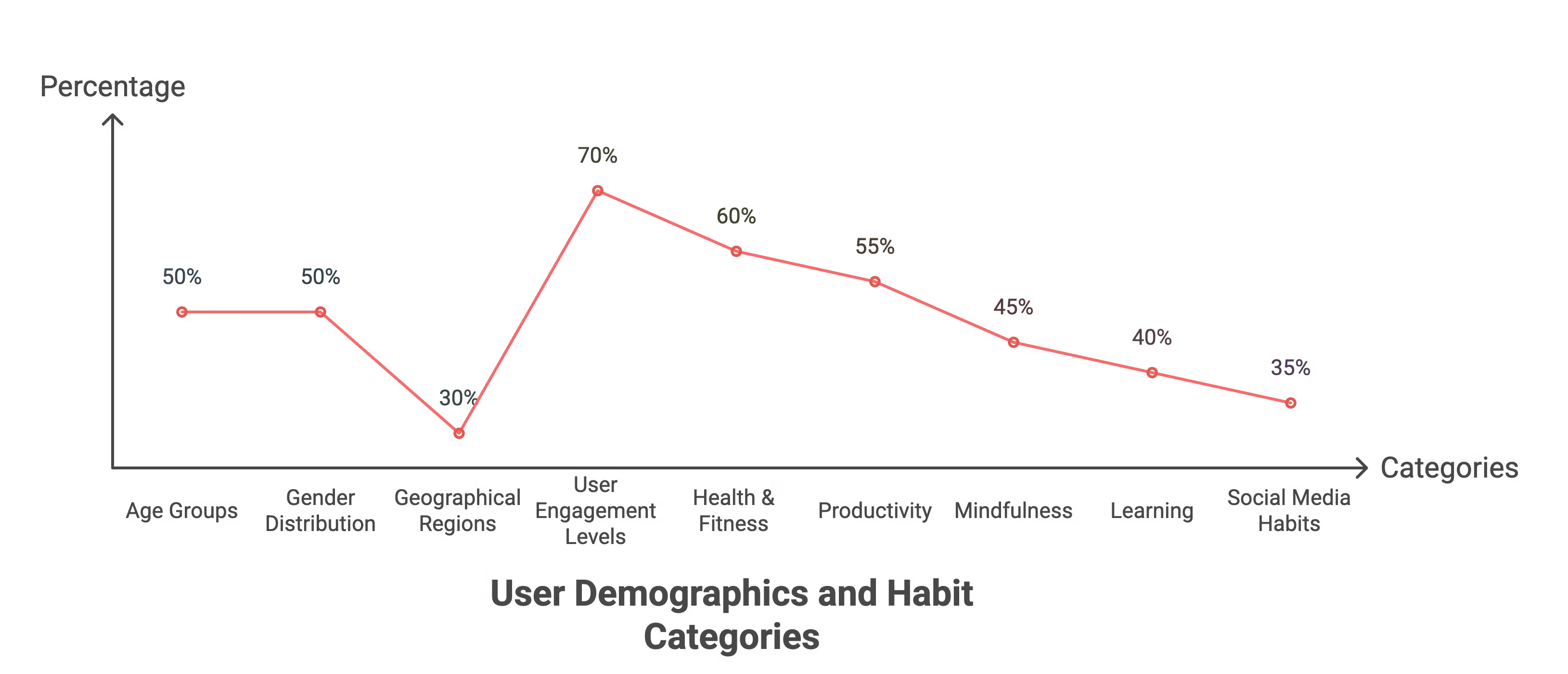
First Voyage reports that users have already created more than 2 million tasks on the platform. The most popular habits tracked relate to productivity, spirituality, and mindfulness. The target audience spans professionals looking to optimize their routines, students building study habits, and wellness communities seeking digital support for their self-care journeys.
Funding Details: What $2.5M Means for the AI Habit Building Companion Space
The Investors Backing This AI Habit Building Companion
First Voyage’s $2.5 million seed round attracted some serious attention from the venture capital world. The round was led by a16z speedrun—Andreessen Horowitz’s accelerator program that invests up to $1 million in early-stage startups. They were joined by SignalFire, True Global, and other strategic investors.
This investment sends a powerful signal to the startup ecosystem. When heavyweight investors like a16z back a consumer AI wellness app, it validates the entire category. Over the past four cohorts, a16z speedrun has funded more than 120 startups with over $100 million deployed—and Momo made the cut.
What This Investment Signals for the Industry
The funding reflects several important trends. First, there’s continued confidence in consumer AI applications—investors see this category as a genuine opportunity rather than a passing fad. Second, we’re witnessing a shift toward personal life AI solutions. The technology that once lived exclusively in enterprise software is now making its way into our daily routines.
AI Habit Building Companion Market Overview
| Metric | 2025 Value | 2034 Projection |
|---|---|---|
| Global Habit Tracking Market | $13.06 Billion | $43.87 Billion |
| CAGR Growth Rate | 14.41% | Projected through 2034 |
| AI Feature Integration | 58% | Growing rapidly |
| North America Market Share | 36-38% | Leading position |
Global Expansion Plans
The fresh capital will fuel several key initiatives. First priority: launching Momo on the Android app store, opening up a massive new user base. Beyond that, First Voyage aims to make the app more intelligent in how it interacts with people—deeper personalization, smarter recommendations, and more nuanced emotional intelligence.
The global potential is substantial. Markets in the USA, China, India, Russia, and beyond are hungry for digital wellness solutions. The Asia Pacific region alone accounts for approximately 29-32% of the habit tracking app market, driven by rising smartphone penetration and growing health consciousness.
Why AI Is Uniquely Suited for Habit Formation
The Constant Feedback Loop of an AI Habit Building Companion
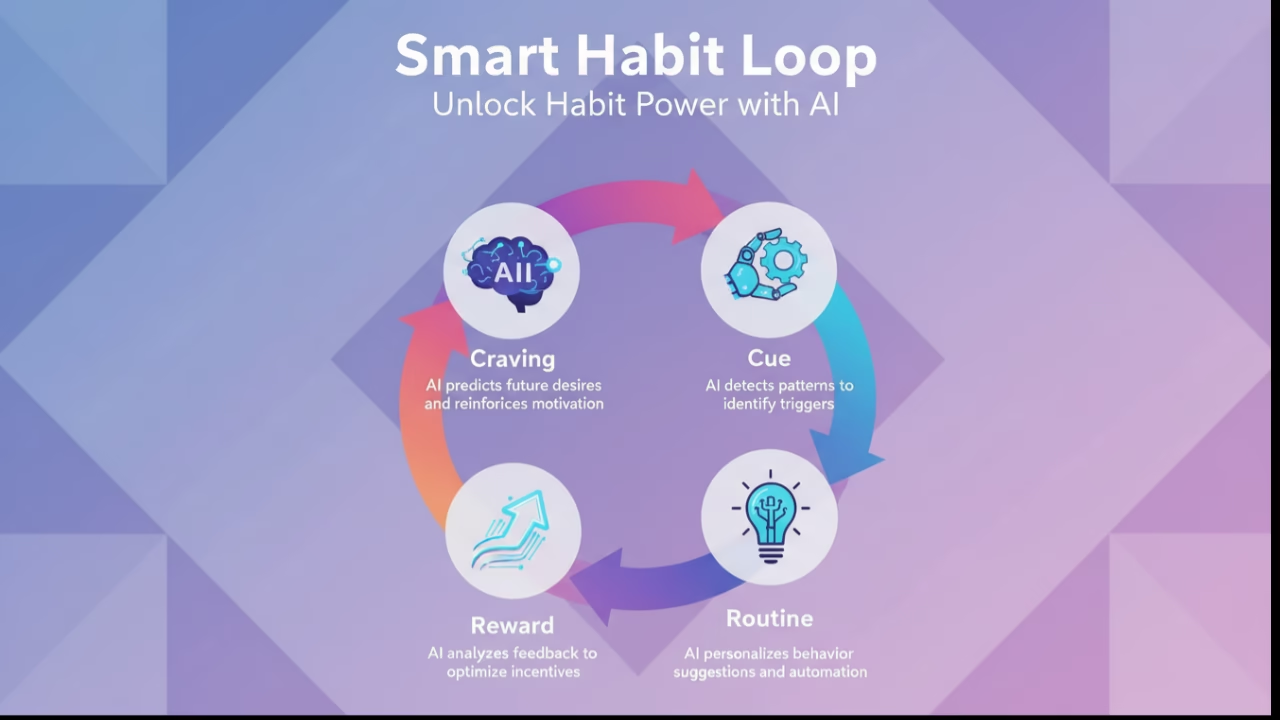
Here’s something fascinating about habit formation: research suggests it can take anywhere from 18 to 254 days to form a new habit, depending on the behavior and individual differences. That’s a wide range—and it highlights why an AI habit building companion can be so powerful.
Unlike a static app that treats everyone the same, an AI habit building companion learns and adapts. It notices when you’re most likely to complete your morning routine. It recognizes patterns in your motivation levels. Your AI habit building companion adjusts its approach based on what actually works for you, not what works for the average user.
Personalized Reinforcement Strategies
A 2025 study found that individuals using binary tracking (simple yes/no completion) maintained habits 27% longer than those using detailed metrics during the formation phase. An AI habit building companion can implement these evidence-based strategies automatically, adjusting the complexity of tracking based on where you are in your habit journey.
The personalization capability takes behavioral psychology principles and applies them at scale. Habit stacking—attaching new habits to existing routines—shows 64% higher success rates. An intelligent system can identify your existing routines and suggest optimal stacking opportunities.
Beyond Static Habit Apps: The AI Advantage
Traditional habit apps are like recipe books—they give you the instructions but can’t help when things go wrong. An AI habit building companion is more like a personal chef who adjusts the recipe based on your pantry, your preferences, and your feedback on previous meals.
This matters because habit formation isn’t linear. You’ll have setbacks. Life will get in the way. A smart companion can recognize these patterns and help you recover, rather than just displaying a broken streak that makes you feel like a failure.
The Science: Where Habits Meet AI Learning
The neurological basis for habits involves the basal ganglia and the formation of automatic stimulus-response patterns. What makes this technology so effective is its ability to work with these natural processes rather than against them.
Machine learning researchers have developed methods that can identify which context variables are associated with behavior and infer how quickly habits form. This scientific foundation enables precise interventions timed when they’ll have maximum impact.
Industry Context: The AI Habit Building Companion Landscape
Competing Products in the Market
First Voyage’s Momo enters a competitive but fragmented market. Other players include AI journaling apps, life coaching assistants, and various wellness trackers. Similar to the hit productivity app Focus Friend, Momo uses gamification to drive engagement—but the digital pet angle offers something genuinely distinctive.
The competitive landscape includes established players like Productive Habit Tracker (approximately 18% market share) and Streaks (about 14%), but these lack the conversational AI capabilities that make Momo unique.
User Adoption Trends
The numbers tell a compelling story. Approximately 64% of users turn to habit tracking apps for wellness monitoring—mental health, sleep cycles, and mindfulness routines. The integration of AI features in habit apps has reached 58%, and that percentage is climbing rapidly. For products like Momo, these trends represent tailwinds rather than headwinds.
Gamification alone has been shown to boost usage by 61%. Combine that with AI personalization, and you have a powerful formula for engagement.
Why This Market Is a Massive Opportunity
The broader wellness app market is expected to reach approximately $45 billion by 2034. Within that, the AI habit building companion segment represents one of the fastest-growing categories. The economics are attractive too: 71% of adults now rely on digital tools for goal tracking, and premium subscriptions account for 36% of habit tracking app downloads.
The retention and engagement economics make this an especially interesting opportunity. An AI habit building companion that successfully drives habit formation creates loyal users with high lifetime value. When your app genuinely improves someone’s life, they stick around.
Expert Perspectives on the AI Habit Building Companion Revolution
What Behavioral Psychologists Say
Behavioral science offers fascinating insights into why an AI habit building companion might succeed where willpower alone fails. Research shows that framing habits in terms of identity—thinking “I am a person who exercises daily” rather than “I should exercise”—significantly improves success rates. A sophisticated AI habit building companion can help users make this cognitive shift.
The concept of “tiny habits,” popularized by Stanford researcher BJ Fogg, emphasizes starting with extremely small versions of target behaviors. An AI habit building companion can calibrate these minimal viable habits precisely, then gradually increase complexity as the user builds momentum.
AI Researchers Weigh In
From a technical perspective, the AI habit building companion represents an interesting application of reinforcement learning principles. The system learns from user behavior, optimizing its interventions based on what actually drives results. This creates a feedback loop where the companion becomes increasingly effective over time.
However, researchers also caution about potential limitations. AI systems can struggle with edge cases and unexpected situations. The best implementations will combine machine learning with human-designed guardrails and fallback mechanisms.
Investor Perspective: Why VCs Are Betting on This Space
The investment from a16z speedrun and SignalFire reflects growing confidence in consumer AI applications. As First Voyage CEO Besart Çopa noted, investors are pleased to see founders building in the AI self-care wellness space. This category represents a constructive application of powerful technology.
From a venture capital perspective, the AI habit building companion market offers attractive unit economics, strong engagement metrics, and meaningful positive impact. That combination is increasingly rare in consumer tech.
TechCrunch – AI Startup Coverage
https://techcrunch.com/ai/
Risks and Criticisms: A Balanced View of AI Habit Building Companions
Dependency Concerns
Let’s be honest about the potential downsides. Any AI-powered companion raises questions about dependency. If you rely on an app to motivate you, what happens when the app goes away? Some experts worry that users might form emotional attachments to AI companions that could affect their human relationships.
Research has shown mixed results on this front. Some studies suggest that AI companions can improve social skills and confidence, while others indicate potential for isolation among heavy users. A responsible product should encourage real-world connections rather than replacing them.
Privacy and Data Security
When you share your daily routines, struggles, and goals with an AI, you’re revealing sensitive information. Studies have found that many AI companion apps collect extensive user data, and privacy practices vary widely across the industry. Users should carefully review privacy policies before committing.
First Voyage has indicated that Momo includes safety guardrails and prompt filters to keep conversations within appropriate boundaries. However, users should always maintain awareness about what they’re sharing with any AI habit building companion.
Efficacy Questions: Does This Technology Actually Work?
The honest answer is: we need more research. While early studies show promising short-term mental health benefits from AI companion apps, longitudinal studies are limited. The longest studies typically span just weeks, and effects like emotional dependency or behavioral changes may only emerge with extended use.
Habit tracking apps in general face significant retention challenges—approximately 52% of users drop off within 30 days, and 44% lose motivation over time. An effective solution needs to overcome these industry-wide challenges.
Editorial Insights: What Makes an AI Habit Building Companion Succeed
AI vs Human Coach: A Comparison
Here’s my take: an AI habit building companion isn’t trying to replace human coaches or therapists—it’s filling a different niche entirely. Consider the trade-offs:
| Factor | AI Habit Building Companion | Human Coach |
|---|---|---|
| Availability | 24/7 instant access | Scheduled sessions |
| Cost | Low subscription fee | $100-500+ per session |
| Personalization | Data-driven, scalable | Deep, intuitive |
| Emotional depth | Simulated empathy | Genuine connection |
| Judgment-free zone | Always non-judgmental | Varies by individual |
The AI habit building companion excels at constant, low-stakes support—the kind of daily nudges that keep you on track between bigger milestones. For deeper psychological work, human connection remains irreplaceable.
Behavioral Economics Meets AI UX
The most successful AI habit building companion will be the one that designs incentives that actually work. This requires understanding behavioral economics: loss aversion, present bias, social proof, and commitment devices. Momo’s gamification approach—coins, accessories, caring for a digital pet—represents one attempt to align incentives with desired behaviors.
The best implementations will continue to iterate on these mechanisms, testing what actually drives long-term behavior change rather than just short-term engagement.
What Successful Habit Adoption Really Requires
Here’s the uncomfortable truth: no AI can do the work for you. Successful habit adoption requires personal motivation at its core. What an AI habit building companion can provide is accountability, structure, and timely support.
The formula looks something like: Personal Motivation + Accountability + AI Support = Lasting Change. The AI companion amplifies your existing motivation rather than creating it from nothing. If you’re genuinely committed to change, a tool like Momo can help you get there faster and with fewer setbacks.
What This Means for Consumers and the Future
Practical Life Impacts
Let’s get practical. What could this technology actually mean for your daily life? The potential impacts span multiple domains. In productivity, imagine waking up to a companion that knows your energy patterns and suggests your most important work during peak hours. For wellness, picture an AI that notices your stress levels rising and gently encourages a mindfulness break before you burn out.
The promise of routine stability is perhaps most compelling. We know that consistent routines improve mental health, sleep quality, and overall life satisfaction. An AI habit building companion can help you build and maintain these routines even when life gets chaotic.
The Evolution of Personal AI Assistants
First Voyage’s Momo represents just the beginning. The next generation of this technology will likely integrate more deeply with our lives. We’re moving from productivity assistants to lifestyle coaches—AI that doesn’t just help you work better but helps you live better.
CEO Besart Çopa puts it eloquently: the hope is that Momo and its community become a defining consumer brand that improves as many lives as possible. That’s an ambitious vision—and the technology is increasingly capable of delivering on it.
Integration with Wearables and Health Tech
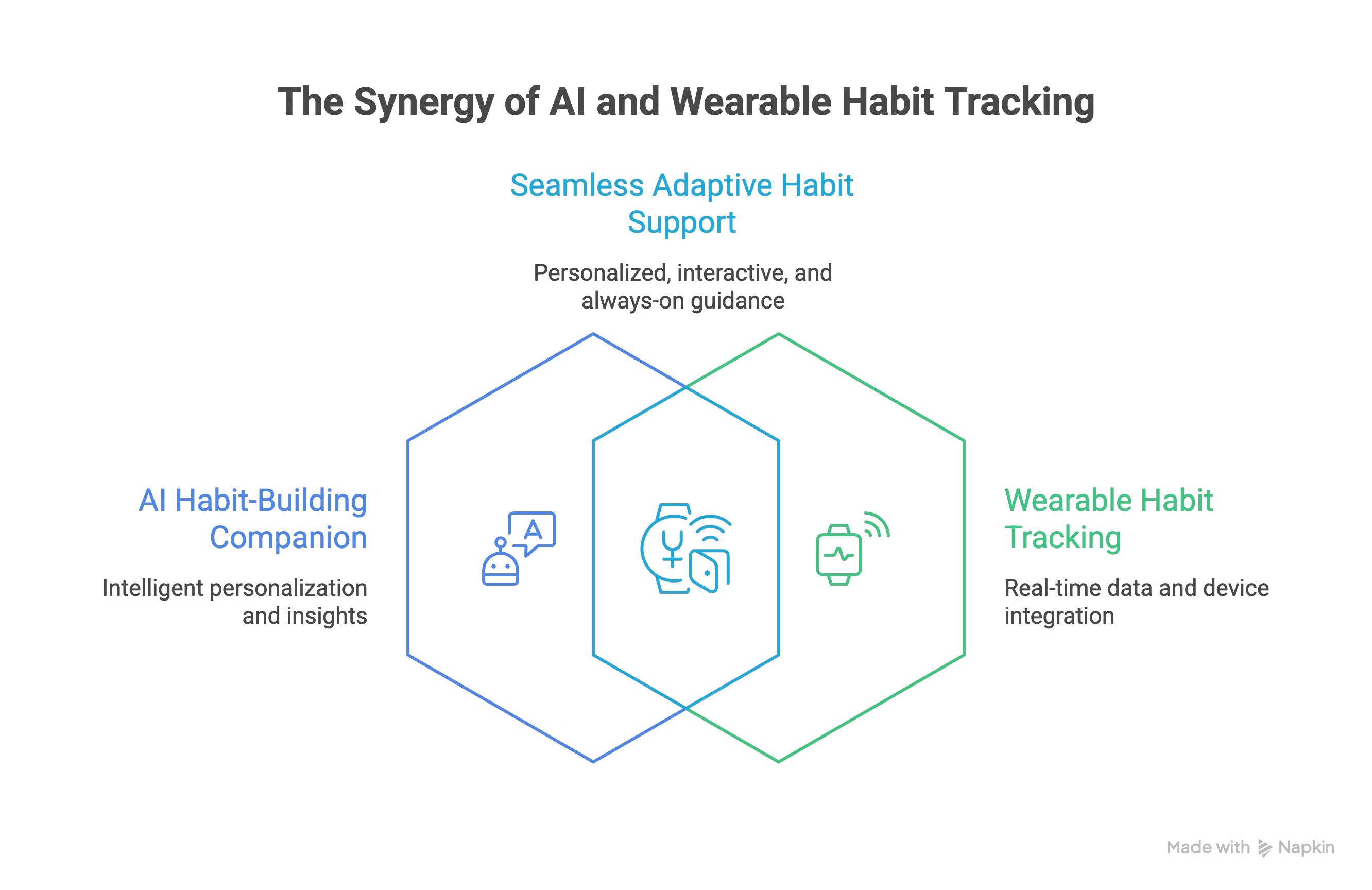
The future likely involves deeper integration with wearable technology. Research shows that wearable integration has improved user retention by 39% in fitness and health-conscious consumers. Imagine your AI habit building companion knowing your sleep quality, heart rate variability, and activity levels—and adjusting its recommendations accordingly.
Apple’s recent Workout Buddy feature, announced in watchOS 26, hints at this convergence. An AI habit building companion that connects with your smartwatch, fitness tracker, and health apps could offer truly holistic guidance.
Frequently Asked Questions About AI Habit Building Companions
What is an AI habit building companion?
An AI habit building companion is an artificial intelligence-powered application designed to help users form and maintain positive habits. Unlike simple reminder apps, an AI habit building companion uses machine learning to personalize recommendations, adapt to your behavior patterns, and provide conversational support throughout your habit-building journey.
How does First Voyage’s Momo work as an AI habit building companion?
Momo is an AI habit building companion that takes the form of a digital pet. You care for Momo by completing your habit tasks, and in return, the AI habit building companion reminds you of your goals, offers personalized suggestions, and provides motivational support. The gamification elements—earning coins, buying accessories—make the process engaging rather than tedious.
Is an AI habit building companion better than traditional habit apps?
An AI habit building companion offers several advantages over traditional apps: personalization that improves over time, conversational support, and adaptive recommendations. However, the best tool depends on your personal preferences. Some people prefer simple trackers, while others benefit from the deeper engagement an AI habit building companion provides.
What are the privacy concerns with an AI habit building companion?
Any AI habit building companion collects personal data about your habits, routines, and goals. It’s important to review privacy policies carefully. Look for apps that are transparent about data usage, offer opt-out options, and implement strong security measures. First Voyage has indicated that Momo includes safety guardrails and prompt filters.
How much does an AI habit building companion typically cost?
AI habit building companion apps typically operate on freemium models, with basic features available for free and premium subscriptions ranging from $5-20 per month. Premium features often include advanced personalization, unlimited conversations, and additional customization options.
Can an AI habit building companion help with specific habits like exercise or meditation?
Yes! An AI habit building companion can be configured for virtually any habit you want to build. According to First Voyage, the most popular habits tracked through their AI habit building companion relate to productivity, spirituality, and mindfulness. Whether you want to exercise more, meditate daily, or read before bed, an AI habit building companion can provide tailored support.
Conclusion: The AI Habit Building Companion Revolution Is Here
First Voyage’s $2.5 million raise for its AI habit building companion Momo represents more than just another startup success story. It signals a broader shift in how we think about AI’s role in our personal lives.
The AI habit building companion category is no longer experimental—it’s becoming mainstream. With substantial market growth projected, increasing AI integration, and growing user adoption of digital wellness tools, the trajectory is clear. We’re moving toward a future where AI doesn’t just help us work; it helps us become who we want to be.
The funding reflects investor confidence not just in First Voyage, but in the entire premise that an AI habit building companion can drive meaningful behavior change. As AI apps move beyond workplace productivity into everyday life transformation, we’re witnessing the emergence of a new category of technology—one focused on human flourishing rather than just efficiency.
Will Momo become the defining AI habit building companion of this generation? Only time will tell. But one thing is certain: the intersection of artificial intelligence and personal development is producing innovations that would have seemed like science fiction just a few years ago. And for those of us trying to build better habits, that’s very good news indeed.
What habits are you trying to build? Have you tried an AI habit building companion? Share your experiences in the comments below—I’d love to hear what’s working for you.
Stay Updated: Follow our coverage of the AI habit building companion space for the latest developments in technology-assisted self-improvement. Subscribe to our newsletter for weekly insights on AI, wellness tech, and the future of personal development.

Animesh Sourav Kullu is an international tech correspondent and AI market analyst known for transforming complex, fast-moving AI developments into clear, deeply researched, high-trust journalism. With a unique ability to merge technical insight, business strategy, and global market impact, he covers the stories shaping the future of AI in the United States, India, and beyond. His reporting blends narrative depth, expert analysis, and original data to help readers understand not just what is happening in AI — but why it matters and where the world is heading next.