

![Clearview AI Legal Case: $51.75M Settlement Explained [2025]](https://dailyaiwire.com/wp-content/uploads/2025/12/Clearview_AI_Legal_Overview_22b2c158-5fa3-43c1-98c7-3a0565bbe6a6-1024x576.avif)
Picture this: a company quietly scrapes over 50 billion photos from your social media, news articles, and random websites—all without asking permission. That’s exactly what Clearview AI did, and it sparked one of the most consequential privacy battles of our generation. If you’ve been wondering what the fuss is about, you’re in the right place. This comprehensive
overview of the Clearview AI legal case will walk you through everything—from the lawsuits and settlements to what it means for your face online.
I’ve spent considerable time digging into the court documents, regulatory decisions, and expert analyses surrounding this case. What I found genuinely surprised me. The
overview of the Clearview AI legal case isn’t just about one company—it’s about whether our faces can be commodified without consent. Let’s dive in.
What Is the Clearview AI Legal Case About?
Before we go deeper into this
overview of the Clearview AI legal case, let me give you the basics. Clearview AI is an American facial recognition company that built something unprecedented: a searchable database of billions of facial images scraped from publicly accessible websites. Law enforcement agencies could upload a photo and instantly find matches from their massive collection.
The problem? Clearview never asked anyone for permission. They didn’t notify people their photos were being collected. And that’s where the legal storm began.
This
overview of the Clearview AI legal case centers on allegations that the company violated numerous privacy laws, including the Illinois Biometric Information Privacy Act (BIPA), which requires explicit consent before collecting biometric data like faceprints.

Who Sued Clearview AI and Why? The Key Plaintiffs
Understanding who brought legal action is essential to this
overview of the Clearview AI legal case. Multiple parties filed lawsuits, but the most significant came from:
- The American Civil Liberties Union (ACLU) – Filed in May 2020 in Cook County, Illinois, representing vulnerable communities including domestic violence survivors and undocumented immigrants.
- Class Action Plaintiffs – A consolidated multidistrict litigation (MDL) representing virtually anyone whose face appeared online during Clearview’s data collection period.
- European Data Protection Authorities – Privacy regulators in the UK, France, Italy, Greece, and the Netherlands launched investigations citing GDPR violations.
The ACLU’s case was particularly important in shaping this
overview of the Clearview AI legal case because it resulted in a groundbreaking 2022 settlement that restricted Clearview’s U.S. operations. The ACLU argued that Clearview’s technology endangered survivors of abuse, sex workers, and marginalized communities who rely on anonymity for safety.
Understanding BIPA: The Illinois Law at the Heart of the Case
No
overview of the Clearview AI legal case would be complete without explaining BIPA—the Illinois Biometric Information Privacy Act. This 2008 law is arguably the strongest biometric privacy protection in America.
What Makes BIPA So Powerful?
- Consent Requirement: Companies must obtain written consent before collecting biometric identifiers like fingerprints or faceprints.
- Private Right of Action: Individuals can sue companies directly—not just wait for regulators to act.
- Statutory Damages: Plaintiffs can recover $1,000 per negligent violation or $5,000 per intentional violation.
- Injunctive Relief: Courts can order companies to stop collecting data.
Clearview collected faceprints from millions of Illinois residents without consent—a textbook BIPA violation. This
overview of the Clearview AI legal case shows how BIPA became the primary legal weapon against the company in the United States.
The $51.75 Million Settlement: A Historic Resolution
Here’s where this
overview of the Clearview AI legal case gets really interesting. In March 2025, a federal judge in Illinois approved one of the most unusual class action settlements in privacy law history.
Instead of a traditional cash payout, Judge Sharon Johnson Coleman approved a settlement giving class members a
23% equity stake in Clearview AI, valued at approximately $51.75 million based on a January 2024 company valuation of $225 million.
Why an Equity-Based Settlement?
This
overview of the Clearview AI legal case reveals that Clearview simply didn’t have the cash to pay a traditional settlement. As lead attorney Jon Loevy explained, “Clearview and the class members were trapped together on a sinking ship: the potential liability was massive, there was no money for a substantial settlement.”
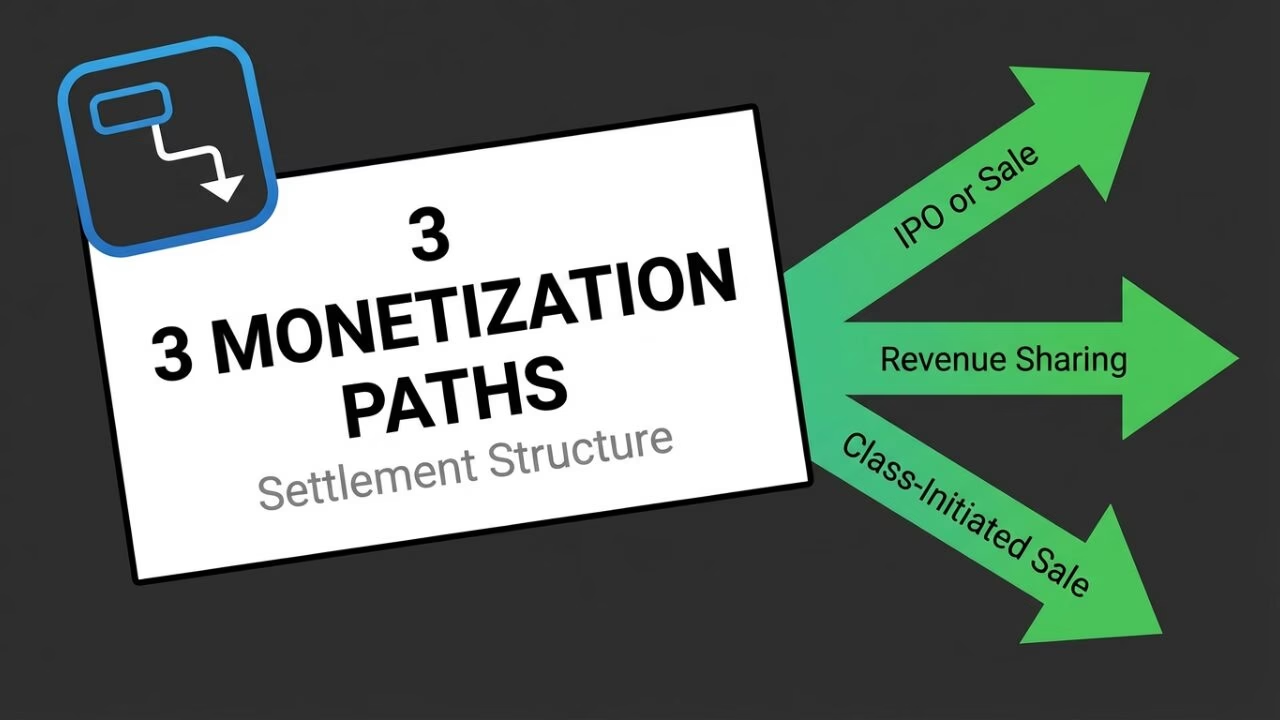
Settlement Payment Pathways
Payment Trigger | Description |
|---|---|
IPO or Sale | If Clearview goes public or is acquired, the class’s 23% equity converts to cash based on valuation. |
Revenue Sharing | If no liquidity event occurs, Clearview must contribute 17% of revenue over two years to the settlement fund. |
Class-Initiated Sale | The class may independently sell their 23% stake and distribute proceeds to members. |
This
overview of the Clearview AI legal case notes that 22 state attorneys general objected to the settlement, arguing it didn’t provide meaningful monetary relief. However, the judge ruled that “necessity is the mother of invention.”
The ACLU Settlement: Restricting Private Sector Access
A critical piece of this
overview of the Clearview AI legal case is the separate 2022 settlement Clearview reached with the ACLU. This agreement fundamentally changed how the company operates in America.
Key Terms of the ACLU Settlement
- Nationwide Private Entity Ban: Clearview is permanently barred from selling access to its database to private companies and individuals across the United States.
- Illinois State Ban: Clearview cannot provide services to any entity in Illinois—including law enforcement—for five years (until May 2027).
- Opt-Out Program: Illinois residents can submit photos to have their facial data blocked from search results.
- No Free Trials: Clearview can no longer offer free trial access to individual police officers acting outside departmental authority.
This
overview of the Clearview AI legal case emphasizes that Clearview did not admit wrongdoing in either settlement, though the company agreed to significant operational restrictions.
Global Regulatory Actions: GDPR Fines Across Europe
This
overview of the Clearview AI legal case extends far beyond American borders. European data protection authorities have hammered Clearview with substantial fines under the General Data Protection Regulation (GDPR).
Summary of European GDPR Fines Against Clearview AI
Country | Fine Amount | Key Findings |
|---|---|---|
Netherlands (2024) | €30.5 million | Illegal database construction; biometric data collection without consent |
France (2022) | €20 million | Failure to delete data; continued non-compliance |
Italy (2022) | €20 million | Maximum GDPR fine; unlawful processing of biometric data |
Greece (2022) | €20 million | Largest fine ever by Greek DPA; ordered data deletion |
UK (2022) | £7.5 million* | *Overturned in 2023; reinstated on appeal in October 2025 |
This
overview of the Clearview AI legal case shows that total European fines exceed €90 million. However, enforcement remains challenging since Clearview has no physical presence in Europe. The Dutch Data Protection Authority has even announced investigations into holding Clearview’s management personally liable.
How Does Clearview AI Collect Its Data?
Understanding Clearview’s methods is central to this
overview of the Clearview AI legal case. The company uses automated web-scraping technology to harvest images from:
- Social media platforms (Facebook, Instagram, Twitter, LinkedIn)
- News media websites
- Public mugshot databases
- Employment sites like LinkedIn
- Payment apps like Venmo
- Personal blogs and websites
As of 2025, Clearview claims its database contains over
50 billion facial images—up from 3 billion when first exposed in 2020. Each image is processed to create a unique biometric “faceprint,” which is stored alongside metadata including source URLs, webpage titles, and geographic data.
This
overview of the Clearview AI legal case demonstrates that the company’s growth strategy directly conflicted with privacy laws requiring consent before biometric data collection.
Privacy Concerns: Why This Case Matters to Everyone
This
overview of the Clearview AI legal case wouldn’t resonate so strongly if the stakes weren’t personal. Here’s why privacy advocates are alarmed:
The Core Privacy Issues
- Loss of Anonymity: Anyone can be identified in public spaces, eliminating the possibility of moving through society unrecognized.
- Chilling Effect on Free Expression: Protesters, journalists, and activists may avoid public participation knowing they can be instantly identified.
- Potential for Abuse: While law enforcement uses are regulated, the technology could enable stalking, harassment, or discrimination.
- Consent Violation: Posting a photo online doesn’t constitute consent for biometric analysis and indefinite storage.
- Data Security Risks: In 2020, Clearview’s client list was breached, revealing 2,200 organizations in 27 countries had used the service.
This
overview of the Clearview AI legal case reveals that these concerns extend beyond individual privacy—they touch fundamental questions about surveillance, consent, and corporate power in the digital age.
Impact on Facial Recognition Regulation Worldwide
This
overview of the Clearview AI legal case has far-reaching implications for how governments worldwide approach facial recognition technology.
Legislative Responses Across the Globe
- United States: Multiple cities have banned facial recognition for law enforcement; BIPA has inspired similar legislation in Texas, Washington, and other states.
- European Union: The AI Act restricts real-time facial recognition in public spaces; GDPR enforcement against Clearview sets precedent for cross-border data protection.
- China: While government surveillance is extensive, personal information protection laws now require consent for facial data collection by private companies.
- India: The Digital Personal Data Protection Act (2023) establishes consent requirements for biometric data processing.
This
overview of the Clearview AI legal case demonstrates that the company has become a catalyst for global privacy reform. The settlements and regulatory actions establish precedents that other facial recognition companies will need to navigate.
Frequently Asked Questions
To complete this
overview of the Clearview AI legal case, let me address the questions people ask most frequently.
Did Clearview AI Admit Guilt in the Lawsuits?
No. In both the ACLU settlement and the class action settlement, Clearview expressly denied liability. This is standard practice in settlements—companies agree to restrictions and payments without admitting wrongdoing. This
overview of the Clearview AI legal case notes that despite not admitting guilt, Clearview agreed to significant operational changes.
Can Private Companies Still Use Clearview AI’s Database?
No, not in the United States. The 2022 ACLU settlement imposed a permanent nationwide ban on Clearview selling access to private entities and individuals. The company can only serve government agencies for law enforcement purposes. This is a key takeaway from this
overview of the Clearview AI legal case.
How Much Money Will Class Members Receive?
That remains uncertain. The equity-based settlement means payment depends on Clearview’s future performance. If the company goes public, is sold, or the class sells its 23% stake, members will receive a proportional share. Alternatively, revenue sharing could begin if no liquidity event occurs by September 2027. This
overview of the Clearview AI legal case acknowledges this uncertainty frustrated some plaintiffs and state attorneys general.
Can I Opt Out of Clearview AI’s Database?
Illinois residents can request their facial data be blocked through Clearview’s opt-out program established under the ACLU settlement. However, complete deletion may not be guaranteed, and residents of other states have limited recourse. This
overview of the Clearview AI legal case highlights the patchwork nature of U.S. privacy protections.
Is Clearview AI Still Operating?
Yes. Despite the legal challenges covered in this
overview of the Clearview AI legal case, Clearview continues serving law enforcement agencies. In September 2025, the company signed a $10 million contract with a U.S. federal agency—its largest American government contract to date.
What’s Next for Clearview AI?
As this
overview of the Clearview AI legal case shows, the company faces ongoing legal and regulatory pressures. The Dutch Data Protection Authority is pursuing personal liability for Clearview’s executives. European fines remain uncollected but could create problems if the company ever seeks to do business internationally.
Clearview’s CEO, Hoan Ton-That, resigned in February 2025, and the company now operates under co-CEO leadership with strong ties to the Trump administration. Whether this political connection will influence enforcement remains to be seen.
This
overview of the Clearview AI legal case suggests that the battle over facial recognition technology is far from over. The legal precedents established here will shape privacy law for decades.
Final Thoughts: Why This Case Matters to You
I hope this
overview of the Clearview AI legal case has given you a clear picture of one of the most significant privacy battles of our time. Whether you’re in the USA, China, India, Russia, or anywhere else in the world, facial recognition technology affects you. The legal frameworks being tested and established through these cases will determine how much control you have over your own biometric data.
The Clearview AI legal case isn’t just about one company’s aggressive data practices—it’s about the fundamental question of whether our faces belong to us or can be commodified without our consent. The answer is still being written in courtrooms and regulatory offices worldwide.
If you found this
overview of the Clearview AI legal case valuable, I encourage you to stay informed about privacy developments and consider how you can protect your digital footprint. The technology is here to stay—but with proper regulation and public pressure, we can ensure it respects human rights.
Stay Updated on AI and Privacy News
Subscribe to our newsletter for the latest developments in artificial intelligence, privacy law, and technology regulation. Knowledge is your best defense in the digital age.
Additional Resources
For more information about this overview of the Clearview AI legal case and related topics, explore these authoritative sources:
- ACLU v. Clearview AI Official Case Page
- Clearview AI Class Action Settlement Information
- European Data Protection Board – Clearview AI Fine
Last Updated: December 2025

Animesh Sourav Kullu is an international tech correspondent and AI market analyst known for transforming complex, fast-moving AI developments into clear, deeply researched, high-trust journalism. With a unique ability to merge technical insight, business strategy, and global market impact, he covers the stories shaping the future of AI in the United States, India, and beyond. His reporting blends narrative depth, expert analysis, and original data to help readers understand not just what is happening in AI — but why it matters and where the world is heading next.