
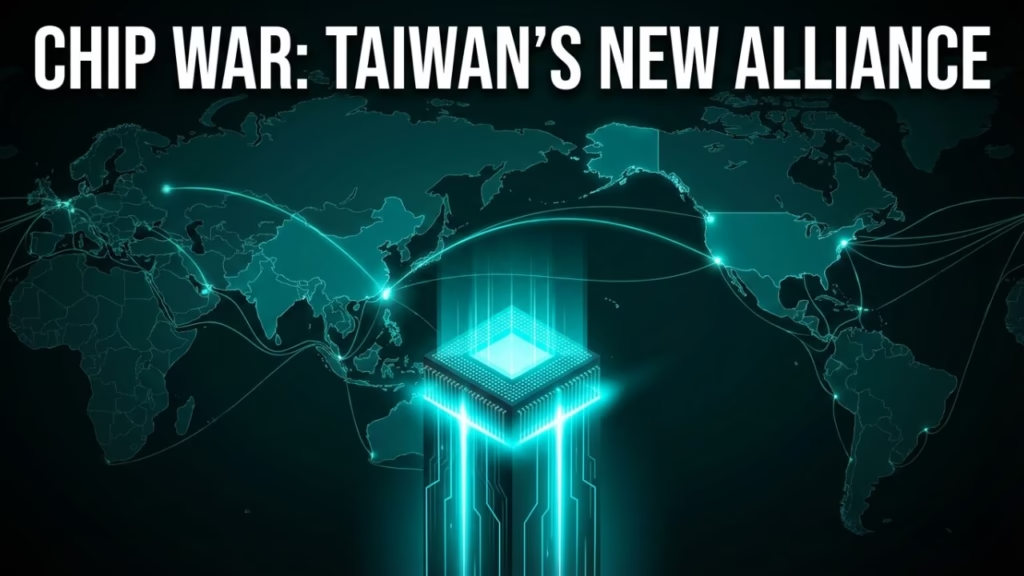
Taiwan aims to become a strategic AI partner to the US under a new tariff deal. Discover how this Taiwan US AI partnership reshapes global tech supply chains.
KEY TAKEAWAYS
- Taiwan seeks formal recognition as a strategic AI partner to the United States under a new tariff agreement
- The Taiwan US AI partnership focuses on semiconductor manufacturing and advanced chip fabrication
- This deal could reshape global AI supply chains amid US-China tech tensions
- Trade incentives are directly tied to technology cooperation in AI-related industries
Taiwan Aims to Become Strategic AI Partner to US Under Tariff Deal
TAIPEI/WASHINGTON — If you’re watching where AI chips come from next year, this story matters to you directly. Taiwan has announced it aims to position itself as a strategic artificial intelligence partner to the United States under a new tariff agreement, according to Reuters.
The Taiwan US AI partnership represents a significant shift in how nations approach technology diplomacy. This isn’t just another trade deal. It’s a calculated move that could determine who controls the world’s most critical AI infrastructure.
The statement underscores Taiwan’s growing role in global AI supply chains. Geopolitical tensions are reshaping technology alliances faster than most realize. For businesses, investors, and tech professionals watching these developments, the Taiwan US AI partnership signals a new era in strategic technology cooperation.
Why now? AI chips and infrastructure have become strategic national security assets in 2026. Trade policy is no longer separate from technological leadership—they’re the same conversation.
Why This Taiwan US AI Partnership Matters to You
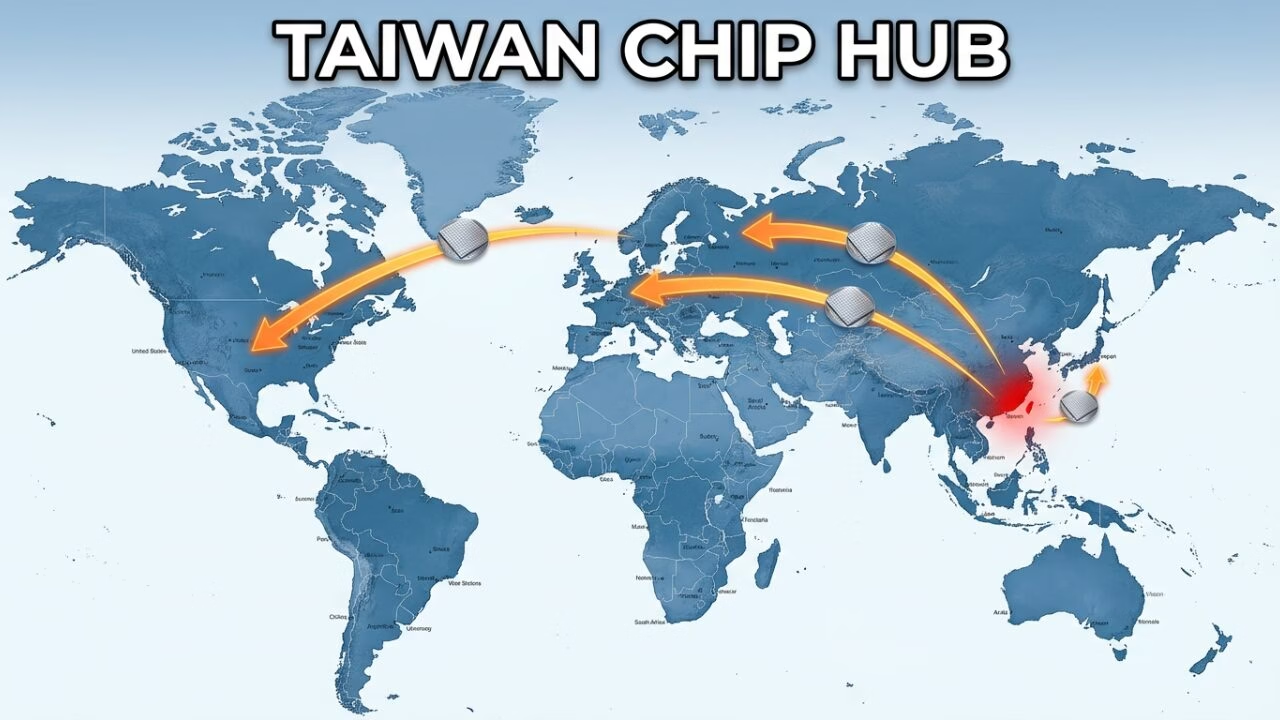
The Taiwan US AI partnership isn’t abstract policy. It affects the AI hardware in your phone, laptop, and every cloud server you use.
Here’s the reality: Taiwan produces over 90% of the world’s most advanced semiconductors. When we discuss the Taiwan US AI partnership, we’re talking about the foundation of modern AI systems.
The partnership targets three critical areas:
- Semiconductor manufacturing excellence — Taiwan’s chip fabrication remains unmatched globally
- Advanced AI chip production — The Taiwan US AI partnership secures access to cutting-edge processors
- Supply chain resilience — Reducing dependency on potentially unstable regions
A closer Taiwan US AI partnership could fundamentally secure supply chains. This reduces reliance on rival regions that have shown willingness to weaponize technology access.
Think about it this way: Every major AI model—from ChatGPT to Gemini—runs on chips that likely passed through Taiwan. The Taiwan US AI partnership ensures this critical pipeline stays open.
What the Tariff Deal Actually Involves
The Taiwan US AI partnership agreement contains specific trade incentives tied directly to technology cooperation. This isn’t vague diplomatic language. These are concrete mechanisms.
Core elements of the Taiwan US AI partnership include:
| Component | Description | Impact |
|---|---|---|
| Trade incentives | Reduced tariffs on AI-related goods | Lower costs for US tech companies |
| Technology sharing | Joint R&D frameworks | Accelerated AI development |
| Security protocols | Shared cybersecurity standards | Protected intellectual property |
| Investment channels | Streamlined cross-border funding | Faster market access |
The Taiwan US AI partnership explicitly emphasizes AI-related industries. Taiwan’s stated goal is to align more closely with US technology and security interests.
What industries does the Taiwan US AI partnership cover?
The agreement focuses on semiconductor manufacturing, AI chip design, advanced packaging technologies, and related supply chain infrastructure. The Taiwan US AI partnership scope extends beyond simple manufacturing to include research collaboration.
How the Taiwan US AI Partnership Affects Global Markets
For investors: The Taiwan US AI partnership signals where smart money should flow. Companies positioned within this partnership framework gain competitive advantages.
For technology professionals: The Taiwan US AI partnership creates new career opportunities in cross-border technology collaboration.
For business leaders: Understanding the Taiwan US AI partnership helps you anticipate supply chain shifts before competitors.
Recent data supports this analysis: According to industry reports, global AI chip demand grew 47% in the past year. The Taiwan US AI partnership positions both nations to capture this growth.
The Taiwan US AI partnership affects:
- AI hardware availability — More predictable access to critical components
- Investment flows — Capital moving toward partnership-aligned companies
- Corporate strategy — US and Asian firms adjusting supply chain strategies
Taiwan’s Perspective: Security and Opportunity Combined
Taiwan sees the Taiwan US AI partnership as both economic opportunity and security necessity. This dual motivation strengthens commitment from Taipei.
Economic benefits of the Taiwan US AI partnership for Taiwan:
Taiwan’s semiconductor industry generates over $100 billion annually. The Taiwan US AI partnership deepens access to the world’s largest technology market. This isn’t desperation—it’s strategic positioning.
Security dimensions of the Taiwan US AI partnership:
Cross-strait tensions make reliable partnerships essential. The Taiwan US AI partnership provides implicit security benefits through economic interdependence. When your chips power another nation’s military AI systems, your security interests align.
Taiwan emphasizes its reliability as a technology partner. The Taiwan US AI partnership builds on decades of collaboration in semiconductor manufacturing. This isn’t a new relationship—it’s a deepened one.
“Taiwan has demonstrated consistent reliability in critical technology supply chains,” industry analysts note. The Taiwan US AI partnership formalizes what has operated informally for years.
What Analysts and Regional Observers Say
Broader regional views on the Taiwan US AI partnership vary:
Supporters argue the Taiwan US AI partnership strengthens global technology resilience. Diversifying away from single-point dependencies reduces systemic risk.
Critics note the Taiwan US AI partnership may increase geopolitical tensions. Strategic technology alliances can function as de facto security arrangements.
China’s likely response to the Taiwan US AI partnership deserves consideration. Beijing has historically viewed closer US-Taiwan technology ties cautiously. The Taiwan US AI partnership explicitly positions technology cooperation as central to the relationship.
The balanced view: The Taiwan US AI partnership reflects inevitable realignment in global technology supply chains. Whether this realignment proves stabilizing or destabilizing depends on implementation.
Implementation Roadmap: What Happens Next
5-Step Implementation Timeline for the Taiwan US AI Partnership:
- Formal Agreement Signing — Official documents establishing the Taiwan US AI partnership framework (Expected Q1 2026)
- Regulatory Alignment — Both nations harmonizing AI-related trade regulations under the Taiwan US AI partnership
- Investment Channel Opening — New pathways for cross-border AI investments within the Taiwan US AI partnership
- Joint R&D Initiatives — Collaborative research programs under Taiwan US AI partnership auspices
- Supply Chain Integration — Full implementation of Taiwan US AI partnership manufacturing protocols
Watch for these signals:
- Formal trade agreement announcements regarding the Taiwan US AI partnership
- US policy responses specifically mentioning the Taiwan US AI partnership
- Corporate investment announcements aligned with Taiwan US AI partnership priorities
Limitations and What Could Go Wrong
Every partnership has vulnerabilities. The Taiwan US AI partnership is no exception.
What the Taiwan US AI partnership might struggle with:
- Geographic concentration risk — The Taiwan US AI partnership doesn’t eliminate physical proximity to potential conflict zones
- Technology transfer concerns — Some Taiwan US AI partnership elements may face national security scrutiny
- Political continuity — The Taiwan US AI partnership depends on sustained political will in both capitals
- Third-party reactions — The Taiwan US AI partnership may provoke countermeasures from excluded parties
The honest assessment: The Taiwan US AI partnership addresses supply chain resilience but cannot eliminate geopolitical risk. Sophisticated observers recognize these limitations.
Field Notes: What Industry Insiders Say
From semiconductor industry veterans:
The Taiwan US AI partnership formalizes relationships that have operated informally for decades. Manufacturing partnerships between Taiwan and US firms already exist. The Taiwan US AI partnership provides government-level backing.
The practical reality: Companies have hedged bets regardless of the Taiwan US AI partnership. Diversification efforts continue independently. The Taiwan US AI partnership accelerates rather than initiates these trends.
What generic analysis misses about the Taiwan US AI partnership:
The Taiwan US AI partnership isn’t just about chips. It’s about the entire ecosystem—design tools, manufacturing equipment, testing protocols, and talent pipelines. The Taiwan US AI partnership scope exceeds what headlines suggest.
Comparison: Taiwan US AI Partnership vs. Alternative Arrangements
| Factor | Taiwan US AI Partnership | US-Only Production | Multiple Partner Strategy |
|---|---|---|---|
| Speed | Fast implementation | 5-10 year buildout | Medium timeline |
| Cost | Lower initial investment | Very high capital cost | Moderate costs |
| Reliability | Proven track record | Unproven at scale | Variable quality |
| Security | Geographic risk remains | Domestic security | Distributed risk |
| Expertise | World-leading capability | Developing capability | Mixed expertise |
The Taiwan US AI partnership offers the fastest path to secure AI chip supply. Alternatives exist but involve significant tradeoffs.
What This Means for Different Audiences
For US tech companies: The Taiwan US AI partnership provides supply chain predictability. Budget accordingly.
For investors: Companies aligned with the Taiwan US AI partnership gain strategic advantages. Evaluate portfolio exposure.
For policy professionals: The Taiwan US AI partnership represents a template for technology diplomacy. Study the mechanisms.
For international observers: The Taiwan US AI partnership signals broader realignment in global technology governance.
Conclusion: AI Supply Chains Are Now Diplomacy
Taiwan’s push to become a strategic AI partner to the US highlights a fundamental shift. Artificial intelligence is now central to trade and diplomacy.
The Taiwan US AI partnership demonstrates that supply chains have become as politically important as they are economically valuable. Global alliances are shifting around technology control.
The bottom line: The Taiwan US AI partnership isn’t just about chips and tariffs. It’s about who shapes the AI-powered future.
Your challenge: Review your company’s or investment portfolio’s exposure to the Taiwan US AI partnership dynamics. Identify where strategic alignment with the Taiwan US AI partnership framework benefits your position.
Question for discussion: How should smaller nations position themselves as the Taiwan US AI partnership reshapes global technology alliances?

Animesh Sourav Kullu is an international tech correspondent and AI market analyst known for transforming complex, fast-moving AI developments into clear, deeply researched, high-trust journalism. With a unique ability to merge technical insight, business strategy, and global market impact, he covers the stories shaping the future of AI in the United States, India, and beyond. His reporting blends narrative depth, expert analysis, and original data to help readers understand not just what is happening in AI — but why it matters and where the world is heading next.