
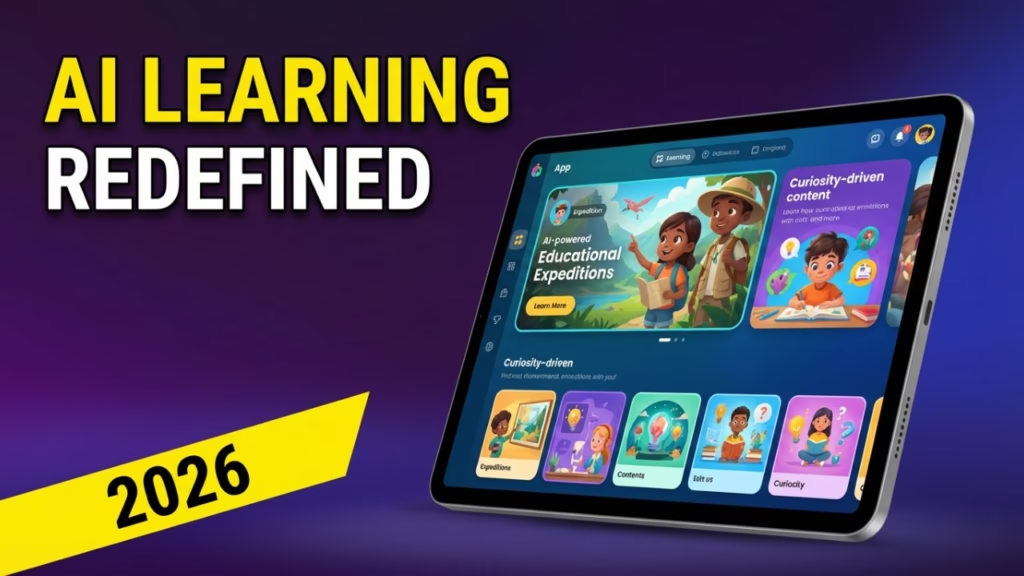
Sparkli’s AI-powered learning platform turns children’s curiosity into interactive expeditions. Learn how this EdTech startup is reshaping education in 2026.
KEY TAKEAWAYS
- Sparkli raised $5M to build AI-powered interactive learning experiences for children aged 5-12
- The AI-powered app generates complete multimedia expeditions in under 2 minutes
- Currently piloting with 100+ schools and 100,000+ students worldwide
- Safety-first approach addresses growing concerns about AI-powered tools for children
Your child asks why money exists. Instead of a wall of text, an AI-powered adventure unfolds—complete with animated characters, interactive quizzes, and a virtual marketplace simulation. That’s the promise behind Sparkli, a Zurich-based startup that just secured $5 million to transform how children learn through AI-powered educational experiences.
Three former Google engineers founded this AI-powered learning platform after a frustrating realization: existing chatbots couldn’t engage their own curious kids. Now they’re betting that AI-powered multimedia expeditions—not text-heavy responses—hold the key to unlocking children’s natural curiosity.
The Problem: Why AI-Powered Chatbots Fail Children
Here’s what sparked this venture. Co-founder Lax Poojary watched his six-year-old lose interest in ChatGPT within seconds. The AI-powered text responses couldn’t compete with YouTube’s visual appeal.
“We realized tools designed for adults simply don’t work for children,” Poojary explains. “Kids need AI-powered experiences that match their attention spans and learning styles.”
Traditional assistants deliver information. Sparkli’s AI-powered approach delivers experiences. The difference matters more than you might think.

How AI-Powered Expeditions Actually Work
The AI-powered engine behind Sparkli doesn’t just generate text. It creates complete multimedia packages in under two minutes. Here’s what happens when a child asks a question:
Step 1: The AI-powered system analyzes the question and maps it to age-appropriate learning objectives.
Step 2: AI-powered content generation creates custom audio narration, images, and video elements.
Step 3: The AI-powered platform assembles interactive quizzes and choose-your-own-adventure decision points.
Step 4: AI-powered personalization adjusts difficulty based on the child’s knowledge graph.
Step 5: The complete AI-powered expedition launches with gamified rewards and progress tracking.
What makes this AI-powered approach different? No right or wrong answers create pressure. The design encourages exploration over memorization.
AI-Powered Learning Tools: How They Compare
Platform | AI-Powered Features | Cost | Best For |
Sparkli | Multimodal AI-powered expeditions with video, audio, quizzes | TBD (Mid-2026) | Curious kids 5-12 |
Khanmigo | AI-powered tutoring with Socratic method | $44/year | Homework help |
Duolingo | AI-powered language lessons with gamification | Free / $12.99/mo | Language learning |
The Safety Question: What AI-Powered Tools Get Wrong
Let’s address the elephant in the room. AI-powered chatbots have sparked lawsuits. Parents allege some tools encouraged harmful behaviors in children. California’s new SB 243 law now requires specific safeguards for AI-powered products targeting minors.
Sparkli’s AI-powered safety approach includes:
- Sexual content completely banned from responses
- Self-harm queries redirected to AI-powered emotional intelligence lessons
- AI-powered prompts encouraging parent conversations
- Human review at every stage of AI-powered content generation
- COPPA and GDPR compliance for all data handling
“Every feature goes through multiple safety checks,” says Poojary. “We’re building AI-powered experiences parents can trust.”
What AI-Powered Learning Gets Wrong: Honest Limitations
No system is perfect. Here’s what current AI-powered educational tools struggle with:
Depth vs. Breadth: AI-powered content generation excels at broad overviews but may oversimplify complex topics. Human teachers still provide irreplaceable nuanced instruction.
Social Learning Gaps: AI-powered individual experiences can’t replicate peer collaboration. Sparkli acknowledges their tools supplement—not replace—classroom interaction.
Screen Time Concerns: Any AI-powered digital tool adds screen time. Parents must balance learning benefits against overall device usage.
Long-term Impact Unknown: AI-powered education is new territory. Longitudinal studies on learning outcomes don’t exist yet.
The $17 Billion AI-Powered EdTech Opportunity
The numbers tell a compelling story. The child-focused game-based learning market—where tools like Sparkli compete—is projected to reach $17.079 billion by 2026.
Founderful, the Swiss venture capital firm leading Sparkli’s $5M round, made this their first pure-play AI-powered edtech investment. “The team’s technical expertise combined with clear differentiation made this compelling,” says Lukas Weder, Founderful partner.
The education space is crowded. But Sparkli’s multimodal AI-powered approach—generating video, audio, and interactive elements rather than just text—creates genuine differentiation in a market where most competitors rely on chatbot interfaces.
Field Notes: AI-Powered Results From 100,000+ Students
Sparkli’s AI-powered platform is currently piloting with a network of 100+ international schools. Teachers report using expeditions for class introductions, discussion prompts, and homework assignments.
Here’s what the pilot reveals:
- Teachers assign expeditions as pre-class preparation
- Skill radars help identify students needing extra support
- Parents receive weekly insights on learning progress
- The interest graph tracks what topics engage each child
Consumer launch is planned for mid-2026. Current focus remains on perfecting the school experience first.
Master Prompts: How to Evaluate Any AI-Powered Learning Tool
Use these frameworks when assessing educational products for your children:
Prompt 1 – Safety Assessment:
“What specific safety measures does this AI-powered tool implement for children under 13? How does it handle sensitive queries? Is it COPPA compliant? What human oversight exists?”
Prompt 2 – Pedagogical Value:
“Beyond engagement, what learning outcomes does this AI-powered platform target? How does the system adapt to different knowledge levels? What evidence supports its methodology?”
Prompt 3 – Integration Potential:
“How does this AI-powered tool connect with existing curriculum? Can teachers track learning progress? Does the experience complement or compete with classroom instruction?”
Frequently Asked Questions About AI-Powered Learning
Is AI-powered education safe for young children?
Safety depends entirely on implementation. Tools designed specifically for children—with content filtering, human oversight, and regulatory compliance—offer safer experiences than general-purpose chatbots. Always verify COPPA compliance before allowing children to use any AI-powered platform.
Can these apps replace teachers?
No responsible education company claims this. Tools like Sparkli position themselves as supplements. They handle curiosity-driven exploration while teachers focus on structured curriculum and social development.
What age is appropriate for AI-powered learning tools?
Sparkli targets children aged 5-12 with content calibrated for developmental stages. Most experts recommend supervised usage for children under 10.
The Bottom Line: Is AI-Powered Learning Worth Your Attention?
The AI-powered education revolution isn’t coming—it’s here. Sparkli represents one approach to a fundamental challenge: making tools genuinely useful for children rather than miniaturized adult products.
Whether this particular venture succeeds matters less than the trend it represents. AI-powered learning tools will increasingly shape how children explore, question, and understand their world. Your role as parent or educator? Become a discerning evaluator of these options.
Your Challenge: Before your child uses any learning tool, run it through the three master prompts above. Share your findings in the comments. What features matter most to you?

Animesh Sourav Kullu is an international tech correspondent and AI market analyst known for transforming complex, fast-moving AI developments into clear, deeply researched, high-trust journalism. With a unique ability to merge technical insight, business strategy, and global market impact, he covers the stories shaping the future of AI in the United States, India, and beyond. His reporting blends narrative depth, expert analysis, and original data to help readers understand not just what is happening in AI — but why it matters and where the world is heading next.