
By Animesh Sourav Kullu | 16 February | DailyAIWire.com
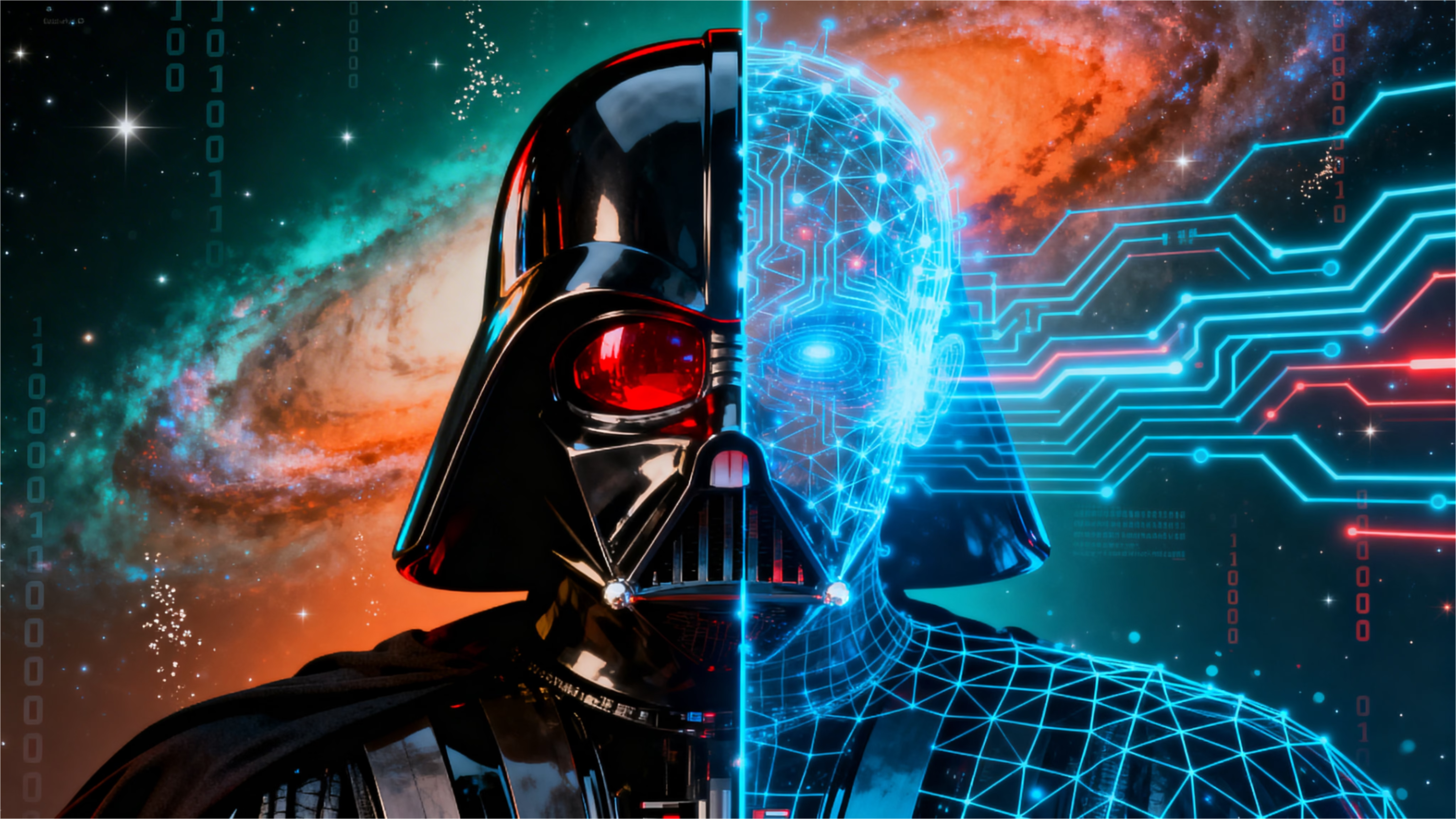
Disney just dropped $1 billion to put Darth Vader, R2-D2, and over 200 Star Wars characters into OpenAI’s Sora video generator – and fans will create their own Star Wars AI videos starting early 2026.
This is the single biggest collision between a legacy entertainment empire and generative artificial intelligence ever seen.
It will change how you experience the galaxy far, far away.
The deal, announced in December 2025, doesn’t just affect Star Wars. It signals a tectonic shift across all of Hollywood.
But before you fire up Sora and start directing your own lightsaber battles, there’s a complex story behind this Star Wars AI revolution, one that involves copyright lawsuits, controversial demos, fan outrage, and a 50-year legacy of visual effects innovation now facing its biggest test.
What the Disney | OpenAI Star Wars AI Deal Actually Include
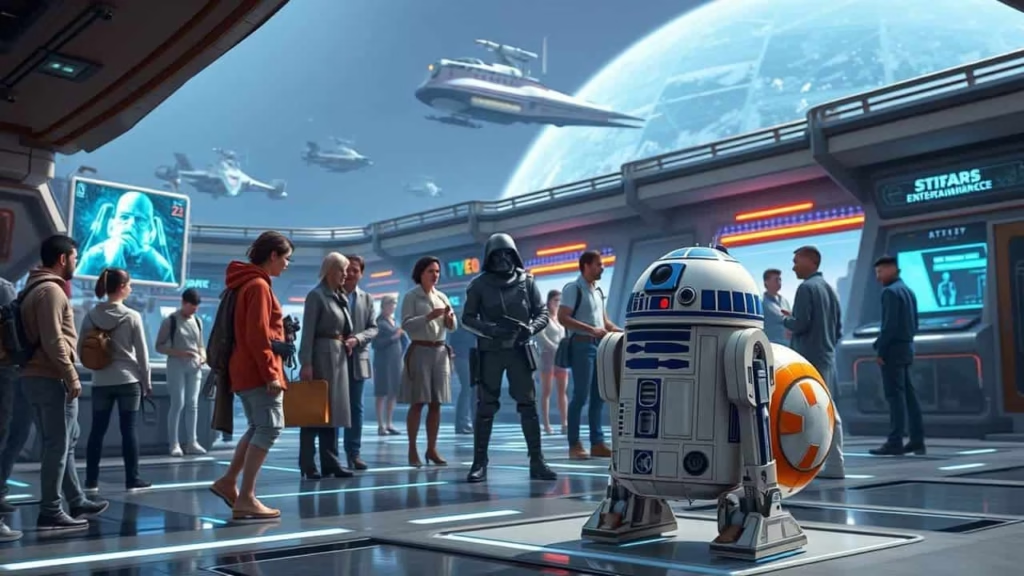
Here’s what’s happening. Under a three-year licensing agreement, OpenAI’s Sora platform will let users generate short-form social videos using more than 200 characters from Disney, Marvel, Pixar, and Star Wars.
Think costumes, props, vehicles, and iconic environments, all powered by Star Wars AI technology.
ChatGPT Images also gets access to the same character library. Type a prompt, and you’ll see Darth Vader or a Stormtrooper rendered in seconds.
The best fan-created Star Wars AI videos will even stream on Disney+, creating an entirely new category of user-generated content on a major platform.
But there are guardrails. The agreement explicitly excludes talent likenesses and voices. You won’t see an AI-generated Mark Hamill or Harrison Ford.
Disney and OpenAI have committed to robust controls to prevent harmful or illegal content featuring kid-friendly characters.
Related: 20 Best AI Models in 2026: Ultimate Guide You Can’t Miss
Disney CEO Bob Iger framed it as inevitable progress.
The company would rather shape how Star Wars AI content evolves than watch from the sidelines while others profit from unlicensed versions.
According to The Walt Disney Company’s official announcement, the goal is to extend storytelling through generative AI while protecting creators and their works.
Why Disney Chose to Embrace Star Wars AI Instead of Fighting It
The timing tells the real story. Just months before signing with OpenAI, Disney and Universal Studios filed a major copyright infringement lawsuit against Midjourney.
The lawsuit alleged that Midjourney’s AI tools were generating unauthorized images of Star Wars characters including Darth Vader, R2-D2, C-3PO, and Luke Skywalker.
Disney also sent a cease and desist letter to Google on the same day it announced the OpenAI deal.
The company accused Google of using Disney characters in its Gemini AI service without permission.
So why partner with OpenAI while suing Midjourney? The answer reveals Disney’s strategic thinking about Star Wars AI.
If generative AI tools are already producing content featuring your characters, and people use them whether you approve or not, it’s smarter to monetize the demand through an official deal than fight an unwinnable game of copyright whack-a-mole.
The $1 billion equity investment in OpenAI sweetens the math. Disney receives warrants to purchase additional stock, meaning it profits as OpenAI’s value grows.
Star Wars AI isn’t just a creative experiment for Disney. It’s a financial strategy.
Related: Overview Of The Clearview AI Legal Case: Complete Guide
ILM’s Star Wars AI Experiment That Backfired Spectacularly
While the Disney-OpenAI deal made headlines for its scale, a quieter Star Wars AI moment in mid-2025 revealed just how far the technology still needs to go.
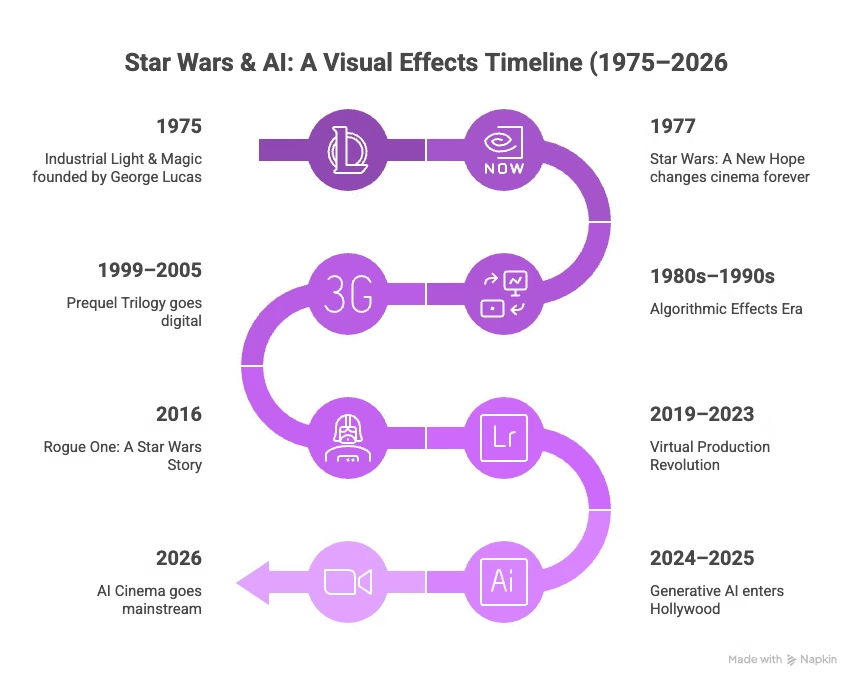
Industrial Light & Magic, the legendary VFX studio George Lucas founded in 1975 to bring the original Star Wars to life, debuted an AI-generated short film called Star Wars: Field Guide during a TED talk by ILM’s Chief Creative Officer Rob Bredow.
The two-minute demo was created by a single artist in two weeks using generative AI tools.
The idea was exciting: simulate what a probe droid would capture on a never-before-seen Star Wars planet. The execution was… not.
Critics and fans savaged the results.
The Star Wars AI creatures on display were essentially mashups of Earth animals, a blue tiger with a lion’s mane, a manatee with squid tentacles, a peacock merged with a snail.
Nothing looked like it belonged in the Star Wars universe.
According to coverage by Fast Company, Bredow positioned the demo as a “mood board, but a moving one” rather than a finished product.
He argued that generative AI needs better artist-focused tools and that text prompts alone are not a great way to make movies.
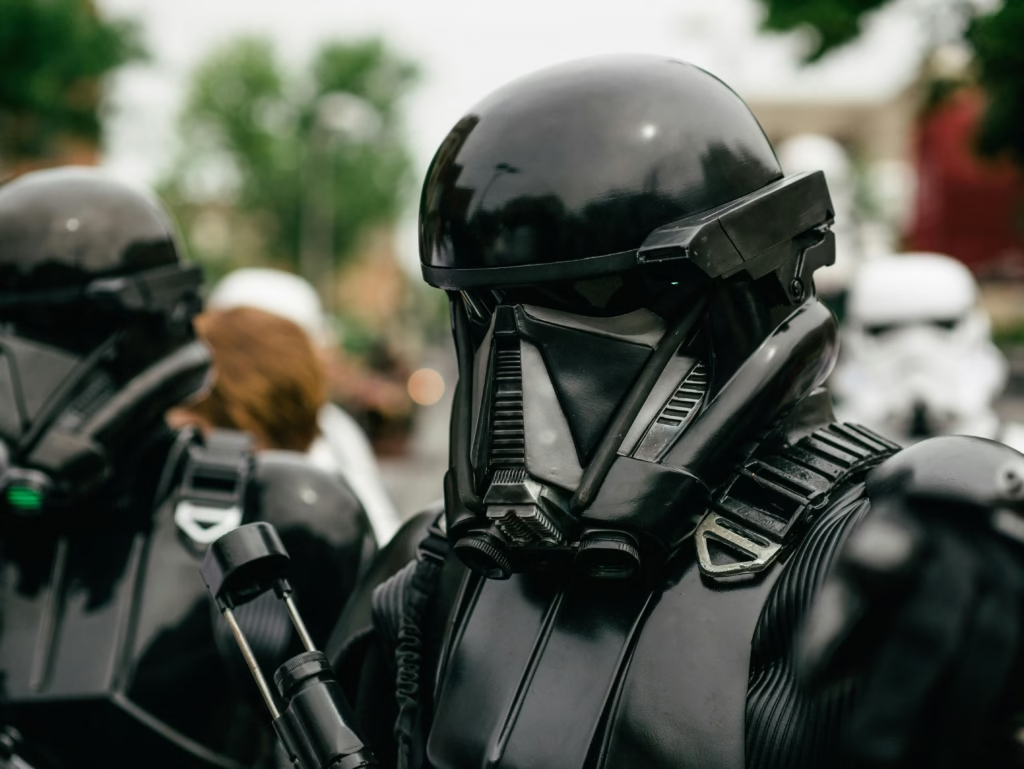
The 50-Year Legacy That Makes Star Wars AI So Controversial
Why did the Field Guide demo hit such a nerve? Because ILM’s history sets an impossibly high bar.
This is the studio that invented the computer-controlled motion camera (Dykstraflex) for the original 1977 Star Wars. They created groundbreaking computer-generated characters for Jurassic Park in 1993.
They pioneered virtual production with StageCraft LED walls for The Mandalorian.
Every major leap in movie visual effects over five decades traces back to ILM.
When ILM presents a Star Wars AI demo that looks like a random animal generator, fans feel the disconnect viscerally.
The same studio that gave us Tauntauns, Ewoks, and Jabba the Hutt showed them AI-produced blue elk with brown ears.
Bredow drew a parallel to the Jurassic Park moment, when stop-motion pioneer Phil Tippett saw early CGI and felt like he was going extinct.
The fear proved unfounded, Tippett’s skills merged with new technology to create something greater than either could achieve alone.
Bredow’s argument: Star Wars AI tools will follow the same trajectory. Artists aren’t going anywhere. The old and new technologies blend together.
Related: Breaking: China Meta AI Acquisition Review Sparks 7 Critical Concerns
Not everyone’s convinced. Over 50% of game developers now believe generative AI is bad for the industry, according to recent surveys, a dramatic increase from just two years ago.
The Star Wars AI debate sits at the center of this larger creative industry reckoning.
How Star Wars AI Already Changed Luke Skywalker Forever
Star Wars AI isn’t all controversy and corporate deals. It’s already produced moments that genuinely stunned audiences.
When The Mandalorian Season 2 finale revealed a young Luke Skywalker, fans held their breath. The character wasn’t recast or simply shown in flashback.
ILM used a combination of deepfake technology, CGI, and AI voice cloning to recreate a 1983-era Mark Hamill.
The voice came from Respeecher, an AI tool trained on vintage Hamill recordings — radio interviews, audiobook narration, ADR sessions, and old Star Wars radio plays.
The neural network generated new dialogue that was virtually indistinguishable from young Hamill. The face was built through layered VFX.
The body was performed by actor Max Lloyd-Jones.
This Star Wars AI application worked because it combined human artistry with AI capabilities rather than relying on AI alone. ILM artists hand-refined every frame. Hamill himself provided his blessing and performance reference.
The late James Earl Jones similarly approved AI use of his voice for future Darth Vader performances before his passing.
Lucasfilm has already used this Star Wars AI voice technology for Vader’s appearance in Fortnite.
The lesson: Star Wars AI works best as a collaborative tool, not a replacement.
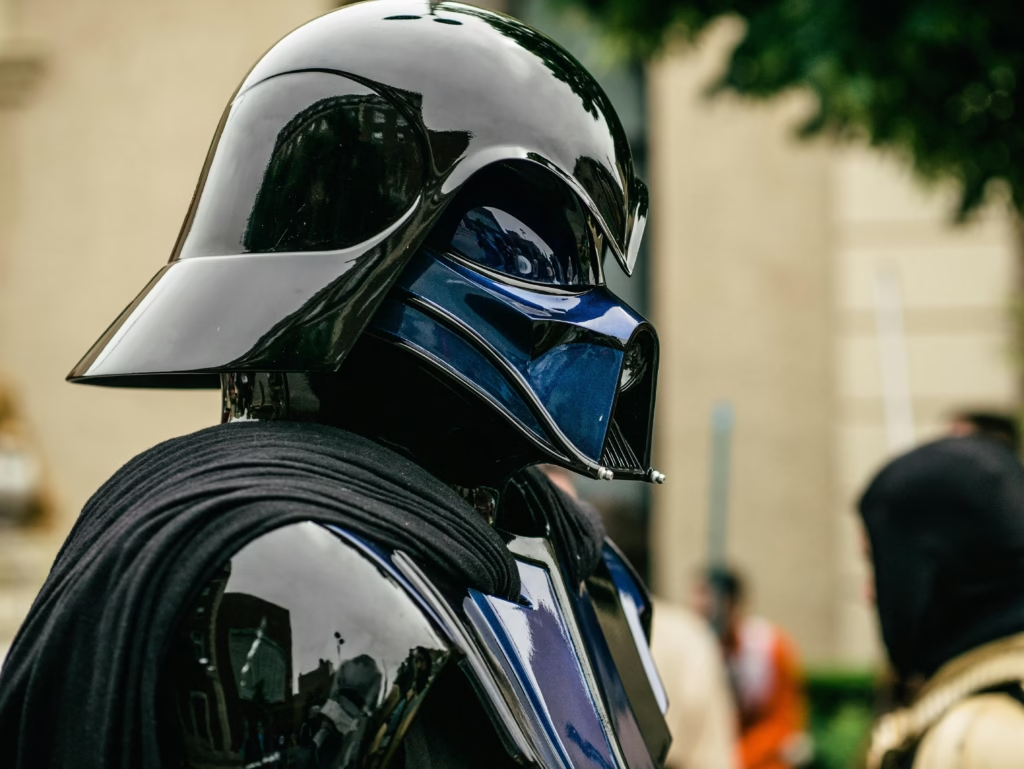
What Fans Can Actually Do With Star Wars AI in 2026
So what does the Disney-OpenAI partnership mean for you in practical terms?
Starting early 2026, Sora users will type prompts and generate short-form videos featuring Star Wars characters.
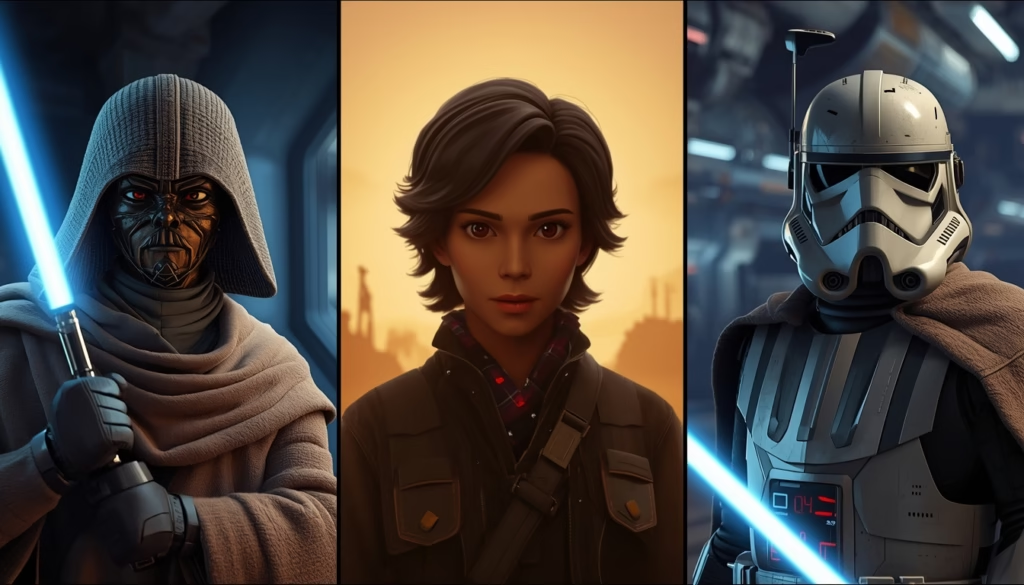
Disney’s preview examples showed fans wielding lightsabers in Star Wars attire, standing alongside iconic characters, and interacting with famous environments, all generated by Star Wars AI.
The best fan-made clips get curated for streaming on Disney+. It’s a new form of interactive fan fiction, as OpenAI CEO Sam Altman described it.
Beyond Sora, Disney is deploying OpenAI’s tools across its entire business. Disney+ subscribers may see new AI-powered experiences.
Employees will have access to ChatGPT internally. The APIs will power new products still in development.
Related: Higgsfield AI Video Generator: The $75 Tool Replacing $5,000 Video Productions
For the broader Star Wars AI ecosystem, implications extend beyond video creation.
Large language models trained on Star Wars lore could help writers maintain canon consistency across the franchise’s sprawling timeline.
AI tools could help concept artists brainstorm creature designs faster. Real-time AI rendering could transform virtual production for future series.
Disney’s BDX droids, real-world robots developed with NVIDIA AI and Google DeepMind — are already walking around Disneyland’s Galaxy’s Edge.
Jon Favreau confirmed these Star Wars AI-powered robots will appear in the 2026 film The Mandalorian and Grogu.
The Copyright War Behind Star Wars AI
The Star Wars AI story can’t be told without addressing the copyright battles raging around it.
Disney’s lawsuit against Midjourney, filed in June 2025, used Star Wars characters as key evidence of copyright infringement.
A separate lawsuit targeted Shanghai-based MiniMax for using Darth Vader imagery to market its Hailuo AI generative tool.
Both cases allege that AI companies trained models on copyrighted Star Wars material without permission.
Publishers are responding too. Penguin Random House, which publishes Star Wars novels, now includes anti-AI training notices on the copyright pages of all new books.
Andor creator Tony Gilroy revealed he decided against publishing scripts online to prevent AI companies from using them as training data.
The Disney-OpenAI deal draws a clear line: authorized Star Wars AI use happens through licensed partnerships. Everything else faces legal action.
Whether this model sustains long-term remains an open question.
As TechCrunch reported, Disney’s exclusivity with OpenAI lasts only one year, after that, the company can pursue additional AI licensing deals.
Related: Canva AI Magic Studio: 9 Powerful Tools That Cut Design Time by 80%
What This Means for the Future of Hollywood and Star Wars AI
The Disney-OpenAI partnership signals a new era. Studios won’t just make content for passive consumption anymore.
They’ll create character libraries that AI platforms use to power user-generated content. Star Wars AI is the test case for this entire model.
If it works, if fans create compelling Star Wars AI content, Disney+ gets fresh user engagement, and nobody’s likeness gets exploited, expect every major studio to follow.
Warner Bros. Discovery, Universal, and others are all watching.
But risks remain. The nonprofit advocacy group Fairplay criticized the deal for attracting children to AI platforms using beloved characters.
Creative professionals worry that Star Wars AI tools will eventually replace jobs rather than augment them.
And the quality question lingers, until AI can generate creatures as iconic as Yoda, the technology will face skepticism.
Rob Bredow’s words from that TED stage feel more relevant than ever: innovation thrives when old and new technologies blend together.
Star Wars AI is testing whether that principle survives its biggest challenge, the collision between algorithmic generation and five decades of handcrafted artistic legacy.
The Force is strong with AI. Whether that’s a good thing depends on who’s directing it.
FAQ: Star Wars AI – Your Questions Answered
Q: When can I create Star Wars AI videos on Sora? Disney and OpenAI expect the licensed Star Wars character features to launch on Sora and ChatGPT Images in early 2026.
Q: Which Star Wars characters are available for AI generation? Over 200 animated, masked, and creature characters from Star Wars (plus Disney, Marvel, and Pixar) are included, covering costumes, props, vehicles, and environments. Human talent likenesses and voices are excluded from the Star Wars AI deal.
Q: How much did Disney invest in OpenAI for this Star Wars AI deal? Disney invested $1 billion in OpenAI as part of the three-year licensing agreement, with additional warrants to purchase more equity.
Q: Will Star Wars AI replace actors and VFX artists? The current deal excludes actor likenesses and voices. ILM maintains that Star Wars AI tools will augment human artists rather than replace them, though industry concerns about job displacement persist.
Q: Can I stream my Star Wars AI creations on Disney+? Yes. Disney will curate a selection of the best fan-inspired Star Wars AI videos from Sora and make them available for streaming on Disney+.
EXTERNAL HIGH-AUTHORITY LINKS
INTERNAL LINKS (DailyAIWire.com)
| Anchor Context | URL |
|---|---|
| Best AI Models 2026 | https://dailyaiwire.com/best-ai-models-guide/ |
| Clearview AI Legal Case | https://dailyaiwire.com/overview-of-the-clearview-ai-legal-case/ |
| China Meta AI Acquisition | https://dailyaiwire.com/china-meta-ai-acquisition-review-regulatory-impact/ |
| Home | https://dailyaiwire.com/ |
| Contact | https://dailyaiwire.com/contact-us/ |