

Last Updated: May 2026 | Reading Time: 7 min
The US-Israel military operations against Iran did not just rely on superior firepower. They relied on superior speed — specifically, the speed at which AI systems could process battlefield data, identify targets, and recommend strikes faster than any human command structure.
This is machine-speed warfare. And it may have permanently changed how nations fight.
Can Humans Still Keep Up With Modern Warfare?
Machine-speed warfare refers to military operations where AI compresses decision-making from hours or days into seconds. Instead of analysts reviewing satellite photos overnight, AI systems now process thousands of images in real time, flag threats, and generate targeting recommendations before a human commander finishes reading a briefing.
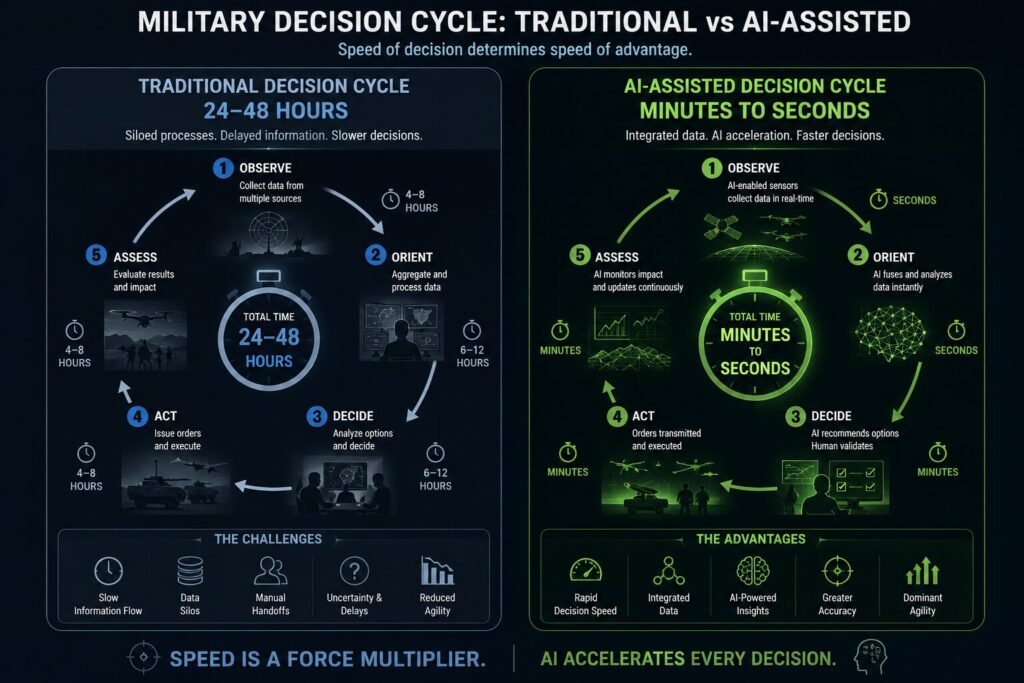
The key shift: AI moved from a back-office support tool to frontline operational infrastructure.
How Maven Changed the Way Modern Wars Are Fought
The Maven Smart System — originally developed under the US Department of Defense’s Project Maven — became the backbone of intelligence processing during operations against Iranian military assets.
What Maven does:
- Processes satellite imagery, drone video feeds, and signals intelligence simultaneously
- Identifies patterns humans would miss across thousands of data points
- Generates target recommendations with confidence scores
- Updates targeting data in near real-time as conditions change
This system allowed coalition forces to strike time-sensitive targets (mobile missile launchers, command vehicles, drone storage facilities) within minutes of detection rather than hours.
Which AI Is the Most Capable?
| Capability | Traditional Military Systems | AI-Powered Systems (Maven Era) |
|---|---|---|
| Image analysis speed | Hours per batch | Seconds per image |
| Target identification | Manual analyst review | Automated detection + human approval |
| Decision cycle | 24-72 hours | Minutes |
| Data sources processed | 2-3 simultaneously | Dozens simultaneously |
| Pattern recognition | Limited by human fatigue | Continuous, scalable |
| Predictive analysis | Based on historical models | Real-time adaptive learning |
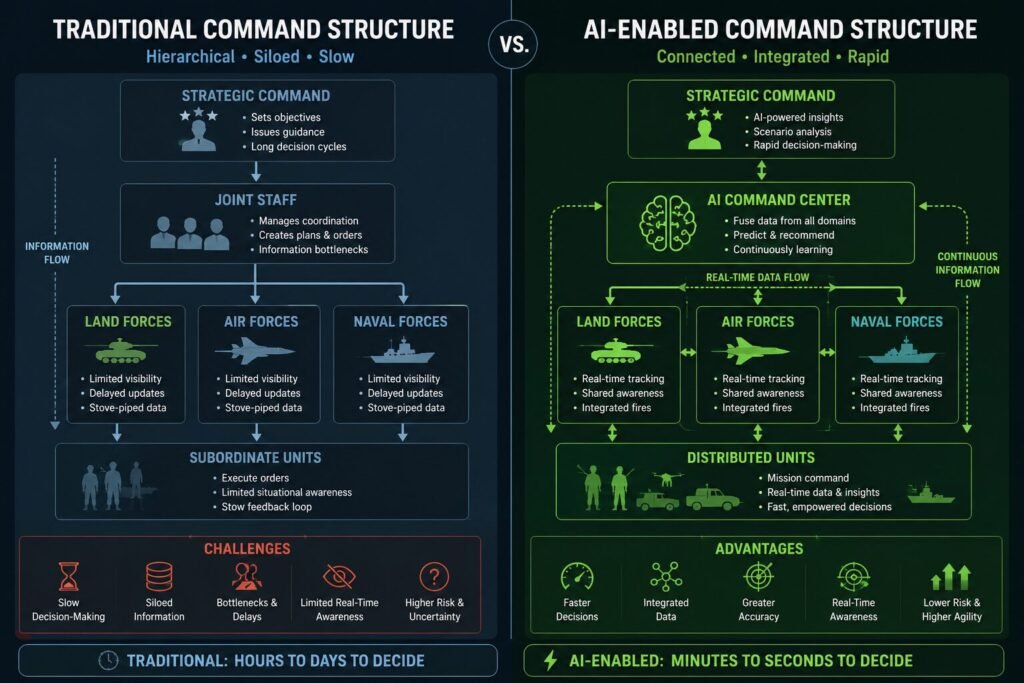
Can Humans Still Compete With AI Warfare?
Iran’s counter-strategy focused on overwhelming AI systems rather than outthinking them:
- Missile saturation attacks — launching enough projectiles to overload defense tracking systems
- Electronic warfare — attempting to jam satellite communications and drone links
- Infrastructure targeting — striking radar installations and communication nodes that feed AI systems
- Decoy operations — deploying fake targets to waste AI processing resources
The results were mixed. AI-enabled defense systems like Iron Dome and its newer variants adapted faster than Iran could saturate them, but targeted attacks on communication infrastructure exposed vulnerabilities in AI-dependent operations.
How Modern Militaries Watch the Battlefield From Above
AI did not just process intelligence — it actively directed drone operations. Autonomous reconnaissance drones mapped Iranian military positions continuously, feeding data back to AI systems that updated targeting packages in real time.
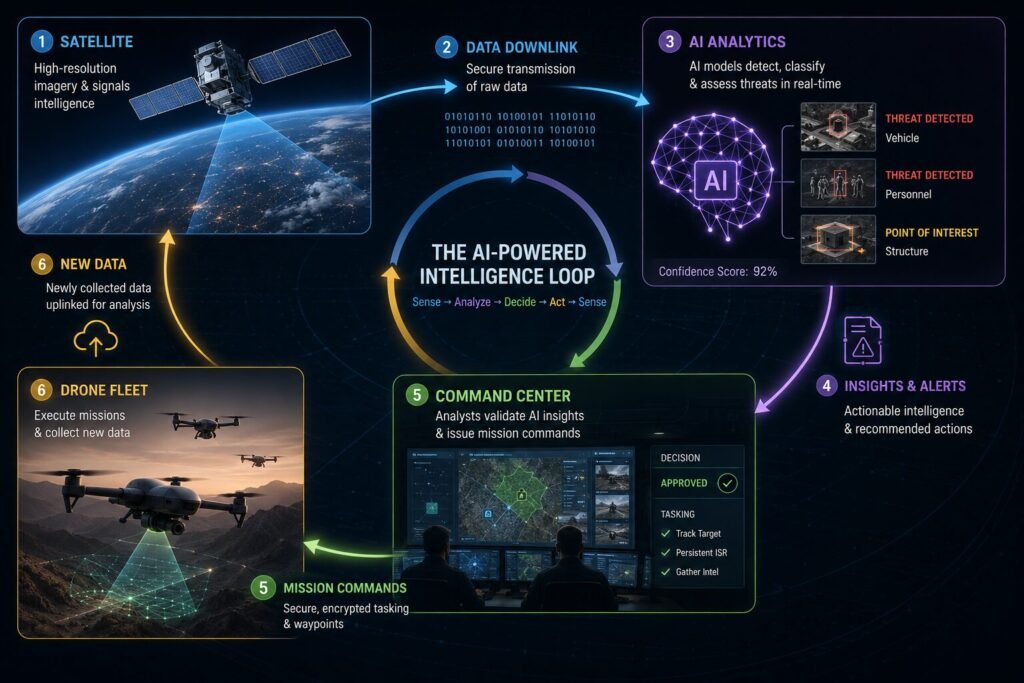
Key developments:
- Drones operated in coordinated swarms guided by AI pathfinding algorithms
- Satellite revisit rates increased through AI-optimized scheduling
- Damage assessment became nearly instant through automated before/after image comparison
Should Machines Decide Life and Death in War?
| Risk Category | Concern | Current Safeguard |
|---|---|---|
| Targeting errors | AI misidentifies civilian infrastructure | Human-in-the-loop approval required |
| Escalation speed | AI recommends strikes faster than diplomacy can respond | Command authority thresholds |
| Accountability | Who is responsible when AI-recommended strikes cause civilian harm? | Unclear — under debate |
| Autonomy creep | Gradual removal of human oversight under time pressure | Policy limits (often bypassed in practice) |
The biggest unresolved question: when AI compresses decision-making to seconds, does meaningful human oversight become physically impossible?
Will Humans Still Control Future Wars?
The US-Israel-Iran conflict demonstrated that AI advantage translates directly to battlefield advantage. Nations without comparable AI infrastructure face asymmetric disadvantage regardless of troop numbers or conventional weapons.
This is accelerating the global military AI race. China, Russia, India, and several smaller nations are investing heavily in autonomous weapons, AI targeting, and machine-speed command systems.
Suggested Video
Watch: Search YouTube for “Project Maven AI military targeting explained” or “machine speed warfare documentary 2025” for detailed visual breakdowns of these systems in action.
FAQs
What is machine-speed warfare?
Machine-speed warfare is military conflict where AI systems compress decision-making from hours to seconds, enabling faster targeting, response, and battlefield coordination than human-only command structures.
How is AI used in modern military conflicts?
AI processes satellite imagery, drone feeds, and signals intelligence in real time. It identifies targets, predicts enemy movements, coordinates defensive systems, and generates strike recommendations for human commanders.
What is the Maven Smart System?
The Maven Smart System is a US Department of Defense AI platform that processes multiple intelligence streams simultaneously to identify threats and generate targeting recommendations at machine speed.
Disclaimer
This article is written for informational and educational purposes only. The content is based on publicly available reporting from credible defense and technology publications. The author does not have direct access to classified military systems or operations. Readers should consult official government sources, peer-reviewed defense research, and credible investigative journalism for verified operational details. This content does not constitute military analysis or strategic advice. All claims reflect publicly reported information as of May 2026.
About the Author: This article was researched using publicly available defense technology reporting, academic papers on autonomous weapons systems, and credible investigative journalism from established outlets covering military AI developments.