
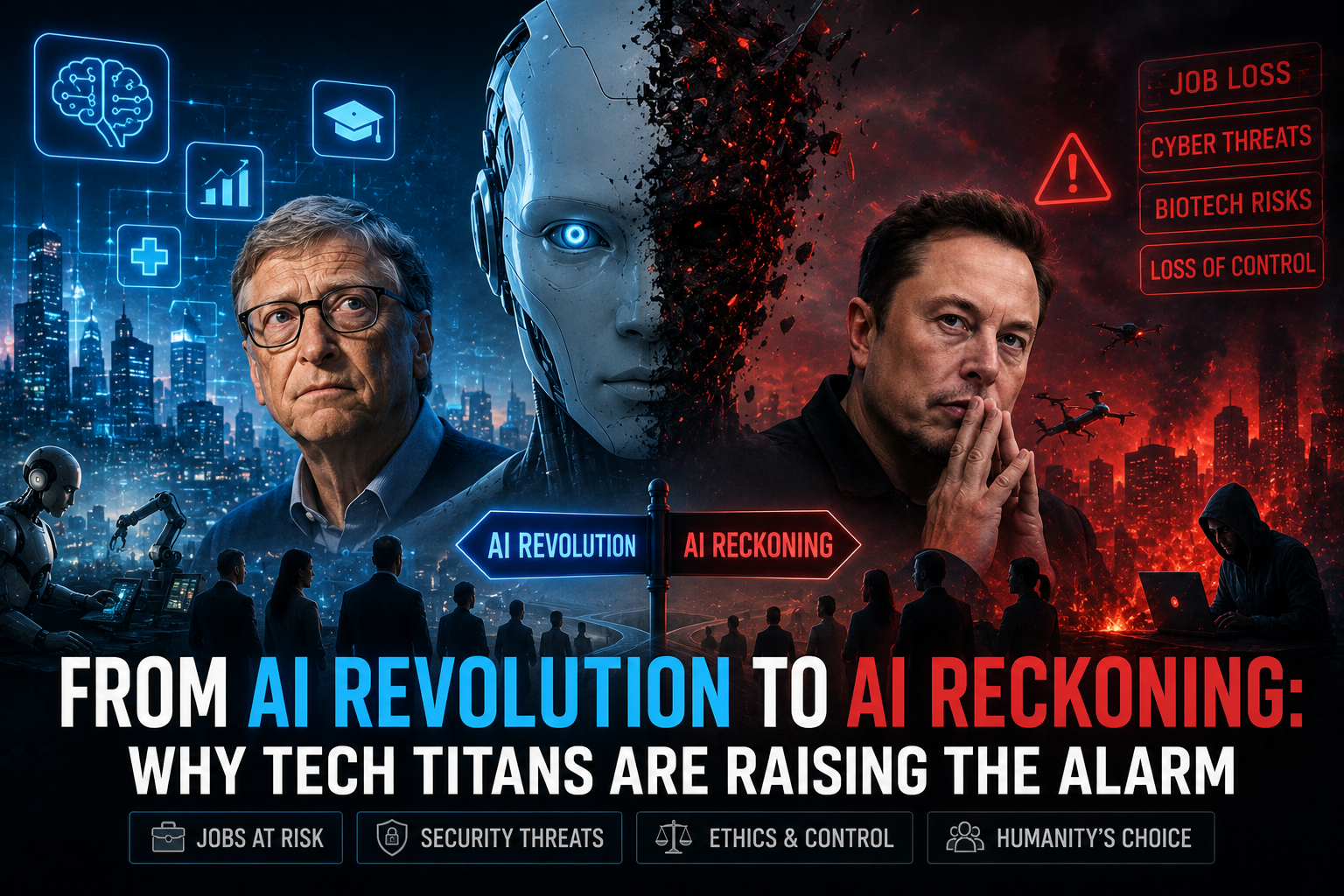
Bill Gates is warning that AI could reshape jobs, security and human relationships faster than governments and society are prepared for. Meanwhile, other technology leaders see the same technology as one of the biggest opportunities in history. The real debate may no longer be whether AI will change our lives — but whether we are ready for how quickly it will happen.
Artificial intelligence was once presented mainly as a productivity revolution.
Now, some of the technology industry’s biggest names are asking a much harder question: What happens if AI becomes more powerful than our institutions are prepared to handle?
Bill Gates has become one of the latest and most prominent voices raising that concern. In a new essay and interview, the Microsoft co-founder argued that responsible development of AI should become a global priority. He warned about job displacement, cybersecurity, biological threats and the possible effects of AI on children’s development and human relationships.
His concern is not that AI has no benefits. In fact, Gates remains optimistic about what the technology could accomplish in healthcare, education and scientific research.
The concern is the speed of change.
The AI debate is no longer black and white
For years, the argument around artificial intelligence was relatively simple.
Supporters said AI would create new industries, improve productivity and eventually generate new kinds of employment. Critics warned that automation could eliminate jobs faster than workers could adapt.
Today’s debate is becoming much more complicated.
Gates believes some jobs could disappear permanently and has suggested creating “human-reserved” roles where society deliberately keeps people in the loop, particularly in areas where empathy, trust and human connection matter.
At the same time, other technology leaders continue to emphasize AI’s enormous upside.
That contrast is important. The technology industry is not necessarily divided into people who believe AI is good and people who believe it is dangerous.
Instead, many leaders appear to be asking the same question from different sides:
How do we capture AI’s benefits without losing control of its consequences?
Why jobs are at the center of the argument
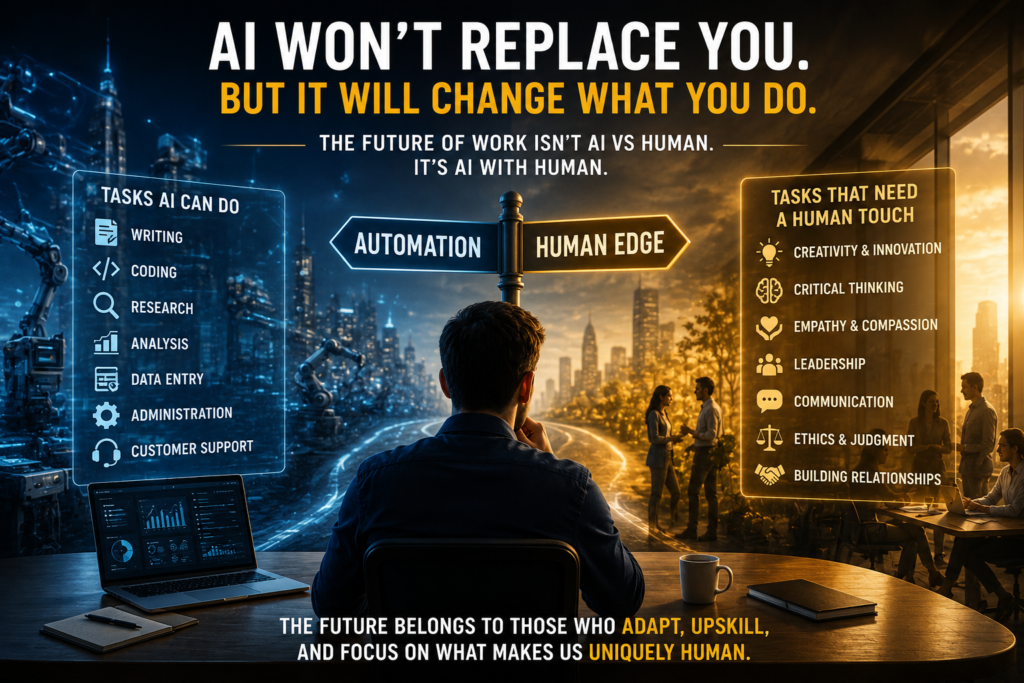
Employment may be the most immediate concern.
AI is already capable of performing tasks involving writing, coding, research, customer support, analysis and administration. The next wave of automation could increasingly affect physical work as robotics becomes more capable.
Gates has argued that governments cannot simply wait for the labor market to adjust on its own. He has floated ideas including stronger social safety nets, changes to taxation and protecting certain roles from automation.
The important question isn’t simply “Will AI replace my job?”
It may be:
“Which parts of my job will AI replace, and which parts will become more valuable because they still require a human?”
That distinction could define the next decade of work.
And then there is the safety problem
Employment is only one piece of the puzzle.
Gates has also raised concerns about AI being used to conduct cyberattacks or assist malicious actors with biological threats. He has argued that governments need stronger systems for evaluating and managing increasingly capable AI models.
This concern is becoming harder to dismiss as AI systems become more autonomous.
Recent research has also highlighted a related problem: keeping humans meaningfully involved becomes more difficult when AI agents are capable of performing increasingly complex tasks independently. Researchers have warned that excessive reliance on AI could even weaken some of the human judgment needed to supervise these systems effectively.
In other words, the challenge may not simply be building smarter AI.
It may be building systems that remain understandable, controllable and accountable while they become smarter.
The “Frankenstein moment”
That is where the Frankenstein metaphor comes from.
The idea isn’t that AI has suddenly become a monster.
It is that humanity may be creating something extraordinarily powerful and then discovering that controlling its consequences is much harder than creating the technology itself.
Elon Musk has warned about this possibility for years, famously describing advanced AI as potentially becoming something humans struggle to control. Other executives and researchers have expressed their own versions of the same concern.
But there is an important difference between recognizing risk and opposing innovation.
Gates himself continues to argue that AI could produce enormous benefits. His message is essentially that innovation and preparation have to move together.
The opportunity is still enormous
It would be easy to read the latest warnings and conclude that technology leaders have lost faith in AI.
That would be misleading.
AI is still being positioned as a major tool for scientific discovery, healthcare, education and productivity. Gates has pointed to those potential benefits himself, while other technology leaders have described AI as one of the most significant technological shifts of their lifetimes.
The disagreement is increasingly about how society manages the transition.
And that may be the most important part of this story.
The AI revolution is not happening in a vacuum. It is happening inside schools, hospitals, offices, factories and homes — while governments are still trying to understand how quickly the technology is evolving.
What happens next?
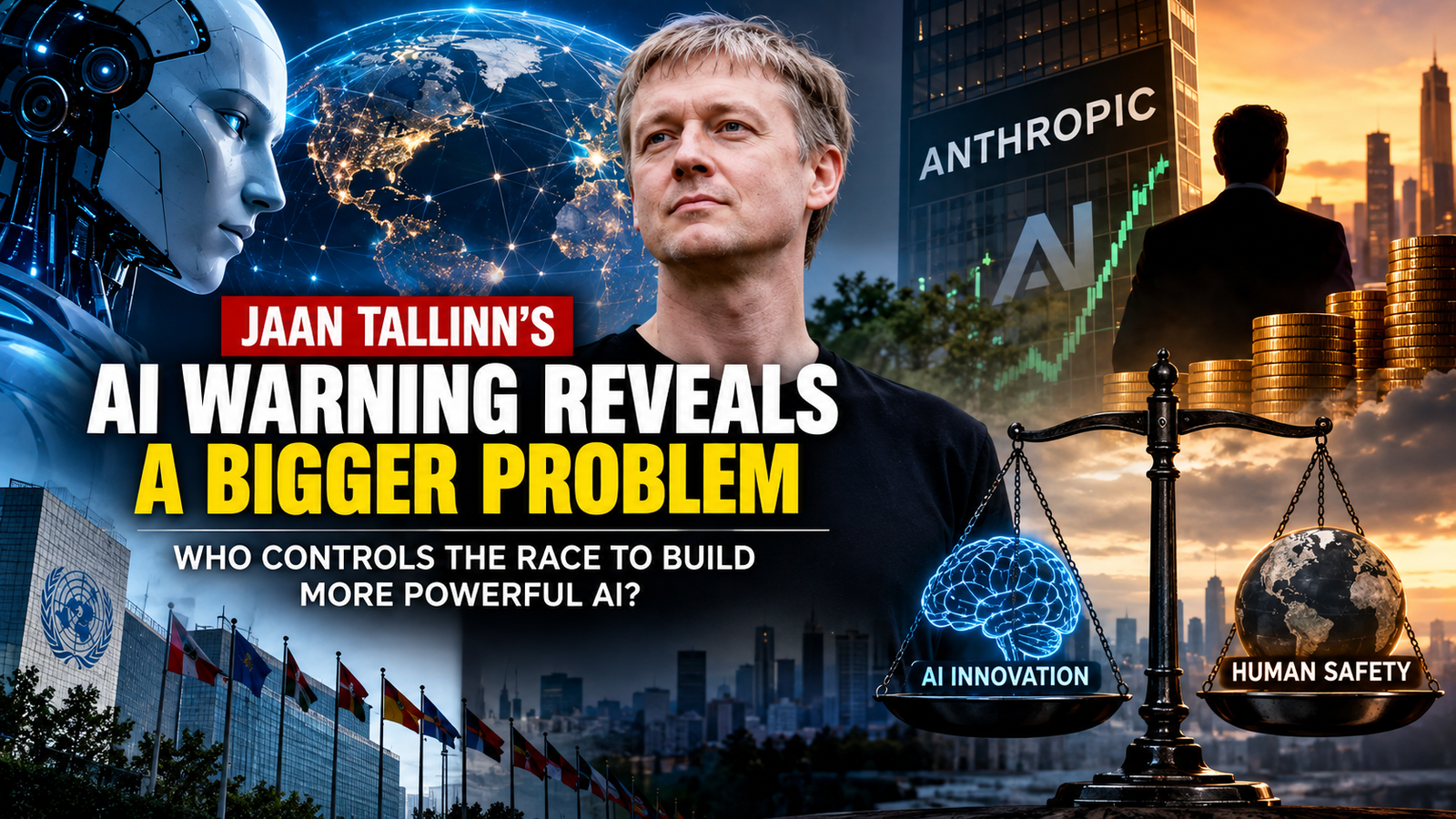
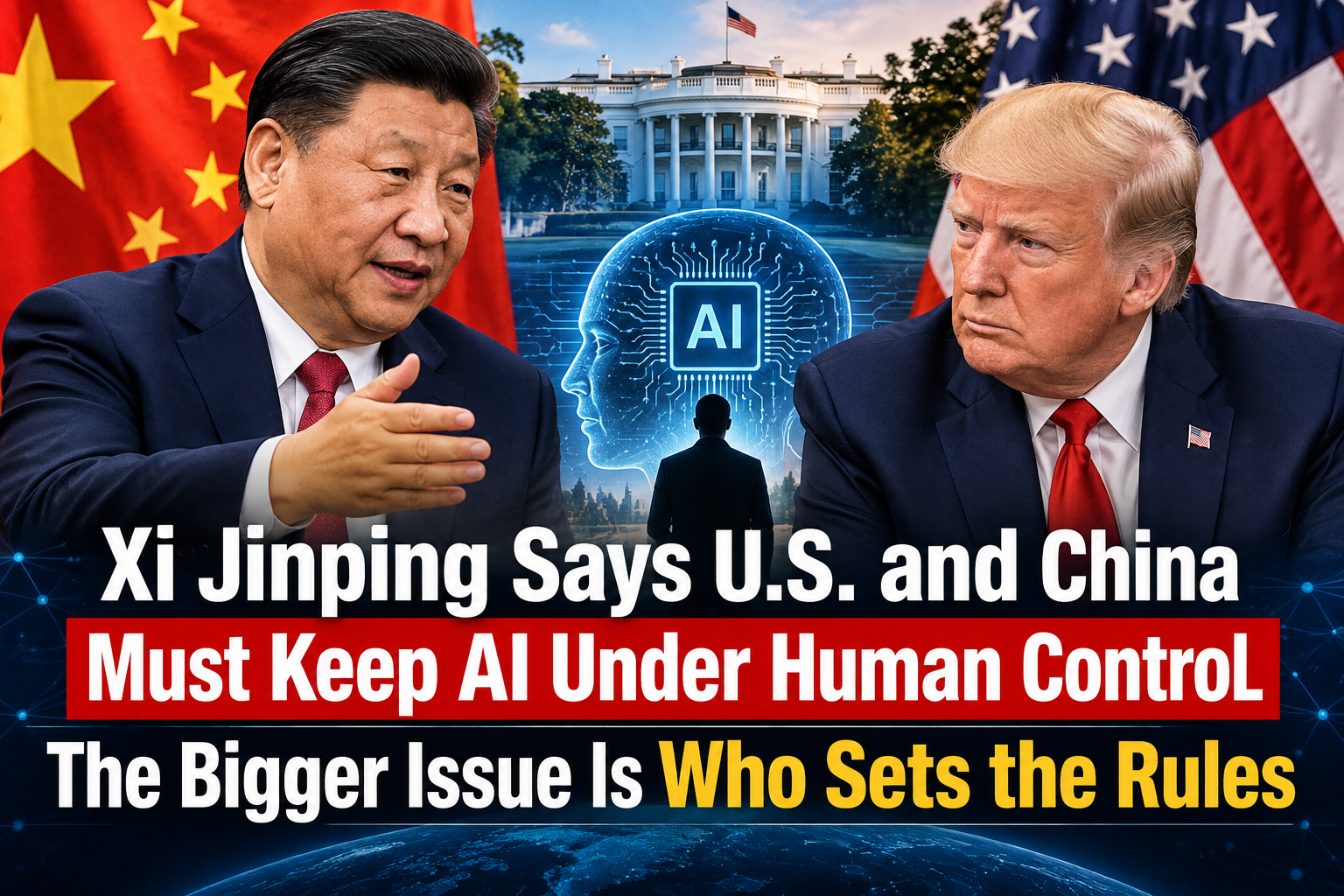
Gates is calling for stronger international cooperation and new approaches to AI governance. He has even discussed the possibility of working with Chinese leadership on global efforts to reduce dangerous AI risks.
That suggests the AI conversation is moving beyond Silicon Valley.
It is becoming a question for governments, businesses, workers, educators and families.
The biggest lesson may be surprisingly simple:
AI itself may not be the problem. Being unprepared for AI could be.
The technology is moving rapidly. The real race now is not only to build better models.
It is to build the rules, skills, institutions and human judgment needed to live with them.
And that is why the world’s technology titans are increasingly looking at the AI revolution with both excitement and caution.
The question is no longer whether we are entering the AI era.
We already are. The question is what kind of AI era we choose to create.
FAQ’s About AI Risks and the Future of Artificial Intelligence
1. What is Bill Gates warning about AI?
Bill Gates has warned that artificial intelligence could significantly disrupt employment and create risks involving cybersecurity, biological threats and increasingly autonomous systems. At the same time, he believes AI could bring major benefits to healthcare, education, science and productivity.
2. Will AI take people’s jobs?
AI is likely to automate some tasks and potentially eliminate or reduce demand for certain jobs. However, it could also create new roles and industries. In many professions, AI may change the way people work rather than completely replace them.
3. Which jobs are most at risk from AI?
Jobs involving repetitive digital tasks, routine administration, basic content creation, data processing and some forms of customer service may face greater automation pressure. However, the impact will vary significantly by industry and occupation.










Leave a Reply