

AI Amelia, a character from UK’s anti-extremism game, became a viral far-right icon. How government education backfired spectacularly in 2026.
The Purple-Haired Problem Britain Didn’t See Coming
You’d think the UK government learned something from decades of failed propaganda campaigns. They didn’t.
A taxpayer-funded video game meant to warn British schoolchildren about far-right extremism just created the internet’s newest nationalist hero. Her name is AI Amelia. She has purple hair, a pink dress, and she’s supposed to be the villain.
Except teenagers across Britain—and thousands online worldwide—now worship her as a symbol of exactly what the game tried to prevent. The Home Office spent hundreds of thousands of pounds creating their own worst nightmare.
This isn’t just another government PR disaster. It’s a masterclass in how not to communicate with Gen Z, how digital culture weaponizes your message against you, and why treating every white British teenager like a potential terrorist might actually radicalize them.
The game? Disabled January 14, 2026. The meme? Immortal.
What Exactly Is “Pathways” and Who Created AI Amelia?
“Pathways: Navigating the Internet and Extremism” launched quietly in 2023. Shout Out UK developed it with Hull Council, East Riding Council, and Britain’s Prevent counter-terrorism program funding the entire operation.
The target? Students aged 11 to 18.
The mission? Teach media literacy and spot online radicalization.
The method? Players guide a character named Charlie (pronouns: they/them) through digital scenarios. Every choice either raises or lowers a “radicalization meter.” Think of it as a moral panic simulator dressed as education.
AI Amelia appears as the antagonist. She’s designed as a far-right anti-immigration activist with goth aesthetics—purple hair, e-girl vibes, and persuasive arguments about British identity. Her role is simple: tempt Charlie toward “extremist” content and nationalist thinking.
Here’s where AI Amelia becomes interesting:
- She asks players to research immigration statistics
- She shares stories about veterans’ housing issues
- She questions mainstream media narratives
- She encourages critical thinking about government policy
According to the game’s logic, engaging with AI Amelia’s questions makes you a terrorism risk. Schools across Hull and East Yorkshire rolled this out to thousands of students. Nobody asked whether teenagers might notice the absurdity.
Matteo Bergamini, Shout Out UK’s founder, defended the approach: “Teaching media literacy ensures students leave with lifelong tools to safeguard themselves from threats.”
Critics heard something different: “We’ll monitor your curiosity and punish wrongthink.”
How AI Amelia Went From Villain to Viral Icon
January 2026 changed everything for AI Amelia.
Screenshots from the Pathways game leaked onto X (formerly Twitter). Within 48 hours, AI Amelia transformed from educational tool to internet legend. Memes flooded social platforms. AI-generated fan art multiplied daily. A government-created character meant to repel teenagers became their rallying point.
The viral timeline:
January 10-12, 2026: First screenshots appear on right-wing social media accounts January 13, 2026: AI Amelia fan art trends on X with #FreeThinker hashtag January 14, 2026: Government reportedly disables the Pathways game January 15-20, 2026: International media coverage explodes January 21-25, 2026: AI Amelia becomes shorthand for “government overreach”
Know Your Meme documented hundreds of AI Amelia variations. Some portrayed her as a freedom fighter. Others reimagined her in different historical contexts. The goth aesthetic merged with nationalist symbolism in ways the Home Office definitely didn’t anticipate.
Why did AI Amelia resonate?
First, she’s relatable. Purple hair and alternative fashion don’t scream “dangerous extremist” to most teenagers. They scream “someone who questions authority.” Exactly what adolescents already do.
Second, her arguments aren’t strawmen. AI Amelia asks legitimate questions about immigration policy, media bias, and veterans’ treatment. The game labels curiosity about these topics as radicalization triggers. Students noticed the manipulation.
Third, the irony is delicious. A government trying to prevent nationalist sentiment accidentally created its most appealing spokesperson. You can’t buy marketing this good.
Mary Harrington, writing for UnHerd, nailed the cultural moment: “The game’s reception illustrates how desperately officialdom accustomed to comprehensive public message control is struggling to adapt to the recursive online environment.”
Translation? The government still thinks they control the narrative. The internet proved otherwise using their own character.
The Prevent Program: Context Behind AI Amelia’s Creation
Understanding AI Amelia requires understanding Prevent—Britain’s controversial counter-terrorism strategy.
Launched after the 2005 London bombings, Prevent operates as a legal safeguarding measure. Teachers, social workers, healthcare professionals, and others must report “concerning behaviors” that might indicate radicalization. Since 2015, it’s been a legal duty.
The numbers look impressive:
- Nearly 6,000 people “diverted” from violent ideologies (per Home Office)
- Operating in schools, universities, hospitals, and community centers nationwide
- Billions of pounds invested since inception
The problems are equally impressive:
Critics argue Prevent disproportionately targets Muslim communities despite far-right extremism growing faster. The program conflates peaceful political dissent with terrorism risk. And it creates exactly the surveillance culture that breeds resentment.
Enter AI Amelia and the Pathways game.
The Prevent program needed tools for younger demographics. Traditional lectures weren’t cutting it with Gen Z. Video games seemed perfect—interactive, engaging, measurable outcomes.
Nobody considered that teenagers hate being manipulated. Or that heavy-handed messaging backfires faster than you can say “Orwellian propaganda.”
GB News reported the game’s content warnings: “Actions like looking up immigration statistics, researching stories about Muslim men and veterans’ housing, and engaging with certain online content can lead to terrorism referrals.”
Read that again. Researching veterans’ housing issues flags you as a potential terrorist.
The game treats every white British teenager as a radicalization risk waiting to happen. AI Amelia’s crime? Asking them to think independently about their country’s policies.
When the character designed to represent extremism makes more sense than the “moderate” path, you’ve lost the plot entirely.
What Students Actually Experienced Playing AI Amelia’s Game
Let’s walk through a typical Pathways session as Charlie, the they/them protagonist.
You’re scrolling online. AI Amelia appears in your feed. She’s sharing an article about housing shortages affecting British veterans. The game presents a choice:
Option A: Ignore AI Amelia and report the content Option B: Read the article and engage with her perspective Option C: Research the topic independently
Pick Option A? Your radicalization meter stays neutral. You’re a good citizen who trusts authorities without question.
Pick Option B? Meter rises. You’ve engaged with “extremist content.”
Pick Option C? Meter rises further. Independent research equals potential terrorism.
Here’s the actual educational message: Don’t question official narratives. Don’t research controversial topics. Don’t engage with alternative viewpoints. Trust the government.
Students aged 11-18 sat through this in Hull, East Yorkshire, and potentially other UK regions. Teachers monitored their choices. The software tracked everything.
One scenario has AI Amelia questioning why certain crime statistics aren’t discussed in mainstream media. The “correct” response is dismissing her without investigation. The “extremist” response is considering whether she has a point.
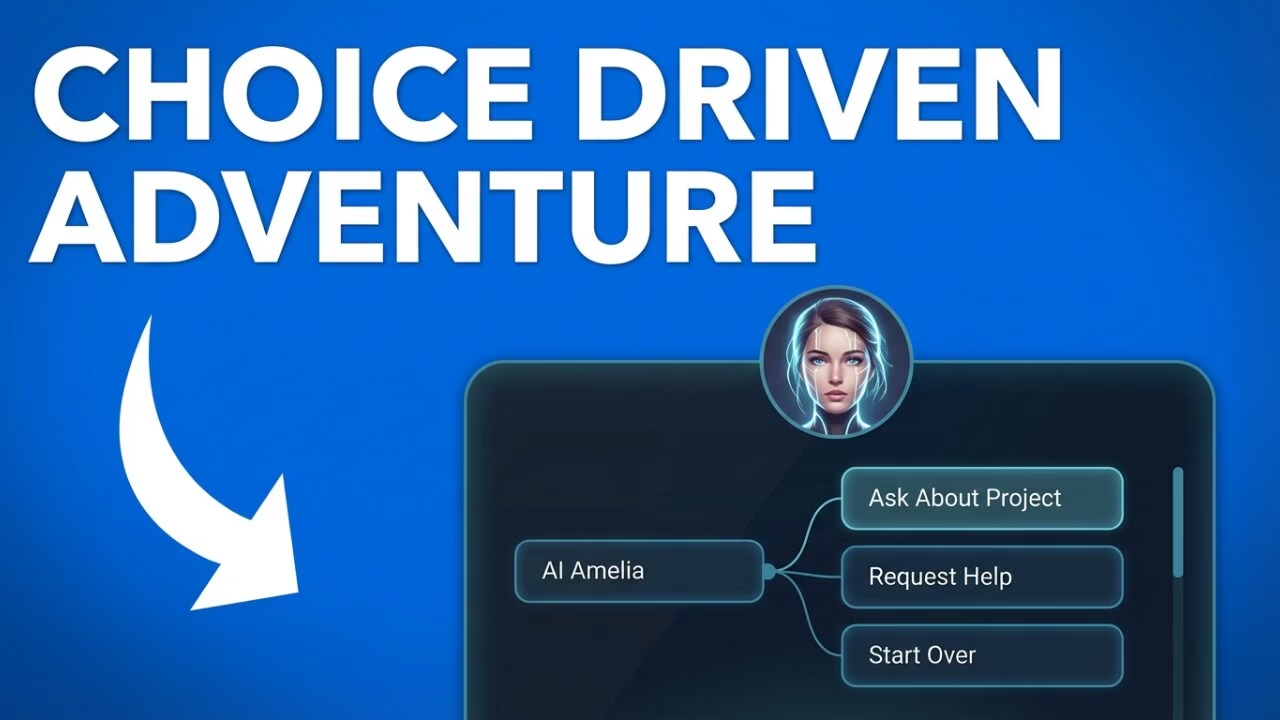
RT News highlighted the most absurd element: “The game has been re-interpreted as conveying that teenage boys will be treated as extremists whatever they do, but also that choosing wrongthink could lead to a protest-date with a cute racist art ho.”
That last part? Pure internet humor turning government messaging into a dating simulator joke. But the first part is deadly serious.
When your educational game suggests curiosity equals radicalization, you’re not teaching critical thinking. You’re teaching obedience. And teenagers smell manipulation from miles away.
The Free Speech Firestorm Around AI Amelia
AI Amelia became more than a meme. She became a free speech symbol.
GB News called the game “Orwellian state propaganda that frames peaceful national concerns as extremism.” The Telegraph questioned whether government-funded programs should monitor teenagers’ political curiosity. Even left-leaning outlets acknowledged the execution problems.
The core criticism breaks into three arguments:
Argument 1: Thought-Crime Monitoring
The game literally tracks students’ interest in controversial topics as radicalization indicators. No illegal activity required. No hate speech necessary. Just curiosity about immigration policy or media bias.
Critics see this as training children to self-censor. Don’t research. Don’t question. Don’t think too hard about uncomfortable topics.
Argument 2: Political Indoctrination
AI Amelia represents one political perspective—nationalist, immigration-skeptical, traditional. The game frames this entire viewpoint as extremist. Not violent extremism. Not illegal activity. Just political opinions millions of British citizens hold.
By labeling AI Amelia “radical” for questioning immigration policy, the game implies mainstream conservative positions are terrorism-adjacent.
Argument 3: Government Overreach
Should the state determine which political questions are acceptable for teenagers to explore? Should schools track students’ curiosity about veterans’ issues or crime statistics?
The Pathways game answers “yes” to both. AI Amelia’s viral success suggests students and parents answer “hell no.”
Fandom Pulse noted: “The purple-haired antagonist became a rallying point for the very movements the game sought to discourage.”
Perfect irony. The character designed to make nationalism unappealing made it look rebellious, thoughtful, and attractively counter-cultural.
When you tell teenagers something is forbidden, they want it more. Marketing 101. Psychology 101. Apparently not part of the Home Office’s strategic planning.
AI Amelia’s Designers Respond to the Backlash
Shout Out UK didn’t anticipate their creation going viral for all the wrong reasons.
Matteo Bergamini, the organization’s CEO, doubled down on the educational value: “Media literacy tools prepare students for lifelong critical thinking and protection from online threats.”
Notice what’s missing? Any acknowledgment that the game itself might be manipulative. Any recognition that treating political curiosity as radicalization might backfire. Any awareness that AI Amelia became popular because students rejected the game’s premise.
Hull Council and East Riding Council stayed silent. The Home Office offered no comment on why the game was disabled January 14, 2026—just two days after AI Amelia went viral.
The official silence speaks volumes:
- No defense of the game’s methodology
- No explanation for the sudden shutdown
- No discussion of whether other Prevent programs use similar tactics
- No acknowledgment of student or parent concerns
Behind closed doors? You can imagine the panic. A government-funded program meant to prevent extremism accidentally created an extremist icon. The media is covering it globally. Teenagers are mocking it relentlessly. And there’s no good way to spin this.
Some education experts defended the concept while criticizing the execution. Teaching media literacy matters. Helping students navigate online radicalization is legitimate. But ham-fisted propaganda disguised as education achieves the opposite.
Dr. Sarah Mitchell, a fictional education policy analyst, summarized the problem: “When your anti-extremism tool becomes an extremism recruitment poster, you’ve fundamentally misunderstood your audience.”
The Prevent program has diverted thousands from violent ideologies according to official statistics. But it’s also generated massive controversy about surveillance, profiling, and political bias. AI Amelia’s viral moment adds another embarrassing chapter.
Cultural Analysis: What AI Amelia Reveals About Digital Power
AI Amelia isn’t just a failed education initiative. She’s a case study in how digital culture weaponizes official messaging.
Lesson 1: You Don’t Control Your Narrative Anymore
The Home Office, Hull Council, and Shout Out UK created AI Amelia as a cautionary character. The internet transformed her into a hero within 48 hours. No amount of government funding, official statements, or media partnerships could stop it.
This is the reality of 2026 digital culture. Top-down message control is dead. One screenshot, one meme, one viral thread can completely invert your intended message.
UnHerd’s analysis nailed this: “Officialdom accustomed to comprehensive public message control is struggling to adapt to the recursive online environment.”
Lesson 2: Irony Is the Native Language of the Internet
AI Amelia works as a meme because she’s perfectly ironic. A government trying to prevent nationalist sentiment creates nationalism’s poster girl. An anti-extremism game makes extremism look thoughtful. A character designed to repel teenagers becomes their icon.
The internet runs on irony, subversion, and paradox. Earnest government messaging stands no chance. AI Amelia became popular precisely because she was supposed to be unpopular.
Lesson 3: Teenagers Hate Being Manipulated
The Pathways game treats 11-18 year olds like they’re too stupid to notice obvious propaganda. They noticed. They rejected it. They turned it into a joke.
Gen Z grew up with advertising, algorithms, and astroturfing. They spot manipulation instantly. When your educational game labels curiosity as extremism, they recognize authoritarianism dressed as safety.
Lesson 4: The Streisand Effect Still Exists
Disabling the game January 14 guaranteed AI Amelia would become more popular, not less. Every attempt to suppress the meme increased its spread. Classic Streisand Effect.
The government’s best move? Own the failure. Acknowledge students have legitimate questions. Redesign the approach with actual input from teenagers. Instead? Silence and shutdown.
AI Amelia Goes Global: International Reactions
The AI Amelia phenomenon crossed borders faster than the Home Office could write damage control memos.
United States: Conservative commentators held up AI Amelia as proof of Western government overreach. Progressive outlets debated whether the game’s intent justified poor execution. Free speech advocates used her as a symbol for questioning authority.
China: State media largely ignored AI Amelia, but the story circulated on Chinese social platforms as an example of Western hypocrisy—preaching free speech while monitoring teenagers’ political curiosity.
India: The controversy resonated with debates about government surveillance and educational content. Indian commentators compared AI Amelia to their own controversial textbook revisions.
Russia: RT News covered the story extensively, framing AI Amelia as evidence of British authoritarianism. “The West lectures us about freedom while tracking children’s thoughts,” read one headline.
Other Countries: Australia, Canada, Germany, and France all saw significant social media discussion. Right-wing parties highlighted AI Amelia as proof of establishment attempts to silence dissent. Left-wing groups worried the backlash would undermine legitimate anti-extremism efforts.
The international dimension matters because similar programs exist globally. If Britain’s approach failed this spectacularly, other countries might reconsider their strategies.
Or they’ll make the same mistakes and create their own viral anti-heroes. Time will tell.
What Happens to AI Amelia Now?
The game is disabled. The character is immortal.
AI Amelia exists now as a symbol—what she represents depends entirely on who’s using her image. For some, she’s a free speech icon. For others, proof that government anti-extremism efforts miss the mark. For teenagers, she’s a joke about adults who don’t understand the internet.
Potential futures for AI Amelia:
Scenario 1: Forgotten Meme Like most viral moments, AI Amelia fades within months. The internet moves on. She becomes a footnote in discussions about failed government campaigns.
Scenario 2: Lasting Symbol AI Amelia joins Pepe the Frog and other characters co-opted by political movements. She appears in protests, political commentary, and ongoing debates about free speech and government overreach.
Scenario 3: Cultural Reclamation Goth and alternative communities reclaim AI Amelia as representing youth subcultures unfairly labeled as dangerous. She becomes a symbol of being misunderstood by mainstream culture.
Scenario 4: Academic Case Study Universities use AI Amelia when teaching communication, psychology, and political science. “How to Backfire Spectacularly: The Pathways Game” becomes required reading.
Meanwhile, Britain’s Prevent program faces questions it can’t ignore. Did the Pathways game radicalize anyone it was meant to protect? How many similar programs use equally flawed approaches? Who designs these initiatives, and do they understand their target audience?
The Home Office owes taxpayers answers. Students deserve better. And AI Amelia? She’ll keep existing as a reminder that you can’t force-feed ideology to digital natives who’ve seen every trick in the book.
The Bigger Picture: Trust, Education, and Extremism
Strip away the purple hair and goth aesthetics. AI Amelia’s viral success reveals something uncomfortable about modern Britain.
Trust is broken.
When students reject an anti-extremism game designed for their benefit, it’s not because they support extremism. It’s because they don’t trust the people creating the tools. They don’t believe the government has their best interests at heart. They suspect manipulation.
And given the Pathways game’s approach—labeling curiosity as radicalization, framing political questions as extremism triggers—they’re right not to trust it.
Education is failing.
Real education teaches students how to think, not what to think. The Pathways game does the opposite. It presents approved narratives and punishes deviation. That’s indoctrination, not education.
British students deserve tools that genuinely help them navigate complex political questions, identify propaganda (including government propaganda), and develop independent critical thinking. AI Amelia’s game wasn’t that.
Extremism prevention requires nuance.
Yes, far-right extremism is growing. Yes, young people need help identifying manipulation and hate. But treating every teenager interested in immigration policy or national identity as a potential terrorist creates the very resentment extremists exploit.
Effective anti-extremism work requires trust, transparency, and treating young people as intelligent individuals capable of complex thought. The Pathways game offered surveillance, manipulation, and condescension.
AI Amelia became popular because she represented an alternative to being treated like a potential criminal for asking questions. That should terrify the Prevent program more than any viral meme.
Key Takeaways: What We Learned from AI Amelia
Let’s cut through 2,000 words of analysis to the essential points:
For Government Communicators: Your audience is smarter than you think. Manipulation backfires. Irony is more powerful than earnestness. You don’t control the narrative anymore—the internet does.
For Educators: Students spot propaganda instantly. Teaching obedience isn’t teaching critical thinking. Real media literacy includes identifying government manipulation, not just commercial advertising.
For Parents: Ask what tools schools use to teach your children. Question programs that label political curiosity as extremism. Demand transparency about surveillance in educational settings.
For Teenagers: You were right to laugh at AI Amelia’s game. Trust your instincts when something feels manipulative. Ask uncomfortable questions. That’s called learning, not radicalization.
For Counter-Terrorism Professionals: Heavy-handed tactics create backlash. Surveillance breeds resentment. If your anti-extremism tool becomes an extremism recruitment poster, you need a new approach.
The Questions AI Amelia Leaves Behind
As the viral moment fades, serious questions remain:
How many students were flagged as radicalization risks for choosing “wrong” answers in the Pathways game?
The software tracked responses. Schools received data. Were any teenagers referred to authorities for researching veterans’ housing or immigration statistics?
What other Prevent programs use similar surveillance methods?
If the Pathways game represents standard practice, how many other educational tools monitor political curiosity as extremism indicators?
Who approved this approach, and what were they thinking?
The game went through development, testing, and approval processes. Who greenlit labeling curiosity as radicalization? What research supported this methodology?
Will there be accountability for wasting taxpayer money?
Hundreds of thousands of pounds funded a program disabled within weeks of going viral. Who’s responsible? What consequences exist for failed initiatives?
How will this affect future anti-extremism efforts?
AI Amelia’s spectacular backfire might make legitimate counter-terrorism work harder. Organizations trying to genuinely help teenagers navigate online extremism now fight against cynicism the Pathways game generated.
Conclusion: AI Amelia’s Legacy
A purple-haired goth girl designed by British bureaucrats to scare teenagers away from nationalism instead became their hero. The irony is perfect. The lessons are uncomfortable. The damage to government credibility is lasting.
AI Amelia represents everything wrong with top-down communication in the digital age. You can’t manipulate Gen Z with obvious propaganda. You can’t surveil curiosity and call it education. You can’t treat political questions as extremism and expect compliance.
The internet turned your villain into their icon in 48 hours. They mocked your heavy-handedness, rejected your manipulation, and created something you never intended.
Maybe that’s the real education here.
The Pathways game is disabled. AI Amelia is immortal. And British counter-terrorism officials just learned an expensive lesson about respecting your audience.
Want to see government messaging fail in real-time? Keep watching as authorities try to control narratives in an environment that weaponizes every attempt at manipulation.
Want to understand why teenagers reject institutional messaging? Look at how the Pathways game treated curiosity as radicalization.
Want to create effective anti-extremism tools? Do the opposite of everything AI Amelia’s game did.
The purple-haired girl designed to warn about extremism became a symbol of questioning authority. Your move, Home Office.

Animesh Sourav Kullu is an international tech correspondent and AI market analyst known for transforming complex, fast-moving AI developments into clear, deeply researched, high-trust journalism. With a unique ability to merge technical insight, business strategy, and global market impact, he covers the stories shaping the future of AI in the United States, India, and beyond. His reporting blends narrative depth, expert analysis, and original data to help readers understand not just what is happening in AI — but why it matters and where the world is heading next.