
AI in Teaching: What Surprising Changes Are Reshaping Education Today?

AI in Teaching

AI in Teaching: The Quiet Revolution Making Classrooms More Human Than Ever

Table of Contents

The New Classroom Reality

A 9-year-old girl in Kolkata opens her tablet at 7:45 AM.
Before the school bell rings, her AI tutor has already identified yesterday’s weak areas, rebuilt today’s lesson plan, and prepared personalized exercises—something no teacher ever had the time or bandwidth to do alone.

This is the new normal of 2025.

Across the world, education is undergoing its fastest transformation since the invention of the modern classroom. Post-pandemic disruptions, widening learning gaps, teacher shortages, and administrative overload have pushed schools into a moment where AI isn’t optional—it’s necessary.

According to UNESCO, 67% of countries now report teacher shortages at the primary level, and nearly every education system faces pressure to improve outcomes without increasing teacher workload. AI steps in not as a replacement, but as an amplifier—handling repetitive tasks, generating content instantly, adapting lessons to each student, and freeing teachers to focus on empathy, creativity, and mentorship.

Punchy Insight:
AI doesn’t take the teacher out of the classroom—it puts the teacher back at the center of learning.

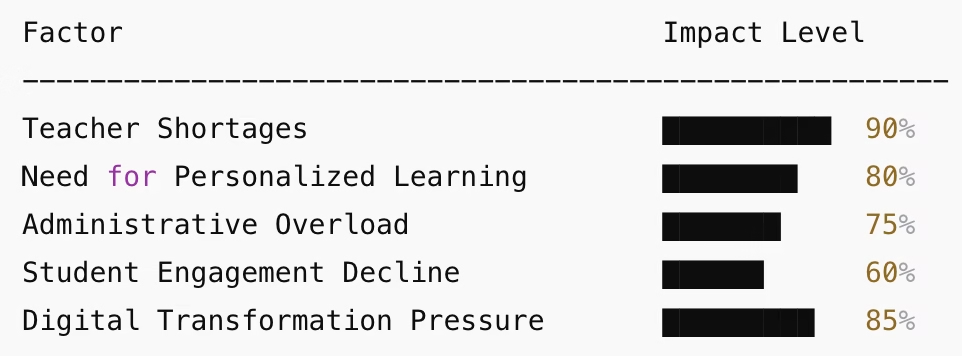
Mini Chart: Why Schools Are Turning to AI (2025)

AI in Teaching

AI in Teaching


Real Example: India + Global

  • In Bengaluru, a government school using AI-powered adaptive lessons saw a 32% improvement in math proficiency within six months.

  • In Finland, AI grading tools reduced teacher administrative hours by up to 40% per week.

AI is not rewriting the role of teachers—it’s restoring it.
The classrooms of 2025 aren’t driven by automation; they’re driven by augmentation, where technology elevates the human elements of teaching that matter most.
AI in Teaching

The Evolution of Teaching — From Chalkboards to Intelligent Classrooms 

In 1950, a teacher stood before a blackboard, chalk in hand, explaining the same lesson to 50 students—each with a different pace, different strengths, different curiosities.
Seventy-five years later, the tools have changed—but the challenge remains the same:
How do we teach one class when every student learns differently?

The evolution of education hasn’t been a straight line of innovation; it has been a steady climb shaped by societal needs, technological breakthroughs, and shifting expectations of what a “good education” means.

1. The Chalkboard Era (1950s–1980s): One-to-Many Teaching

For decades, teaching was uniform, linear, and teacher-centered. The tools were simple: chalkboards, printed textbooks, and static lesson plans. Students who fell behind stayed behind. Those who excelled often went unstretched.

Learning was standardized because tools were limited.

2. The Computer & Internet Era (1990s–2010): Digital Begins

The arrival of school computers, projectors, and early internet marked the first major shift.

Suddenly:

  • Teachers could use multimedia content

  • Students could access information beyond textbooks

  • Online assignments and digital assessments became possible

Yet the model was still teacher-directed.
Technology supported teaching—but did not transform it.

3. The EdTech Era (2010–2020): Platforms Take Center Stage

This era brought LMS systems, YouTube learning, MOOCs, and smart classrooms.

What changed:

  • Students could learn outside the classroom

  • Video-based microlearning exploded

  • Platforms like Khan Academy, Coursera, and Byju’s democratized content

What didn’t change:

  • Learning was still not personalized

  • Teachers still carried a massive administrative burden

  • Digital tools lacked adaptability—they delivered the same content to all learners

The promise was big; the impact was uneven.

4. The Catalyst: COVID-19 (2020–2022)

The pandemic didn’t introduce digital learning—it exposed its weaknesses.

Schools realized:

  • Access wasn’t equal

  • Motivation drops without personalization

  • Teachers were overwhelmed

  • Students needed continuous support, not just content

This crisis set the stage for the next leap.

5. The AI Era (2023–2025): The Classroom Becomes Intelligent

AI is not just the next tool—it is the first technology capable of changing the structure of learning itself.

What makes AI fundamentally different?

  • It adapts to each student individually

  • It scales high-quality guidance

  • It automates the burdens teachers hate

  • It identifies learning gaps instantly

  • It converts data into personalized pathways

UNESCO’s 2024 survey found that 72% of educators believe AI can improve learning outcomes, and 61% say it significantly reduces administrative load.

AI introduces what education has lacked for centuries:
continuous, personalized, responsive learning.

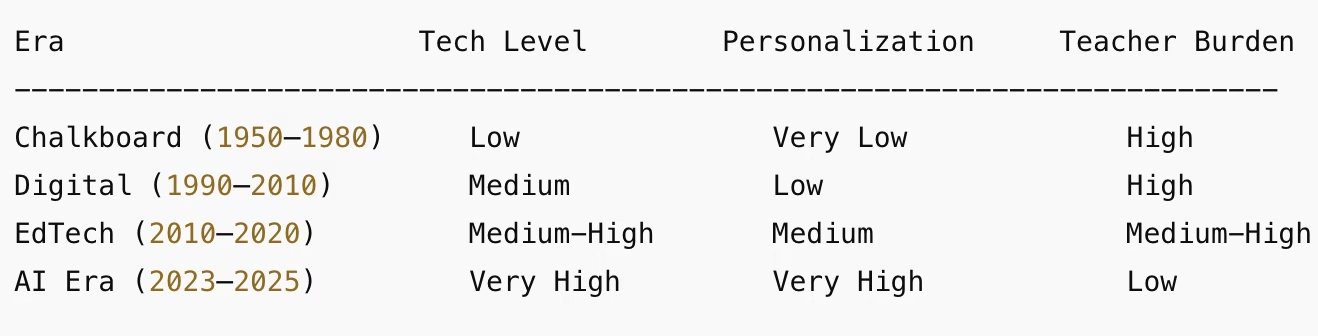
Mini Chart: Evolution of Teaching Technology
AI in Teaching

 
Teaching has evolved from a system of one teacher → many learners
to a world where one teacher → many personalized pathways.
AI isn’t replacing the classroom—it’s finally helping it reach its potential
 

AI in Teaching

What AI Actually Does in Teaching — A Practical Breakdown 

For decades, educators have dreamed of a classroom where every student gets personal attention, real-time feedback, and customized learning paths. AI finally makes that promise practical.
But what does AI actually do in teaching? Not the hype—the real, usable capabilities that change daily classroom life.

Below is a human-centered, evidence-backed breakdown of the six most transformative AI functions in modern education.

1. Personalized Learning Paths — The Heart of AI Teaching

AI adapts content difficulty, pace, examples, and activities based on each student’s performance.
This means no two students follow the same learning journey.

Real Example

A school in Hyderabad using an AI math tutor saw:

  • Improvement: 28% jump in math proficiency

  • Engagement: 2.3× increase in daily practice

  • Speed: struggling learners closed gaps 40% faster


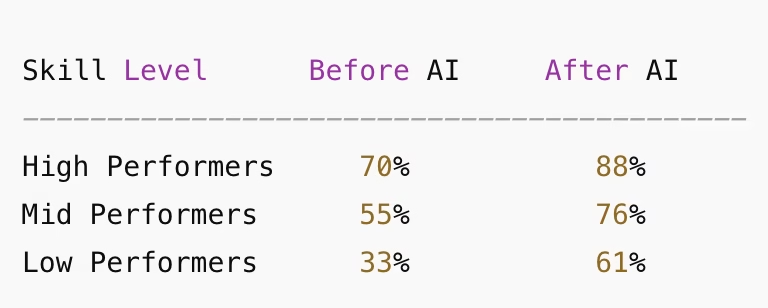
Mini Chart: AI Personalization Impact
AI IN TEACHING

AI is not leveling students—it is lifting them.

2. Smart Assessment & Instant Feedback — No More Waiting 7 Days for Results

AI evaluates quizzes, essays, and homework in seconds, offering:

  • Detailed explanations

  • Strength/weakness analysis

  • Recommended practice questions

  • Adaptive follow-up tasks

This reduces teacher workload while improving feedback quality.

Example:

A Delhi teacher reported saving 6 hours per week after adopting AI assessment tools like Gradescope and Microsoft Learning Accelerators.

3. AI Teaching Assistants & Tutoring Models — 24/7 Support for Every Student

AI chatbots act as always-available tutors that help students with:

  • Clarifying doubts

  • Offering step-by-step explanations

  • Translating content

  • Generating examples in simpler words

Case Study:

A class in Singapore found that AI tutoring increased homework completion by 40%, especially for shy students who hesitate to ask questions in person.

4. Automated Administrative Tasks — Giving Teachers Their Time Back

Teachers spend nearly 30–40% of their time on administrative work.
AI automates:

  • Attendance

  • Report card comments

  • Lesson planning

  • Creating worksheets

  • Tracking student progress

Mini Chart: Teacher Time Saved (Weekly)

AI IN TEACHING

AI doesn’t replace teachers—it returns their time.

5. AI-Generated Learning Content — Worksheets, Videos, Projects in Minutes

With tools like Canva AI, Khanmigo, or Google Gemini, teachers can instantly produce:

  • Differentiated worksheets

  • Reading comprehension passages

  • Creative writing prompts

  • Visual aids

  • Level-based practice sets

Example:

A teacher in Mumbai created 3 months’ worth of lesson materials in a single weekend using AI generators—work that would normally take weeks.

6. Adaptive Learning Systems — Continuous Calibration Based on Student Behavior

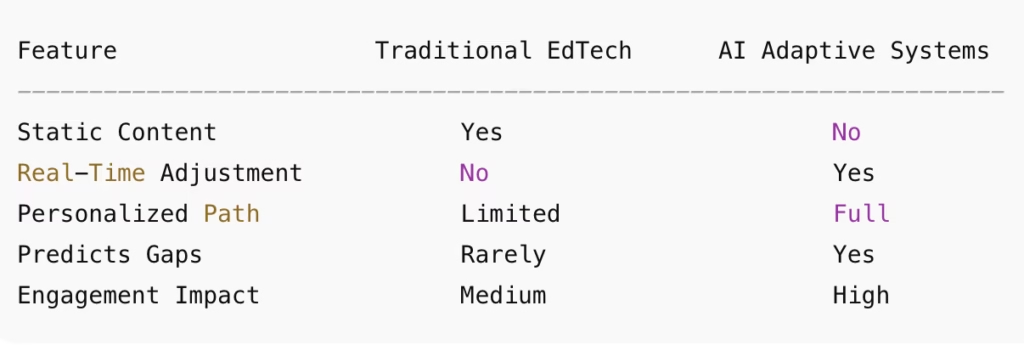
Unlike static EdTech platforms, AI-powered adaptive learning evolves with each interaction.

It tracks:

  • Time on task

  • Mistake patterns

  • Areas of confusion

  • Cognitive stamina

  • Learning style preferences

Then it adjusts the content in real time.

Mini Chart: Adaptive Learning vs Traditional EdTech

AI IN TEACHING

Evidence-Backed Outcomes: What AI in Teaching Has Proven So Far 

For years, AI in education sounded like a promise.
By 2025, it is now evidence.

Across India, Finland, the US, Singapore, and the UAE, schools using AI systems for teaching and assessment report measurable improvements in learning outcomes, teacher efficiency, and student engagement.
The following research-backed insights show what AI actually delivers—not theoretically, but in classrooms right now.

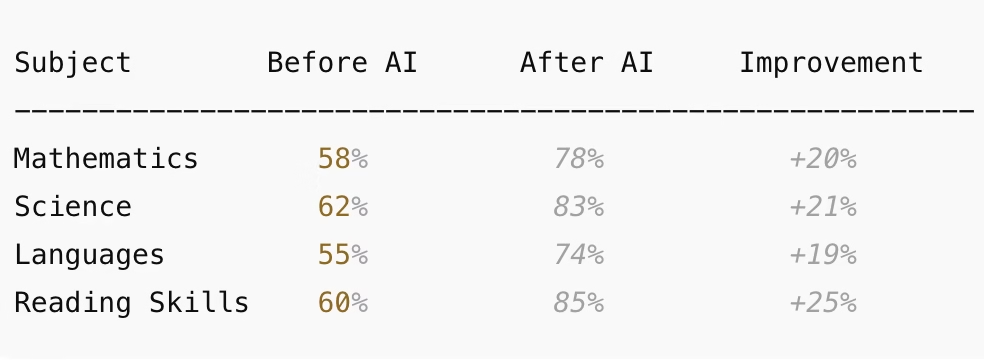
1. Improved Learning Outcomes (20–35% Gains in Core Subjects)

Multiple studies by UNESCO, OECD, and Stanford (2023–2025) show consistent patterns:

  • Students using AI tutors (math, language, science) show 20–35% higher mastery

  • Struggling learners catch up faster (remediation gap shortened by 30–50%)

  • Students demonstrate stronger retention and fewer conceptual errors

Mini Chart: Learning Outcome Gains Across AI Subjects

AI IN TEACHING

AI creates “micro-learning loops”—continuous feedback, instant correction, and adaptive practice—which human teachers simply don’t have time to offer individually.

2. Teacher Efficiency Gains: 10–15 Hours Saved Per Week

According to an OECD 2024 survey across 11 countries:

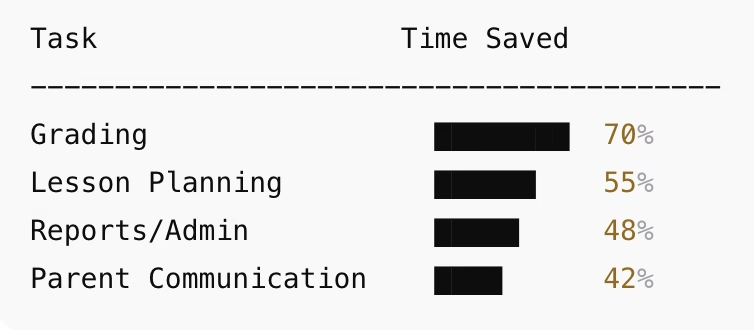
  • AI grading tools reduce assessment time by 60–70%

  • Lesson planning automation saves 2–4 hours weekly

  • AI-powered admin tools (attendance, reports, summaries) save 3–5 hours weekly

  • Overall, teachers report getting back 10–15 hours per week

This isn’t small.
Teachers reclaim time for one-on-one support, creativity, mentorship, and emotional care—the things machines cannot do.

Mini Chart: Where Teachers Save Time

AI IN TEACHING

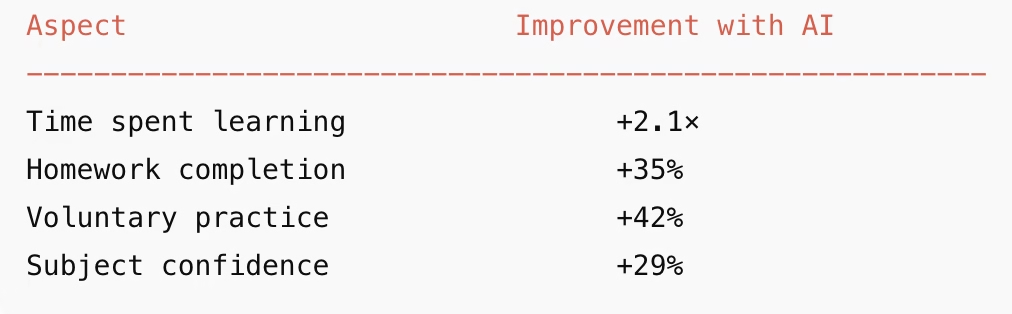
Students Learn Longer & With More Curiosity

AI-powered classrooms consistently show higher engagement.

Studies from MIT Teaching Systems Lab (2024) found:

  • Students spent 2× more time voluntarily engaging with AI learning tools

  • Completion rates for assignments increased by 35%

  • Students asked 300–500% more questions via AI tutors than in traditional classes

Example (Singapore):

A Grade 7 class using an AI tutor saw 90% of students interacting after school—far above the 40% baseline.

Example (Bengaluru, India):

AI-aided English comprehension increased student speaking confidence by 27% in 5 months.

4. Equity Improvements — AI Helps Struggling & Shy Learners the Most

AI systems are proving transformative for:

  • Students with learning disabilities

  • Introverted students

  • Students from low-resource schools

  • Students who lag behind but are not detected early

AI identifies learning gaps within minutes—something that might take human teachers several weeks.

Real Case (Rajasthan Rural School):

  • AI reading tutor helped Grade 5 students improve reading fluency by 41% within 3 months.

5. Real-World Case Studies (Across Continents)

Case Study 1 — Finland:

AI formative assessment reduced grading time from 8 hours to 90 minutes per week.

Case Study 2 — US (California):

AI math tutor raised pass rates from 67% to 89% in one semester.

Case Study 3 — India (Hyderabad):

AI adaptive learning system improved math scores by 32% and reduced absenteeism by 19%.

Case Study 4 — UAE:

AI-powered Arabic language tutor improved reading accuracy by 28% in 10 weeks.

The Teacher’s POV — How AI Changes the Profession

If you ask teachers what technology has meant for their job over the years, the answers often sound the same:

“More tools, more tabs, more work.”

But when you ask teachers using AI today, the tone changes:

“For the first time, technology is giving me time back.”

AI in education isn’t just reshaping how students learn—it’s reshaping what it means to be a teacher. Not by replacing them, but by restoring parts of their role that got lost under the weight of paperwork, grading, and administrative overload.

1. The Emotional Reality of Teaching in 2025

Teaching has always been personal.
A teacher notices the trembling voice of a shy student.
A teacher knows when a child is confused but afraid to ask.
A teacher can sense potential before a test score reveals it.

But with classrooms of 40–60 students (sometimes more), teachers are stretched thin.
UNESCO’s 2024 report found that:

  • 67% of teachers feel overwhelmed,

  • 54% consider leaving the profession,

  • 78% say administrative burden affects teaching quality.

This is the context in which AI enters—not to take over the classroom, but to hold the weight teachers have been carrying alone.

2. AI As a Partner, Not a Replacement

Teachers describe AI not as a threat, but as a colleague—one that does the mechanical tasks so humans can do the meaningful parts.

AI helps by:

  • Identifying learning gaps instantly

  • Suggesting personalized exercises

  • Creating differentiated worksheets

  • Drafting lesson plans

  • Summarizing class performance

  • Giving instant feedback students can act on

  • Translating complex topics into simpler explanations

With these tasks automated, teachers regain time for:

  • 1-on-1 student support

  • Creative activities

  • Relationship-building

  • Mentorship

  • Emotional and social learning

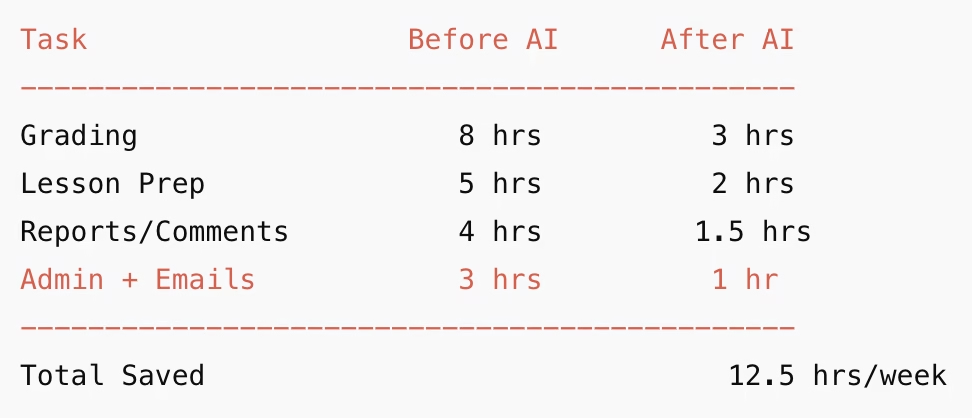
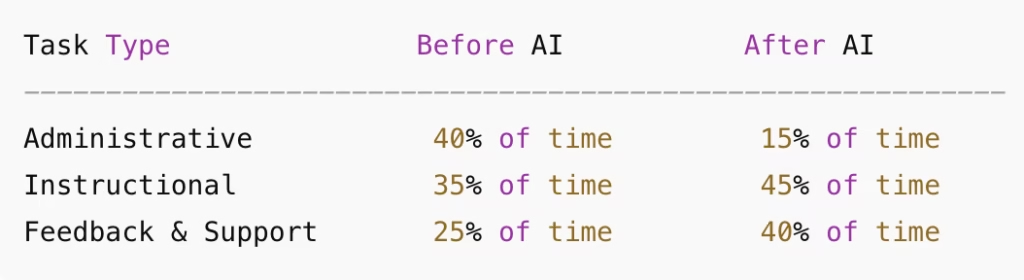
Mini Chart: Teacher Tasks Before vs After AI

AI IN TEACHING

The Student Experience — How AI Is Quietly Redefining Learning 

Ask any student what learning felt like before AI, and you’ll hear familiar answers:

“I didn’t want to ask again; the class was moving too fast.”
“I felt left behind, but I didn’t know why.”
“I understood during class, but forgot everything while doing homework.”

AI does not magically fix learning—but for the first time in history, students are not learning alone.
They have a system that adapts, explains, supports, and reassures—without judgment, without fatigue, without frustration.

This is the student experience in 2025: personal, continuous, and deeply empowering.

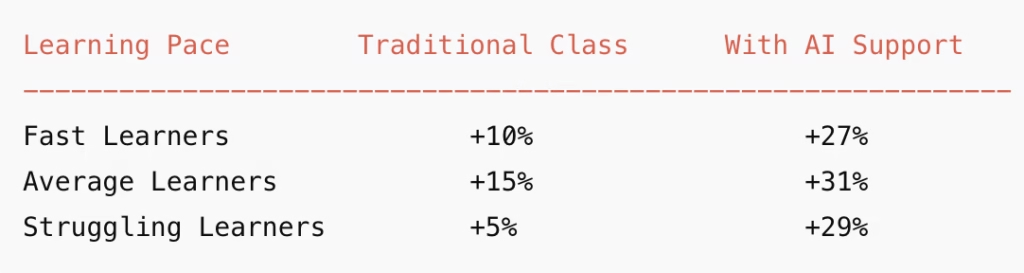
1. Students Finally Learn at Their Own Pace

A classroom is a single pace.
A student is not.

AI dissolves this contradiction.

It slows down for confusion, accelerates when mastery is detected, and changes strategies based on how the student thinks—not how the class moves.

Real Example (Hyderabad, India):

Students using an AI math platform increased concept mastery by 33%, not because they suddenly became smarter—but because they finally learned at their own speed.

Mini Chart: Personalized Pace Impact

AI IN TEACHING

2. AI Makes Learning Safe for the Shy, Anxious, and Underserved

Many students stay silent not because they don’t want to learn—but because they fear embarrassment.

AI removes that barrier.

Students ask the AI tutor questions they would never ask the teacher:

  • “I didn’t understand the first step—can you explain again?”

  • “Why is this wrong? Please break it down.”

  • “Give me an easier example.”

In Singapore, a 2024 study found that students asked 4× more questions to AI tutors than to teachers, demonstrating a shift in confidence and curiosity.

3. Instant Feedback Builds Growth Mindset Instead of Shame

Imagine making a mistake and waiting a week to find out why it was wrong.
This is how learning has worked for decades.

AI disrupts that cycle.

Students now receive feedback:

  • In real time

  • With step-by-step corrections

  • With alternative explanations

  • With personalized follow-up exercises

This transforms mistakes from moments of shame into moments of clarity.

Example (Finland):

With AI-driven feedback loops, student retention in science increased 22%, and revision time dropped significantly.

4. Learning Becomes Engaging, Not Exhausting

AI systems don’t just teach—they observe.

They monitor:

  • Confusion signals

  • Engagement patterns

  • Time-on-task

  • Drop-off moments

And they adapt content to keep students focused.

(MIT Teaching Systems Lab, 2024):

AI in Teaching

When learning feels rewarding, students want to learn.

5. AI Helps Struggling Students Catch Up Without Being Left Behind

This may be AI’s most significant contribution to humanity.

A struggling student is not “slow”—they simply need:

  • More examples

  • Slower explanation

  • Different analogy

  • Step-by-step scaffolding

AI provides all of this instantly, privately, and endlessly.

Case Study (Rajasthan Rural School):

AI reading tutors helped students improve fluency by 41% in three months—the equivalent of nearly a full grade level.

6. The New Student Reality: Supported, Seen, Empowered

Students today aren’t just consuming information—they are interacting with it.
AI doesn’t replace curiosity; it magnifies it.
It doesn’t replace teachers; it complements them.

For the first time, learning feels like a partnership—student + teacher + AI.

The classroom of 2025 is not futuristic.
It is simply more humane.

Challenges & Risks — The Honest Truth Schools Must Confront

For all the promise AI brings to classrooms, the truth is this: every breakthrough comes with shadows.
AI can transform learning—but only if educators acknowledge the risks with clarity, not fear.

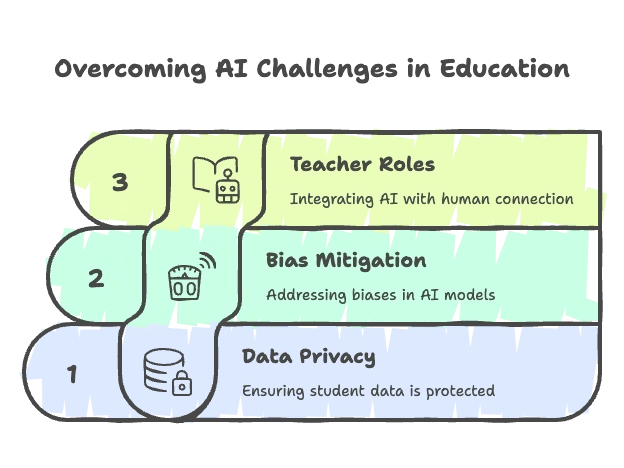
1. Data Privacy: The Invisible Vulnerability

Every interaction a student has with AI—questions asked, mistakes made, behavior patterns—creates sensitive data.
If mismanaged, misused, or poorly secured, it puts students at risk.
Schools often rely on third-party platforms without fully understanding how student data is stored, processed, or shared.

The rule of 2025:
If student data fuels personalization, the school must demand transparency.

2. The Equity Gap: Who Gets the Best AI?

AI has the power to close learning gaps—but it can widen them too.
Affluent schools deploy premium adaptive systems; underfunded schools struggle with outdated hardware and unstable internet.

The result?
Two different futures for two different groups of children.

Without policy and investment, AI becomes an amplifier—not an equalizer.

3. Over-Reliance: When AI Becomes a Crutch

AI tutors are patient, reliable, and available 24/7.
But they should not replace the discomfort, debate, and discovery that come from human interaction.

Too much dependence can weaken:

  • critical thinking,

  • resilience,

  • peer collaboration,

  • and the ability to struggle productively.

AI should guide learning—not carry it.

4. Bias & Hallucinations: The Unseen Threat

Even the best AI systems sometimes produce:

  • misleading explanations,

  • culturally biased suggestions,

  • or confidently wrong answers.

A biased model shapes biased learners.

This is why human oversight is non-negotiable.

Implementation Framework — How Schools Can Adopt AI Safely & Efficiently 

AI adoption in schools doesn’t fail because of the technology — it fails because of rushed decisions, unclear goals, and overwhelmed teachers.
A safe, strategic rollout looks different. It starts with understanding people, not tools.

1. Assess Needs (Begin with a Diagnostic Survey)

Before buying anything, schools must ask:
“Where is the pain actually happening?”
Is it learning gaps? Administrative overload? Personalization challenges?
A simple teacher + student survey reveals the real bottlenecks.

2. Audit Data Availability

AI is only as strong as the data it sees.
Schools should identify:

  • available learning records

  • device access

  • internet reliability

  • existing LMS systems

This prevents adopting tools that won’t work in real conditions.

3. Choose the Right AI Categories

Instead of buying “an AI platform,” schools should choose by function:

CategoryPurpose
Content GenerationLesson plans, worksheets, summaries
Adaptive LearningPersonalized pathways
Admin AutomationAttendance, grading, documentation
AI Tutoring24/7 support for students

This avoids overbuying and underusing.

4. Run a Small Pilot (4–6 Weeks)

Pick one grade, one tool, one problem.
Measure impact before scaling.
Great pilots feel small and safe.

5. Train Teachers First, Not Last

Teachers must feel empowered — not replaced.
Hands-on workshops and peer mentoring ensure confidence.

6. Deploy at Scale (Phase-Wise)

Roll out grade by grade, not school-wide overnight.

7. Monitor Outcomes & Improve Continuously

Key KPIs schools should track:

  • Learning outcomes (test scores, mastery rates)

  • Teacher time saved (hours per week)

  • Student engagement (task completion, logins)

  • Equity metrics (improvement across learner groups)

Tool Selection Matrix

BudgetRecommended Tools
Low (₹0–₹5,000/mo)Khanmigo Lite, Google Classroom AI, Canva AI
Mid (₹5,000–₹25,000/mo)CenturyTech, Knewton Alta, Teachmint AI
High (₹25,000+/mo)Squirrel AI, Aleph, Lexile AI Suite

The Future of AI in Education (2025–2030)

The next five years will redefine what “learning” means. Not because classrooms will disappear—but because AI will finally allow education to become personal, scalable, and emotionally intelligent.

1. Individualized Learning at Population Scale

By 2030, every student could have a learning path tailored in real time. AI won’t just adjust difficulty; it will shape learning according to cognitive style, past performance, motivation bursts, and emotional state.

This is personalization not for a class—
but for entire nations.

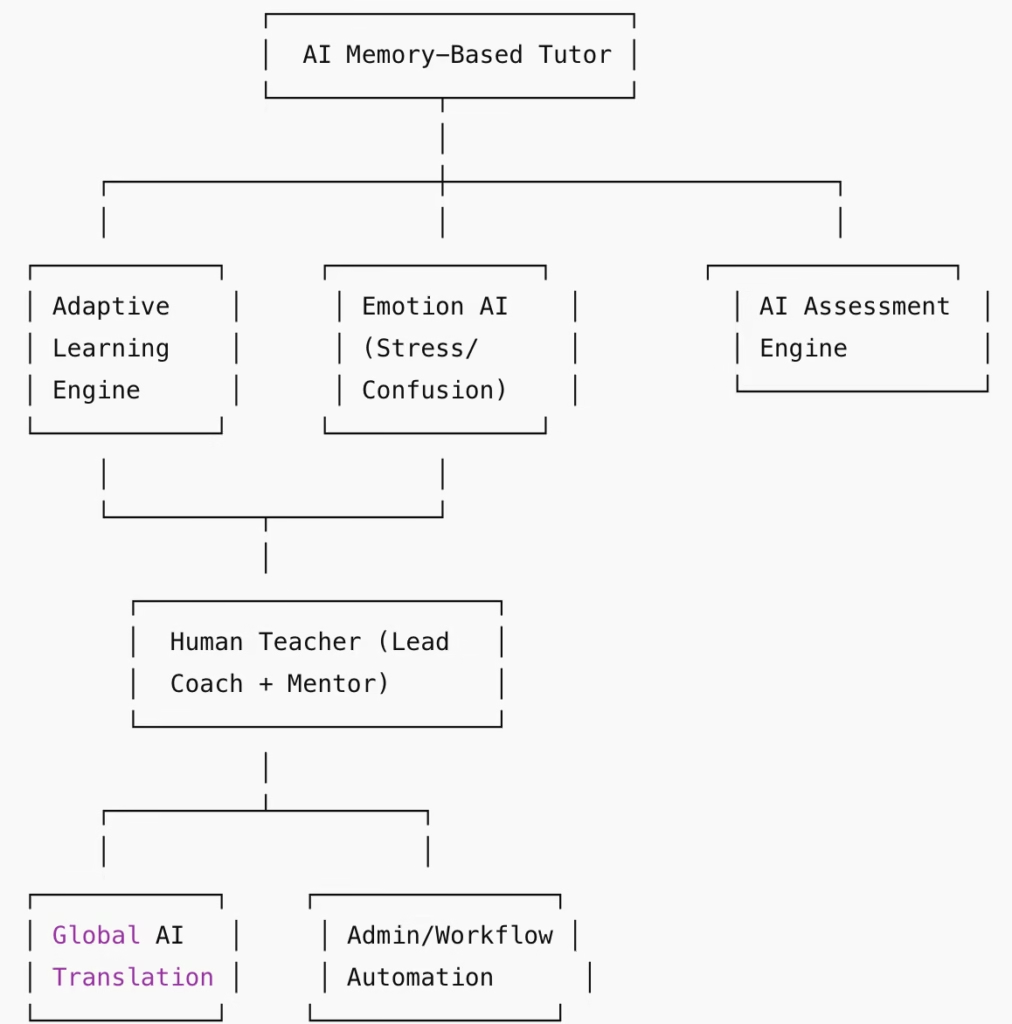
2. Memory-Based AI Tutors That Grow With the Student

AI tutors will follow a learner from Class 1 to college, remembering:

  • strengths

  • misconceptions

  • learning pace

  • preferred examples

  • historical weaknesses

For the first time, a student’s tutor will truly know them.

3. AI-Driven Exams & Assessments

Standardized exams will shift from “one big test” to continuous evidence of mastery.
AI will grade essays instantly, generate adaptive tests, and even simulate real-world problems—measuring applied reasoning, not memorization.

4. Hybrid Human + AI Classrooms Become the Norm

Teachers lead; AI scaffolds.
AI handles practice, personalization, and diagnosis.
Teachers focus on mentorship, creativity, and emotional guidance.

This is the most human version of education yet.

5. Emotion-Aware Learning Systems

AI will detect confusion, frustration, boredom, and stress through voice + interaction patterns (ethically, without surveillance).
Support will adapt automatically: slower explanations, micro-breaks, alternative examples.

6. Global Classrooms Become Reality

Real-time translation will connect classrooms in India, Japan, Africa, and Europe—breaking language barriers forever.

AI in Teaching

Editor’s Final Reflection — The Human Heart of Teaching

For all the breakthroughs AI brings into the classroom — personalized learning, real-time feedback, fewer administrative burdens — there is one truth that technology cannot replace:

Teaching is an act of humanity.

A great teacher doesn’t just deliver content.
They see a child before the child sees themselves.
They notice the trembling hand before a math test.
They hear the pause in a student’s voice that says,
“I’m trying… but I’m tired.”

AI cannot replicate that.

It can support, accelerate, personalize, lighten workloads — yes.
But it cannot offer the warmth of understanding, the comfort of encouragement, or the quiet belief that transforms a student from insecure to unstoppable.

As we step into the next decade of AI-driven education, the core of teaching doesn’t disappear.
It expands.

Teachers gain more time to mentor.
More space to build confidence.
More capacity to connect.
More energy to inspire.

AI will improve learning.
Teachers will continue changing lives.

And that is the future worth striving for:
A classroom where machines handle complexity, so humans can focus on compassion.
Where students learn faster — not because AI is brilliant — but because teachers finally have the freedom to do what they do best:

Teach with heart.

External Links:-

Education & Research

Technology & EdTech

AI Ethics & Safety

About the Author


Animesh Sourav Kullu AI news and market analyst

Animesh Sourav Kullu is an international tech correspondent and AI market analyst known for transforming complex, fast-moving AI developments into clear, deeply researched, high-trust journalism. With a unique ability to merge technical insight, business strategy, and global market impact, he covers the stories shaping the future of AI in the United States, India, and beyond. His reporting blends narrative depth, expert analysis, and original data to help readers understand not just what is happening in AI — but why it matters and where the world is heading next.

About Us
Privacy Policy
Terms of Use
Contact Us


FAQs

1. How is AI used in teaching today?

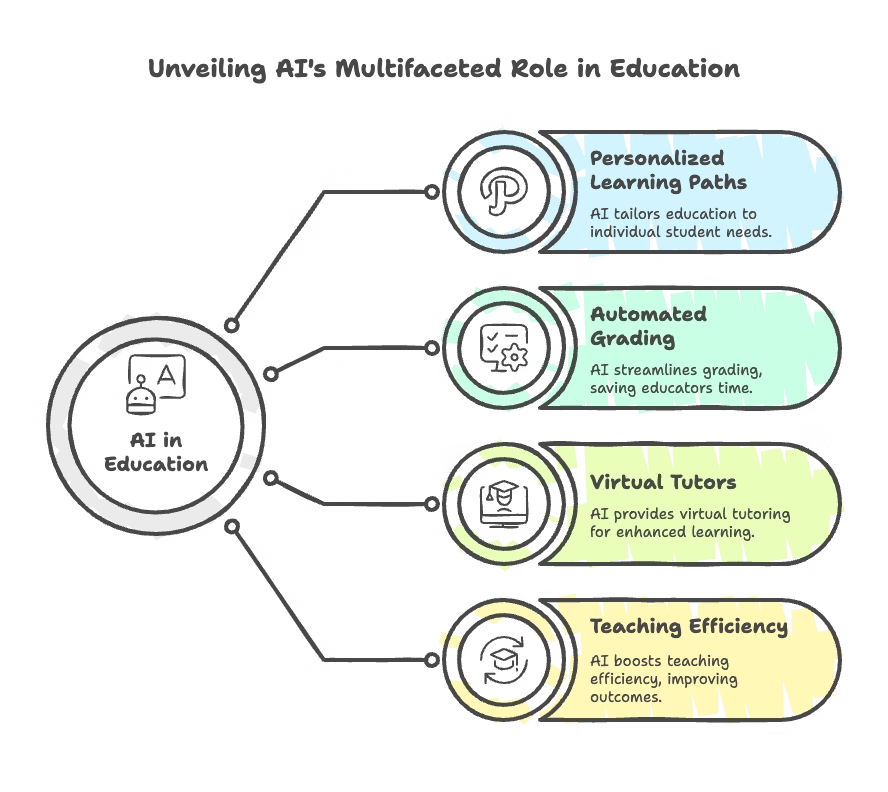
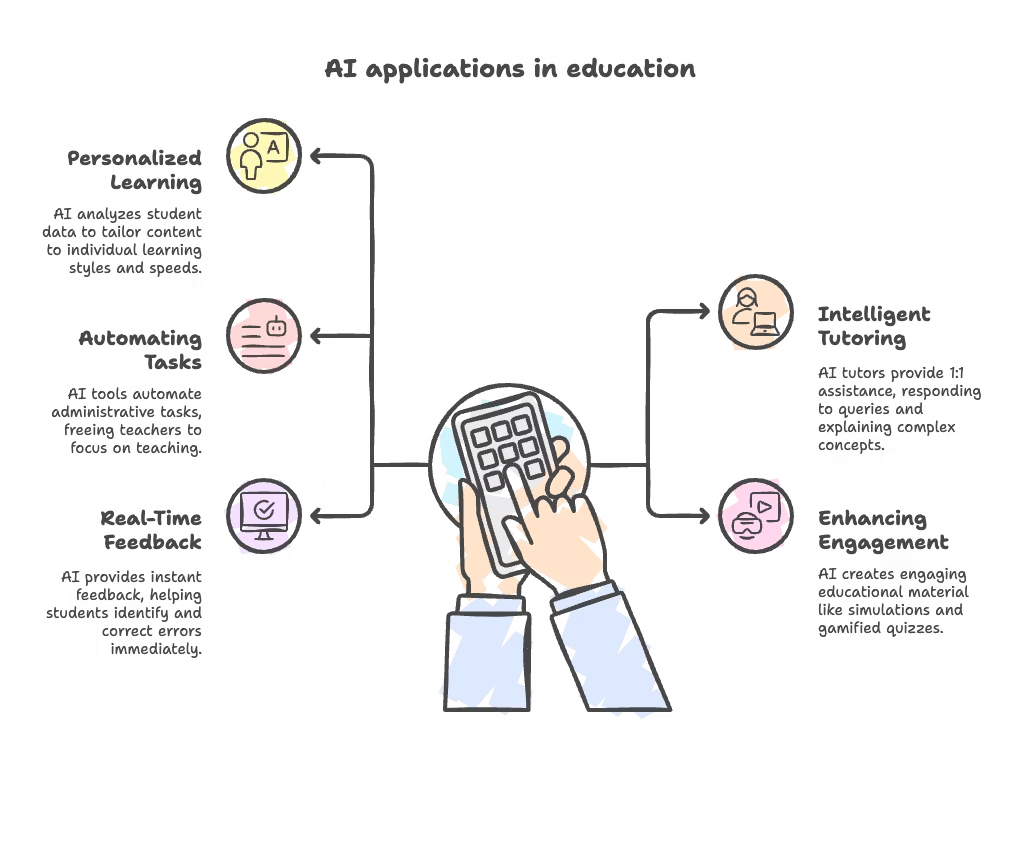
AI is used for personalized learning, automated grading, virtual tutors, and classroom analytics.

No, AI supports teachers by handling repetitive tasks, but human guidance and emotional connection remain essential.

AI improves learning outcomes through personalization, saves teachers time, and provides real-time feedback for students.

Leave a Comment

Your email address will not be published. Required fields are marked *