


Introduction: The Billion-Dollar Question Nobody Wants to Ask
Let’s be honest. If you’re building an AI startup right now, there’s a question keeping you up at night. It’s uncomfortable. It’s intimidating. And it goes something like this: How on earth do AI startups competing with OpenAI stand a chance?
I get it. OpenAI has billions in funding. They’ve got Microsoft backing them. Their models keep getting smarter. And every few months, they release something that makes your carefully planned roadmap look… well, adorable.
But here’s where things get interesting.
Andrej Karpathy—former Director of AI at Tesla, founding member of OpenAI, and one of the most respected voices in machine learning—recently shared his perspective on this exact problem. And his advice might surprise you.
The short version? AI startups competing with OpenAI don’t need to beat them at their own game. They need to play a completely different one.

Who Is Andrej Karpathy? (And Why Should You Listen?)
Before we dive into his insights, let’s establish why Karpathy’s opinion carries so much weight.
This isn’t some random pundit. Karpathy was there at the beginning. He helped build OpenAI from the ground up. Later, he led Tesla’s entire Autopilot AI division. He’s trained some of the world’s most ambitious neural networks. And he’s taught millions of people how AI actually works through his educational content.
In other words, when Karpathy talks about AI startups competing with OpenAI, he’s speaking from both sides of the battlefield. He knows what it takes to build frontier models. He also knows their limitations.
That dual perspective makes his advice invaluable for founders navigating today’s AI landscape.
Karpathy’s Four Core Strategies for AI Startups
So what does Karpathy actually recommend? His framework boils down to four key principles. Each one challenges conventional wisdom about how AI startups competing with OpenAI should approach the market.
1. Don’t Compete on Foundation Models
This is the big one. And it’s counterintuitive.
When most people think about AI startups competing with OpenAI, they imagine building bigger, better models. More parameters. More training data. More compute.
Karpathy says that’s a mistake.
OpenAI, Google, and Anthropic have essentially unlimited resources. They’re spending billions on infrastructure. They have exclusive deals with cloud providers. Trying to out-scale them is like bringing a slingshot to a missile fight.
The insight here is crucial: AI startups competing with OpenAI should consume foundation models, not build them. Use the APIs. Leverage what already exists. Don’t reinvent the wheel—put better tires on it.
This single mindset shift changes everything about startup strategy.
2. Build Around Narrow, High-Value Use Cases
Here’s where AI startups competing with OpenAI actually have an advantage.
OpenAI builds general-purpose models. They have to. Their business depends on serving millions of different use cases. That breadth is their strength—but also their weakness.
AI startups competing with OpenAI can go deep where OpenAI goes wide.
Think about it:
- Legal drafting tools that understand specific contract types
- Healthcare documentation systems that know clinical workflows
- Developer productivity tools designed for particular tech stacks
These aren’t sexy demos. They’re boring, practical solutions to expensive problems. And that’s exactly why they work.
Karpathy emphasizes that AI startups competing with OpenAI win by understanding domain nuances that general models miss. The startup that knows exactly how insurance claims get processed will outperform GPT-5 at insurance claims processing. Every time.
3. Own the Product Experience, Not the Model
This principle might be the most important for AI startups competing with OpenAI to understand.
Users don’t pay for parameters. They pay for outcomes.
Think about how people actually interact with AI tools. They don’t care whether the model has 100 billion or 1 trillion parameters. They care about whether it solves their problem quickly, reliably, and without friction.
AI startups competing with OpenAI should obsess over:
- User experience (Is the interface intuitive?)
- Reliability (Does it work every single time?)
- Integration (Does it fit into existing workflows?)
When you focus on these elements, something interesting happens. The underlying model becomes almost irrelevant. You could swap it out tomorrow and users wouldn’t notice—if the product experience remains excellent.
That’s a moat OpenAI can’t easily cross.
4. Move Fast and Stay Flexible
The AI landscape changes weekly. Sometimes daily. Models that seem revolutionary today become commodities tomorrow.
For AI startups competing with OpenAI, this volatility is actually good news.
Why? Because startups can adapt faster than incumbents. They can rebuild architectures overnight. They can switch providers without board meetings. They can experiment without bureaucratic approval.
Karpathy recommends building vendor-agnostic systems from day one. AI startups competing with OpenAI should never become dependent on a single provider. The moment OpenAI changes pricing, updates terms of service, or deprecates an API version, you need alternatives ready.
This flexibility becomes a competitive advantage that even OpenAI itself doesn’t have.
Why This Advice Is Strategically Brilliant
Let’s zoom out and examine why Karpathy’s framework matters for AI startups competing with OpenAI in 2025 and beyond.
AI Is Becoming a Commodity Layer
Here’s a trend most founders haven’t internalized yet. Foundation models are converging. OpenAI, Anthropic, Google, Meta—their flagship models perform similarly on most benchmarks.
For AI startups competing with OpenAI, this commoditization is liberating. When one model works pretty much as well as another, differentiation moves up the stack. It shifts toward product, distribution, and domain expertise.
Distribution Beats Intelligence
This is uncomfortable for technically-minded founders to hear. But it’s true.
The winning AI startups competing with OpenAI won’t necessarily have the smartest systems. They’ll have the best distribution. They’ll control workflows. They’ll build habits. They’ll become indispensable through integration, not innovation.
OpenAI can build the most intelligent model in the world. But if your startup owns the user relationship, the workflow, and the data—you’re still in control.
The Real Moat Is Domain Knowledge
Raw compute power isn’t a moat. Anyone with enough money can rent GPUs.
But deep domain knowledge? Years of accumulated industry data? Intimate understanding of customer workflows?
That’s something AI startups competing with OpenAI can build that OpenAI cannot easily replicate. Their general-purpose approach prevents them from going deep in any single vertical.
What This Means for AI Startups in 2025
Karpathy’s insights point toward several major trends reshaping how AI startups competing with OpenAI approach the market.
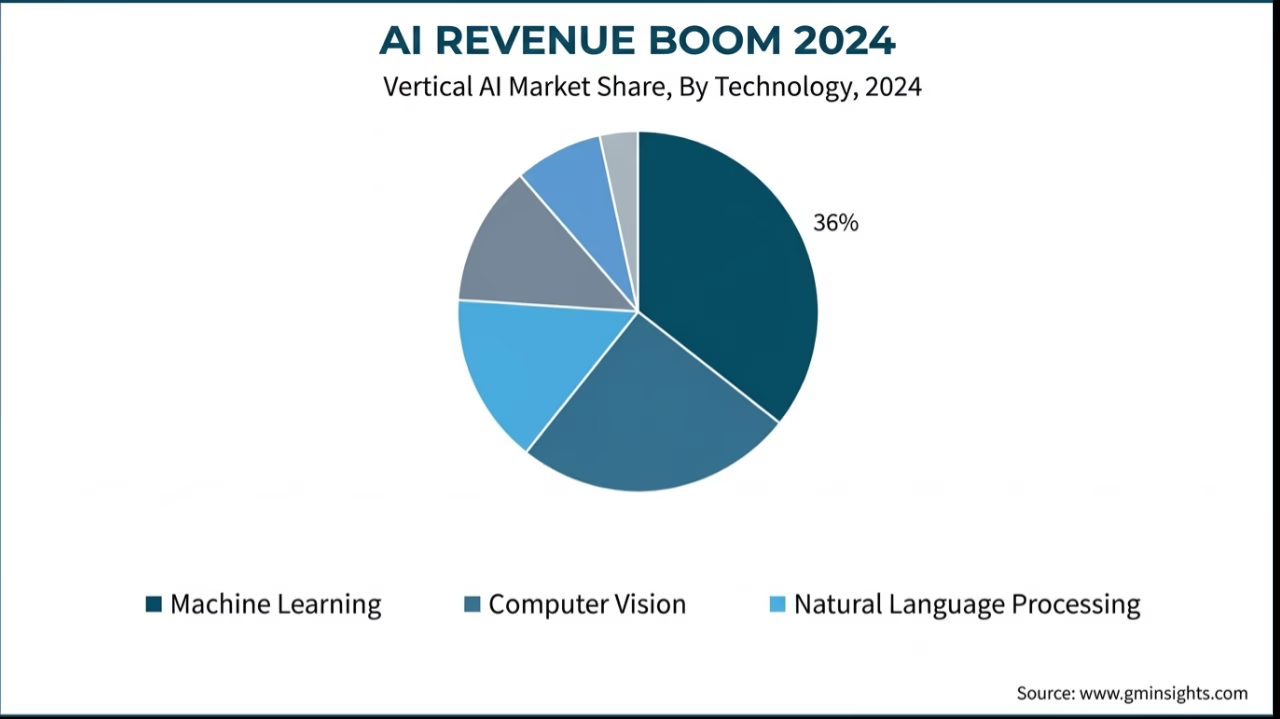
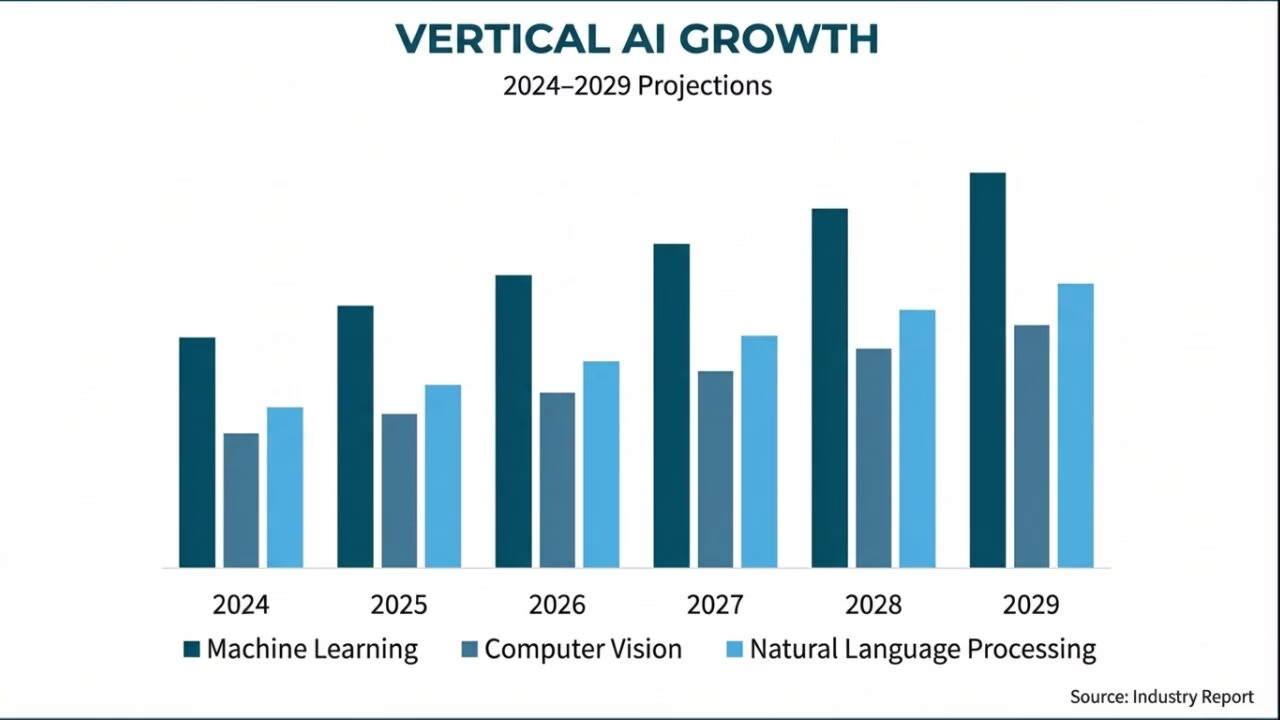
The Rise of Vertical AI Companies
We’re witnessing an explosion of industry-specific AI tools. These aren’t general chatbots—they’re specialized systems built for narrow use cases.
| Industry | Example Use Case | Why Vertical AI Wins |
|---|---|---|
| Legal | Contract analysis | Understands legal terminology and precedents |
| Healthcare | Clinical documentation | Knows HIPAA requirements and medical codes |
| Finance | Risk assessment | Integrates with existing compliance systems |
| Real Estate | Property valuations | Combines local market data with AI |
| Manufacturing | Quality control | Trained on specific defect patterns |
AI startups competing with OpenAI in these verticals have inherent advantages that generalist models can’t match.
AI as Infrastructure, Not the Product
Another shift Karpathy anticipates: AI becoming invisible.
The most successful AI startups competing with OpenAI won’t market themselves as “AI companies” at all. They’ll be software companies that happen to use AI under the hood. The intelligence becomes infrastructure—essential but unseen.
Think about how electricity works. Nobody markets a “electricity-powered toaster.” It’s just a toaster. AI is heading in the same direction.
Fewer “AI Companies,” More “AI-Powered Companies”
This distinction matters for AI startups competing with OpenAI.
The companies winning market share aren’t selling AI. They’re selling solutions to business problems. AI is merely the enabling technology.
When you stop marketing intelligence and start marketing outcomes, you escape the comparison trap entirely. Nobody asks whether your legal research tool is smarter than ChatGPT—they ask whether it saves lawyers time.
Competing With OpenAI: What To Do (And What To Avoid)
Based on Karpathy’s framework, here’s a practical guide for AI startups competing with OpenAI:
| What NOT To Do | What To Do Instead |
|---|---|
| Train giant foundation models | Use APIs strategically |
| Chase benchmark performance | Solve real workflow problems |
| Market raw intelligence | Deliver measurable outcomes |
| Depend on single vendor | Stay model-agnostic |
| Build for demos | Build for daily use |
| Compete on parameters | Compete on product experience |
Every row in this table represents a strategic decision. AI startups competing with OpenAI successfully tend to choose the right column consistently.
Risks and Realities: A Balanced View
Now, I’d be doing you a disservice if I pretended Karpathy’s approach has no downsides. AI startups competing with OpenAI through API consumption face real risks:
API Dependency: Building on OpenAI’s infrastructure means accepting their pricing changes, policy updates, and potential outages.
Margin Pressure: When your core technology is rented, maintaining healthy profit margins becomes challenging.
Platform Risk: OpenAI might expand into your vertical. They’ve done it before. They’ll do it again.
Trust and Compliance: For sensitive industries, explaining that customer data flows through third-party APIs creates friction.
Smart AI startups competing with OpenAI plan for these scenarios. They build fallback providers. They negotiate enterprise agreements. They develop proprietary data advantages that survive even if models become commoditized.
Editorial Insight: Why This Moment Matters
Let me share my perspective on why Karpathy’s timing is so significant.
The AI Gold Rush Is Over
The period of easy money and unlimited hype for AI startups competing with OpenAI has ended. Investors now demand real revenue, real retention, and real unit economics. The survivors will be companies that solved genuine problems—not those that impressed demo audiences.
OpenAI Is a Platform, Not the Enemy
Here’s a mindset shift that struggling AI startups competing with OpenAI need to make. OpenAI isn’t your competitor. It’s your infrastructure provider.
Would you consider AWS your competitor because you use their servers? Of course not. The same logic applies to AI APIs. Use them. Build on them. But don’t try to replace them.
The Next Billion-Dollar AI Companies Will Look Boring
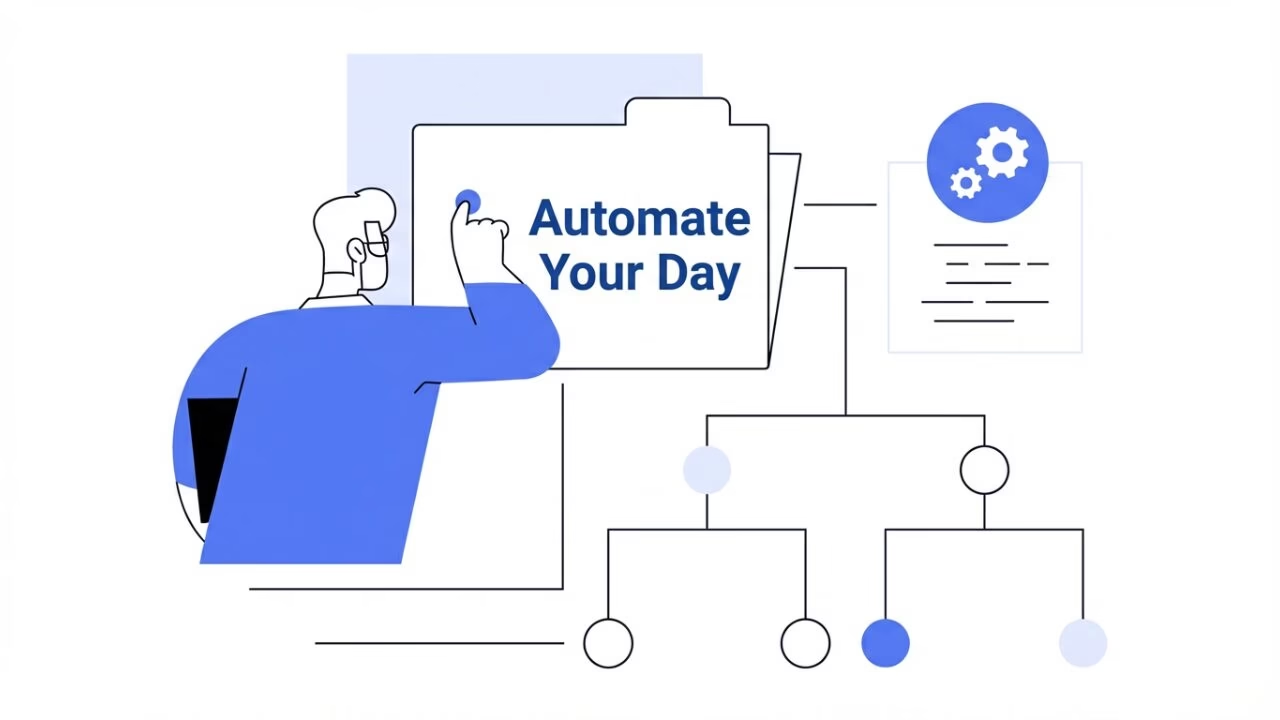
This is perhaps the most important insight for AI startups competing with OpenAI. The massive winners won’t be flashy. They’ll be mundane. They’ll automate paperwork. They’ll streamline approvals. They’ll eliminate tedious data entry.
Boring problems. Massive markets. That’s the formula.
What Comes Next for AI Startups
Looking ahead, several trends will shape how AI startups competing with OpenAI evolve:
Consolidation is coming. Many current startups won’t survive. Those with real customers and real revenue will absorb competitors or get acquired.
Model builders will become rare. The economics simply don’t work for most companies. AI startups competing with OpenAI as model builders need extraordinary resources.
Product managers become crucial. The winning AI startups competing with OpenAI will be led by people who understand users, not just algorithms.
Reliability trumps capability. Enterprise customers care about consistency. AI startups competing with OpenAI through superior reliability will win contracts that raw intelligence can’t.
Conclusion: Reframing the Competition
Andrej Karpathy’s advice fundamentally changes how we should think about AI startups competing with OpenAI.
The old mental model—scrappy startup takes on giant with better technology—doesn’t apply here. OpenAI has won the foundation model race. That battle is over.
But here’s the thing: that battle was never the war.
AI startups competing with OpenAI don’t need to build smarter models. They need to build better products. They need to understand customers more deeply. They need to execute faster. They need to turn impressive AI into invisible infrastructure.
The companies that internalize this lesson will thrive. They’ll take OpenAI’s building blocks and construct something OpenAI never could.
Because in the end, AI startups competing with OpenAI aren’t really competing with OpenAI at all. They’re competing to solve customer problems. And that’s a game where startups have always had the advantage.
What do you think? Are you building an AI startup? How are you positioning against the giants? Drop your thoughts in the comments below—I’d love to hear how you’re approaching AI startups competing with OpenAI in your specific market.

Animesh Sourav Kullu is an international tech correspondent and AI market analyst known for transforming complex, fast-moving AI developments into clear, deeply researched, high-trust journalism. With a unique ability to merge technical insight, business strategy, and global market impact, he covers the stories shaping the future of AI in the United States, India, and beyond. His reporting blends narrative depth, expert analysis, and original data to help readers understand not just what is happening in AI — but why it matters and where the world is heading next.