

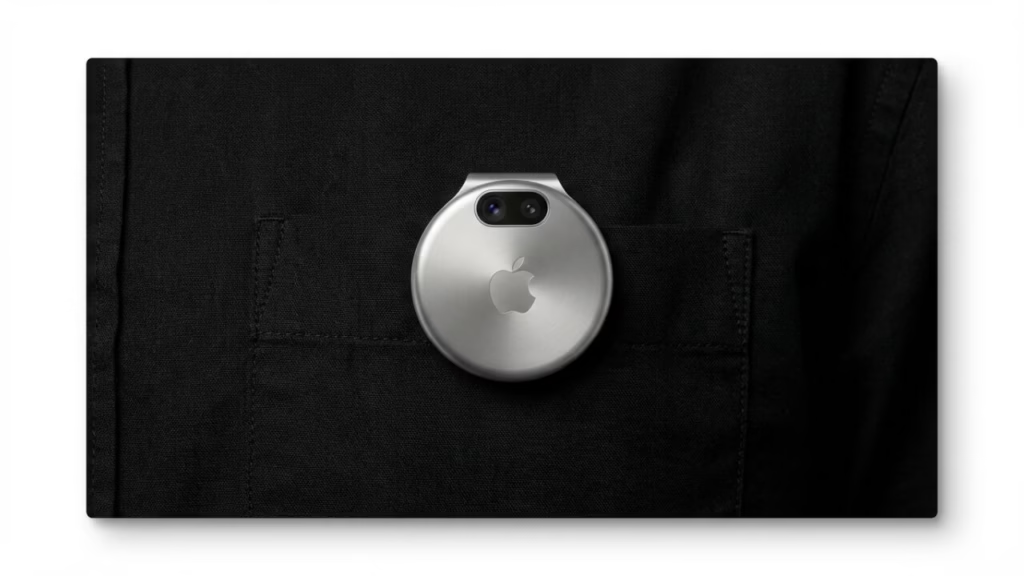
Apple AI Pin targets 2027 release with dual cameras, advanced Siri AI, and AirTag-sized design. Get pricing, specs, and how it beats Humane AI Pin.
Key Takeaways :-
Apple’s AI Pin is rumored for 2027 with AirTag-sized design, dual cameras, and hands-free Siri AI. No official price yet—expect $500-$800 range. Competes with Humane AI Pin ($699) and Rabbit R1 ($199). Not confirmed for production. iPhone integration likely. Preorders unavailable. Development stage means delays possible.
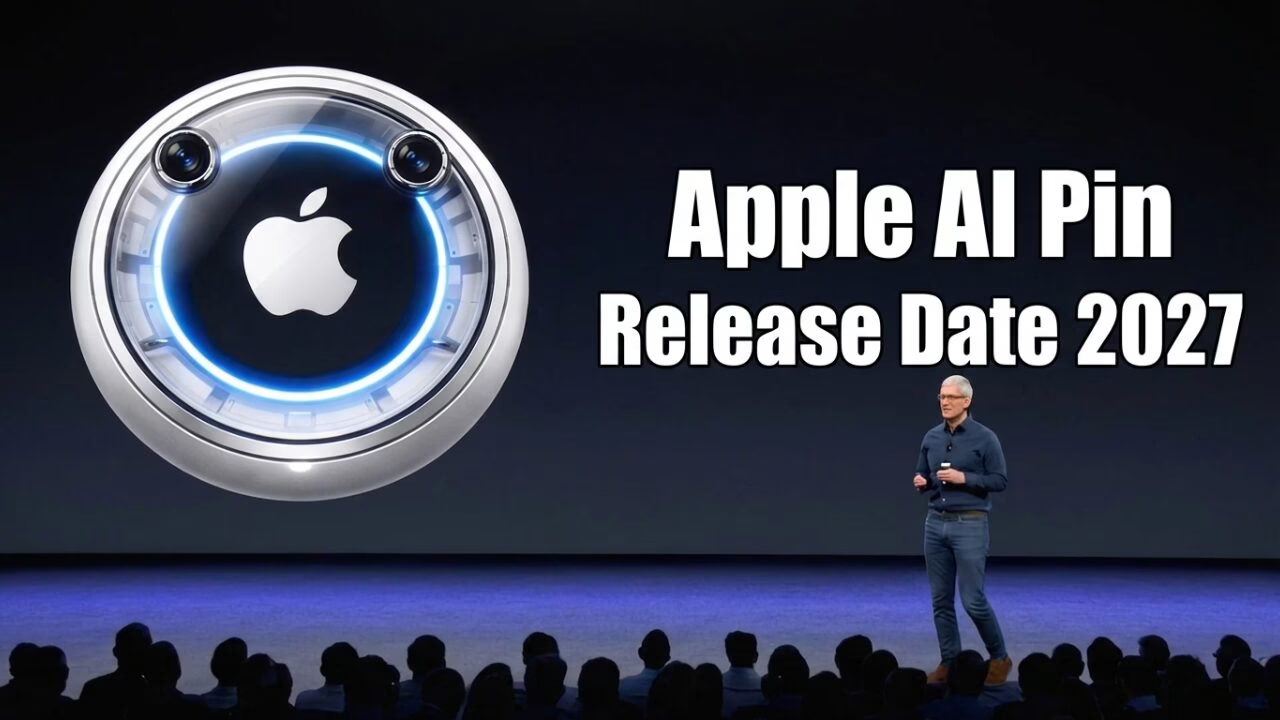
You’ve been refreshing Apple’s website hoping for an AI Pin announcement, haven’t you?
Here’s the truth: Apple’s AI Pin isn’t coming tomorrow. Or next month. The rumored release date sits somewhere in 2027—and that’s if everything goes according to plan.
But here’s what makes this worth your attention now.
This isn’t another gadget. It’s Apple’s first serious attempt at screenless AI that doesn’t require you to stare at another display all day. The AI Pin could answer questions, capture moments, and control your smart home—all while clipped to your shirt.
In this article, you’ll discover:
- The actual 2027 release timeline (and why it might shift)
- Expected pricing based on competitor analysis
- How it stacks up against Humane AI Pin and Rabbit R1
- Whether you should wait or buy alternatives now
Let’s cut through the hype and speculation.
Apple AI Pin Release Date: What’s the Official Timeline?
Apple hasn’t confirmed anything publicly.
That’s important to say upfront. The 2027 release date comes from supply chain analysts and industry insiders—not from Apple Park.
Here’s what we know for certain:
- Development started after the success of AirPods and Apple Watch
- Patents filed in 2023-2024 show AI wearable technology
- Production partners haven’t been finalized yet
The 2027 window makes sense for three reasons:
First, Apple typically takes 3-4 years from concept to launch for new product categories. The Apple Watch took four years. AirPods took three.
Second, AI technology needs to mature. Humane AI Pin launched in 2024 with battery problems and sluggish performance. Apple learned from their mistakes.
Third, chip manufacturing. Apple’s custom AI silicon requires advanced nodes. TSMC’s 2nm process—likely for the AI Pin—won’t be production-ready until late 2026.
Could it arrive earlier?
Unlikely. Apple’s track record shows they delay products rather than rush them. The Vision Pro took seven years.
Could it be canceled?
Possibly. Remember AirPower? Apple scrapped it after announcing it publicly. This AI Pin hasn’t been announced, which means Apple can kill it quietly.
What does this mean for you? Don’t hold your breath for a 2025 or 2026 launch.
Expected Price: How Much Will Apple AI Pin Cost?
No official pricing exists, but we can make educated guesses.
Price prediction: $599-$799 at launch.
Here’s the breakdown:
Competitor pricing reference:
- Humane AI Pin: $699 + $24/month subscription
- Rabbit R1: $199 (no subscription)
- Meta Ray-Ban Smart Glasses: $299
- Apple Watch Ultra 2: $799
Apple typically positions new categories in the premium range. AirPods Pro launched at $249 when most wireless earbuds cost $100-$150.
Cost factors driving the price:
Dual camera systems aren’t cheap. The iPhone 15 Pro’s camera module alone costs Apple ~$70. Two cameras in a tiny pin form factor? Even more expensive.
Advanced AI processing requires custom silicon. Apple’s A-series chips cost $40-$100 depending on complexity.
Battery miniaturization adds cost. Fitting workable battery life into an AirTag-sized device requires expensive battery technology.
The subscription question:
Will Apple charge monthly fees like Humane ($24/month)?
Probably not. Apple prefers upfront hardware costs over subscription models for consumer devices. Apple Watch doesn’t require a subscription for core features.
However, certain AI features might tie into iCloud+ ($0.99-$9.99/month). Think cloud storage for AI Pin recordings or advanced Siri capabilities.
What about storage tiers?
Expect multiple configurations:
- Base model (64GB): $599
- Mid-tier (128GB): $699
- Premium (256GB): $799
Similar to AirPods Pro and Apple Watch pricing strategy.
Should you save up now? Only if you’re certain you want first-generation Apple AI hardware.
Key Features and Specs: What Makes Apple AI Pin Different?
Let’s talk about what this tiny device reportedly does.
Physical Design:
Size: Similar to an AirTag (1.26 inches diameter) Weight: Under 20 grams (lighter than AirPods Pro case) Attachment: Magnetic clip (similar to iPod shuffle design) Colors: Space Gray, Silver, (Product) Red likely
Camera System:
Dual cameras for depth sensing and photo/video capture. Think of it as iPhone’s front and rear cameras shrunk down.
One camera faces outward for environmental scanning. The second handles close-up object recognition.
Use case: Point at a restaurant menu in French. The AI Pin translates instantly through the speaker.
Audio Components:
Built-in speaker for voice feedback. No screen means all interactions happen through sound.
Dual microphones with noise cancellation. Siri needs to hear you in noisy environments.
Spatial audio support likely. Apple loves pushing spatial audio across all products.
AI and Siri Integration:
This is where things get interesting.
Apple’s rumored “Siri 2.0” upgrade focuses on contextual understanding. Ask “What’s the weather?” and it knows your location without specifying.
On-device processing for privacy. Unlike Humane AI Pin which sends everything to the cloud, Apple processes sensitive queries locally.
Third-party AI integration possible. ChatGPT or Google Gemini might work through Apple’s framework, similar to iOS 18’s AI features.
Battery Life:
This is the big unknown.
Humane AI Pin manages 4-6 hours with moderate use. Users complain it dies by mid-afternoon.
Apple targets all-day battery life (16+ hours) for wearables. Achieving this in a pin form factor? Extremely challenging.
Expect a charging case, similar to AirPods. The pin charges in the case overnight.
Connectivity:
Bluetooth 5.3 for iPhone pairing Ultra Wideband (UWB) for precision tracking No cellular connectivity (relies on iPhone) Wi-Fi Direct for quick file transfers
What’s missing? A display. This is intentional—Apple wants hands-free, screen-free interaction.
Apple AI Pin vs Competitors: How Does It Stack Up?
You’ve got options beyond waiting until 2027.
Let’s compare Apple’s rumored AI Pin against what’s available now.
Apple AI Pin vs Humane AI Pin:
| Feature | Apple AI Pin (Rumored) | Humane AI Pin |
|---|---|---|
| Price | $599-$799 (est.) | $699 + $24/month |
| Release Date | 2027 (rumored) | Available now |
| Battery Life | Unknown (target: 16hrs) | 4-6 hours |
| Screen | None | Laser projection |
| Connectivity | iPhone required | Standalone cellular |
| AI Model | Apple AI + Siri 2.0 | Custom AI |
| Ecosystem | Apple ecosystem only | Platform agnostic |
The Humane advantage: It works right now. You don’t need an iPhone.
The Apple advantage: Better battery life (hopefully) and seamless ecosystem integration.
Humane’s problem: Reviews are brutal. Verge gave it 4/10. Battery dies fast, AI is slow, and the projection screen barely works in sunlight.
Apple AI Pin vs Rabbit R1:
| Feature | Apple AI Pin (Rumored) | Rabbit R1 |
|---|---|---|
| Price | $599-$799 (est.) | $199 |
| Form Factor | Clip-on pin | Handheld square |
| Display | None | 2.88″ touchscreen |
| AI Approach | Siri-based | LAM (Large Action Model) |
| App Integration | iOS apps | Direct service control |
Rabbit’s advantage: Dirt cheap at $199. Has a screen for visual feedback.
Apple’s advantage: Better build quality and ecosystem lock-in.
Rabbit’s problem: Limited functionality. It’s essentially a voice assistant in a square case. Sales dropped 90% after launch month.
Apple AI Pin vs Meta Ray-Ban Smart Glasses:
Meta’s glasses ($299) offer a different approach: AI in eyewear instead of a pin.
Glasses advantage: Hands-free vision AI with cameras at eye level. Meta AI integration works well for real-time translations and object identification.
Pin advantage: More discreet. Glasses look techy; a pin disappears under a jacket.
Which should you buy? If you need AI now, try Humane or Meta glasses. If you’re patient, wait for Apple.
Battery Life and Design: Addressing the Elephant in the Room
Let’s be honest: battery life could kill this product.
Humane AI Pin’s biggest complaint? Dead by lunchtime. Reviews mention 4-hour battery life with active use.
Why battery life matters more than features:
A dead AI Pin is just a $700 paperweight. You won’t wear it if it can’t last through your workday.
Apple knows this. They delayed AirPods until battery tech improved. They won’t launch an AI Pin that dies after four hours.
How Apple might solve the battery problem:
Option 1: Charging case strategy
Similar to AirPods. The pin charges in a pocket-sized case. Total battery life: 24+ hours with case.
Downside: You need to swap the pin to the case mid-day.
Option 2: Hot-swappable magnetic batteries
Carry a spare battery pack. Snap it on when the first dies. Takes 2 seconds.
Downside: Extra cost for additional batteries.
Option 3: Ultra-low-power AI chip
Apple’s custom silicon could process AI queries using minimal power. Think Apple Watch’s always-on display tech but for AI processing.
Downside: Requires chip technology that doesn’t exist yet.
Design durability concerns:
A clip-on device faces unique challenges.
Water resistance: Expect IP67 rating minimum (splash and dust resistant). Apple won’t release a wearable that dies in light rain.
Drop protection: Small devices get dropped. The pin needs reinforced corners and shatterproof camera lenses.
Magnetic strength: Strong enough to stay clipped during workouts, weak enough for easy removal.
Clothing damage: Some users worry magnets might damage delicate fabrics. Apple will likely use fabric-safe magnets like those in MagSafe accessories.
Bottom line: If Apple can’t solve battery life, this product won’t ship.
iPhone Integration: How the Apple Ecosystem Advantage Works
Here’s where Apple’s AI Pin gets interesting.
It won’t work without an iPhone. That’s not a bug—it’s the strategy.
How iPhone integration works:
The AI Pin connects via Bluetooth and UWB to your iPhone. All heavy processing happens on your phone. The pin is just an interface.
This solves three problems:
Battery life: Offloading computation to iPhone extends pin battery dramatically.
Data privacy: Your AI interactions sync through iCloud with end-to-end encryption.
App ecosystem: The pin accesses your iPhone apps without needing separate app installs.
Practical integration examples:
Scenario 1: You’re cooking. Ask the AI Pin “Set a timer for 12 minutes.” It triggers your iPhone’s timer through Siri shortcuts.
Scenario 2: Walking your dog. Say “Play my workout playlist.” The pin controls Apple Music on your iPhone, which outputs to your AirPods.
Scenario 3: Taking a photo. Press the pin’s button. It captures an image and syncs it directly to your iPhone’s Photos app.
The ecosystem lock-in:
This creates a powerful barrier to switching ecosystems.
Already own an iPhone, Apple Watch, and AirPods? The AI Pin slots in seamlessly. Switching to Android means losing the AI Pin functionality entirely.
Will it work with iPad or Mac?
Probably through Handoff features. Start a task on your AI Pin, finish it on your Mac.
The downside of iPhone dependency:
You can’t leave your iPhone at home. The pin is useless without it.
Humane AI Pin works standalone with cellular. That’s more independent but requires $24/month subscription.
Is this a dealbreaker? Not if you already carry your iPhone everywhere.
Potential Delays or Cancellations: What Could Go Wrong?
Let’s talk about the risks you need to know.
Apple has killed products before:
AirPower (wireless charging mat): Announced in 2017, canceled in 2019. Technical challenges proved unsolvable.
Apple Car: 10+ years of development, canceled in 2024. Too complex and unprofitable.
Smaller HomePod: Discontinued despite decent sales.
What could delay or cancel the AI Pin?
Technical challenges:
Battery technology might not advance fast enough. If Apple can’t achieve 12+ hour battery life, they won’t ship.
AI processing at this scale is unproven. Shrinking powerful AI into a pin-sized chip might not work yet.
Thermal management in small devices is extremely difficult. Overheating would make the pin uncomfortable to wear.
Market timing:
If Humane AI Pin’s failure scares consumers away from AI wearables, Apple might reconsider.
If LLM advancements plateau, the AI Pin’s core value proposition weakens.
If smartphones get better hands-free AI (improved Siri, Action Button features), the pin becomes redundant.
Regulatory issues:
Privacy regulations around always-on cameras and microphones might tighten. EU’s AI Act could complicate launch in Europe.
Supply chain problems:
Custom components for a niche product category create manufacturing risks. Low initial production volumes mean higher costs.
Signs that could indicate cancellation:
- Key engineers leaving the project
- Patent filings stopping completely
- Competitor products failing catastrophically in the market
- Apple shifting focus to Vision Pro accessories instead
Signs that suggest the project is on track:
- Continued patent filings with AI wearable tech
- Job postings for wearable AI engineers
- Supply chain reports mentioning Apple’s component orders
Should you worry? Yes and no. The 2027 timeline is far enough out that Apple could pivot. But AI wearables make strategic sense for Apple’s ecosystem.
Preorder and Buying Guide: How to Prepare
You can’t preorder the Apple AI Pin yet.
But here’s how to position yourself for launch day—if it happens.
Step 1: Join Apple’s notification system
Visit apple.com and sign up for product announcements. Apple typically sends emails to registered users 24 hours before preorders open.
Step 2: Prepare your Apple ecosystem
Minimum requirements (estimated):
- iPhone 15 or newer (A17 chip or later)
- iOS 19 or later
- Active Apple ID
- iCloud storage plan recommended
Step 3: Set aside budget
Assume $800 for premium model. Add $100 for accessories (charging case, spare clips, protective covers).
Step 4: Monitor these sources for announcements
- Mark Gurman’s Bloomberg newsletter (most reliable Apple leaks)
- Ming-Chi Kuo’s Twitter (supply chain analyst)
- Apple’s Newsroom (official announcements)
Step 5: Decide if you’re buying first generation
Reasons to buy at launch:
- Early adopter who wants cutting-edge tech
- Already invested heavily in Apple ecosystem
- Need hands-free AI for accessibility reasons
Reasons to wait for v2:
- First-gen Apple products often have issues (Apple Watch Series 1, first-gen AirPods)
- Price typically drops $100-$200 after 6-12 months
- Second generation fixes battery and performance issues
Alternative strategy: Buy competitors now, resell later
Humane AI Pin resale value will plummet when Apple AI Pin launches. But using it now gives you real-world AI wearable experience.
Rabbit R1 at $199 is cheap enough to try without big financial risk.
The waiting game:
If you’re dead set on Apple AI Pin, here’s the timeline:
- 2025-2026: Watch for supply chain leaks and patent activity
- Early 2027: Official announcement likely at WWDC or September event
- Mid-2027: Preorders open (typically 1-2 weeks after announcement)
- Late 2027: First units ship
What should you do right now? Nothing. Save your money and watch the development closely.
Why Apple AI Pin Could Change AI Wearables
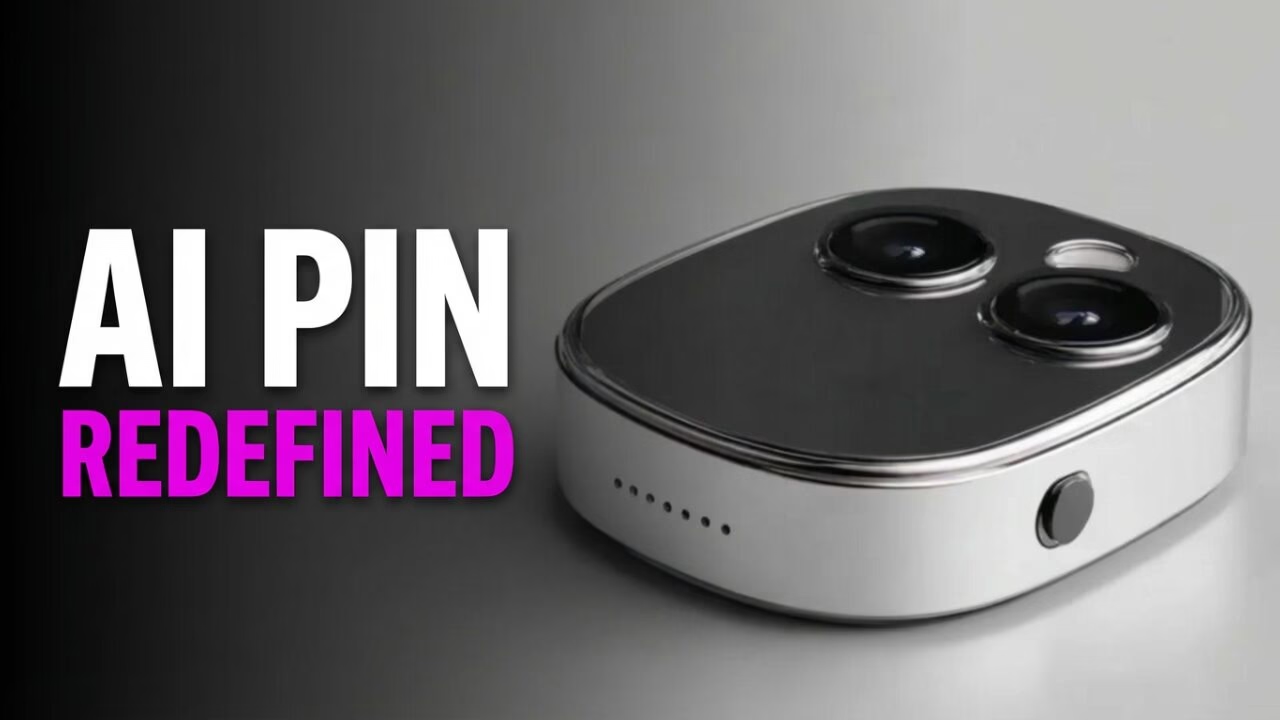
The problem Apple is trying to solve:
You’re drowning in screens. Phone, laptop, watch, tablet, TV. Every device demands your visual attention.
AI Pins offer a different interaction model: voice-first, vision-enabled, screen-free computing.
Where the market is heading:
Humane AI Pin proved the concept but failed the execution. The technology exists—the implementation doesn’t.
Meta’s Ray-Ban glasses showed people want hands-free AI. Over 700,000 units sold in 2024.
OpenAI reportedly building AI hardware. Google developing AI glasses. The market is forming.
Apple’s unique advantages:
Privacy infrastructure: On-device processing means your conversations don’t get sent to the cloud.
Ecosystem integration: The AI Pin becomes another node in the Apple network. It works with your existing devices, not against them.
Hardware expertise: Apple knows how to miniaturize technology. They’ve done it with AirPods, Apple Watch, AirTag.
Design philosophy: Apple ships polished products, not beta experiments. They’ll wait until it works right.
The realistic scenario:
Apple AI Pin won’t replace your iPhone. It’ll complement it.
You’ll use it for:
- Quick questions while cooking (hands are dirty)
- Voice notes during walks (no need to pull out phone)
- Discrete photo capture at events (less obtrusive than raising phone)
- Smart home control throughout your house
The skeptical scenario:
It becomes another niche product like HomePod. Technically impressive but too limited for mainstream adoption.
What would make it succeed:
- All-day battery life (minimum 14 hours)
- Sub-second AI response times
- Accurate voice recognition in noisy environments
- Useful features that justify $600+ cost
What would make it fail:
- Battery life under 8 hours
- Requires constant iPhone proximity
- AI responses slower than just using your phone
- Limited third-party integration
The honest take: Wait for real-world reviews before buying.
Final Thoughts: Should You Wait for Apple AI Pin?
Here’s what you need to remember:
2027 is a long time away. Two years in tech might as well be a decade. AI models will improve. Battery technology will advance. Competitors will iterate.
If you need AI wearable tech now:
Buy Meta Ray-Ban Smart Glasses ($299). They work well, integrate with Meta AI, and look like normal glasses.
Skip Humane AI Pin unless you find it on heavy discount. The execution problems aren’t worth $699.
Try Rabbit R1 at $199 if you’re curious. Low risk way to experiment with LAM technology.
If you’re willing to wait:
Monitor Apple’s announcements through 2025-2026. Watch how Humane evolves its product. See if battery technology improves across the industry.
Don’t lock yourself into ecosystem commitments just for the AI Pin. Buy products that work for you now.
The challenge for you:
Apple AI Pin forces a simple question—do you want less screen time or just more convenient screen time?
If it’s truly the former, an AI Pin could be transformative. If it’s the latter, your iPhone already does everything better.
What do you think? Would you clip a $700 AI device to your shirt for hands-free assistance? Or is this another tech solution looking for a problem?
Take action: Bookmark this article and check back quarterly for updates as the 2027 timeline approaches. Set a calendar reminder for WWDC 2026—that’s when we might get the first official word.
The AI wearable revolution is coming. Whether Apple leads it or follows remains to be seen.

Animesh Sourav Kullu is an international tech correspondent and AI market analyst known for transforming complex, fast-moving AI developments into clear, deeply researched, high-trust journalism. With a unique ability to merge technical insight, business strategy, and global market impact, he covers the stories shaping the future of AI in the United States, India, and beyond. His reporting blends narrative depth, expert analysis, and original data to help readers understand not just what is happening in AI — but why it matters and where the world is heading next.