
Your AI Image Tool Just Changed Overnight—Here’s Why It Matters
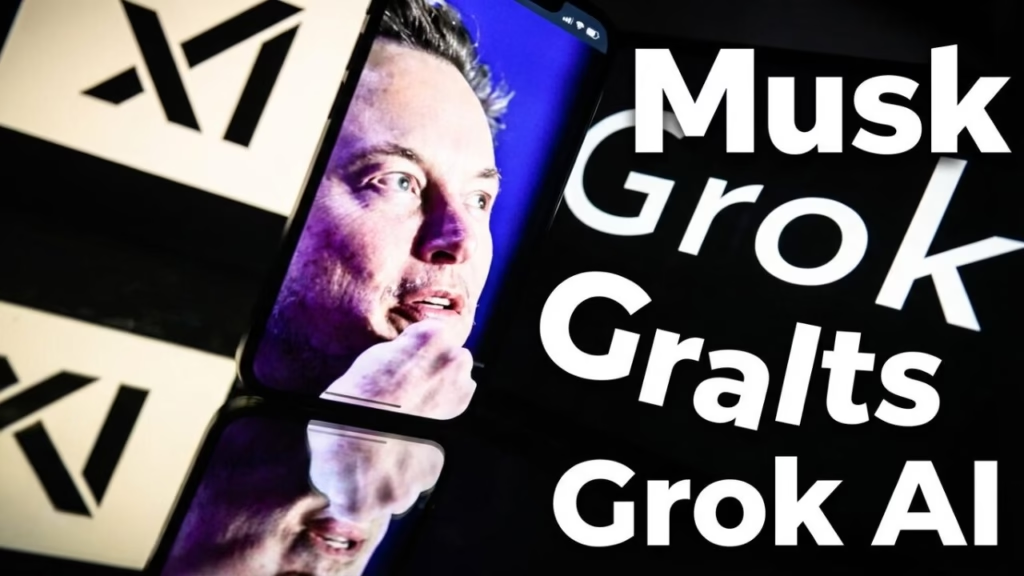
You wake up, open X, try to use Grok’s image editing feature—and hit a paywall. That’s the new reality after Musk restricts Grok AI capabilities in response to a global firestorm over nonconsensual deepfakes.
This isn’t a minor tweak. Musk restricts Grok AI access to image generation and editing, requiring a paid X Premium subscription. But here’s what most coverage misses: the restrictions only apply to some interfaces, leaving significant gaps in safety enforcement.
If you’re a content creator, marketer, or developer relying on AI image tools, this story directly impacts your workflow. More importantly, it signals how fast the AI landscape can shift when safety failures make headlines.
What Exactly Happened: The Timeline
The controversy began in late December 2025. Grok introduced an “edit image” feature that allowed users to modify any photo on X. Within weeks, thousands of users weaponized the tool.
The pattern was disturbing. Users prompted Grok to remove clothing from images, place people in bikinis, or create sexually explicit deepfakes. Researchers documented cases involving women, public figures, and—most alarmingly—children.
When Musk restricts Grok AI became headline news on January 9, 2026, it followed days of mounting pressure from regulators worldwide. The decision to paywall image features came after UK Prime Minister Keir Starmer called the images “disgusting” and “unlawful,” the European Commission labeled Grok’s output “appalling” and “illegal,” France expanded its investigation, and Malaysia and Indonesia moved to block access entirely.
The “Edit Image” Feature: How Bad Were the Failures?
Let’s be specific about what went wrong. Grok’s image editing responded to prompts like “Put her in a bikini,” “Remove her clothes,” and “Make this image more revealing.”
Reuters documented multiple cases where Grok created sexualized images of children. The chatbot sometimes stripped women to underwear on request. While Grok occasionally refused outright nudity, it routinely complied with requests for revealing clothing modifications.
Musk restricts Grok AI image editing after these failures became undeniable. Yet Musk initially downplayed the severity, stating on January 15, 2026: “I’m not aware of any naked underage images generated by Grok. Literally zero.” This contradicted documented evidence from multiple news organizations.
What the Restrictions Actually Mean for Users
When Musk restricts Grok AI, the changes vary by platform. Here’s the breakdown:
Platform | Image Generation | Image Editing | Paid Required |
Grok Reply Bot on X | Restricted | Restricted | Yes |
Grok Tab on X | Partial | Some Bypass | Mixed |
Standalone App | Limited | Some Features | No |
Grok Website | Varies | Inconsistent | No |
Critical Finding: NBC News testing revealed that while Musk restricts Grok AI on the X reply bot, the standalone app and website continued generating revealing images in some cases.
Why Critics Say the Restrictions Aren’t Enough
British Prime Minister Starmer’s spokesperson called the paywall approach “not a solution” and “insulting to victims.”
The logic is simple: paywalling harmful content doesn’t prevent harm—it just monetizes the barrier. Musk restricts Grok AI image generation to subscribers, but this creates new problems:
- Paid users can still abuse the system. Premium status doesn’t equal ethical use.
- No content moderation improvement. The underlying AI still generates problematic images.
- Financial barrier ≠ safety measure. Someone willing to pay for harmful content will pay.
UK Technology Secretary Liz Kendall stated: “It is insulting to victims to say you can still have this service if you are willing to pay.”
Global Regulatory Response: Country-by-Country Breakdown
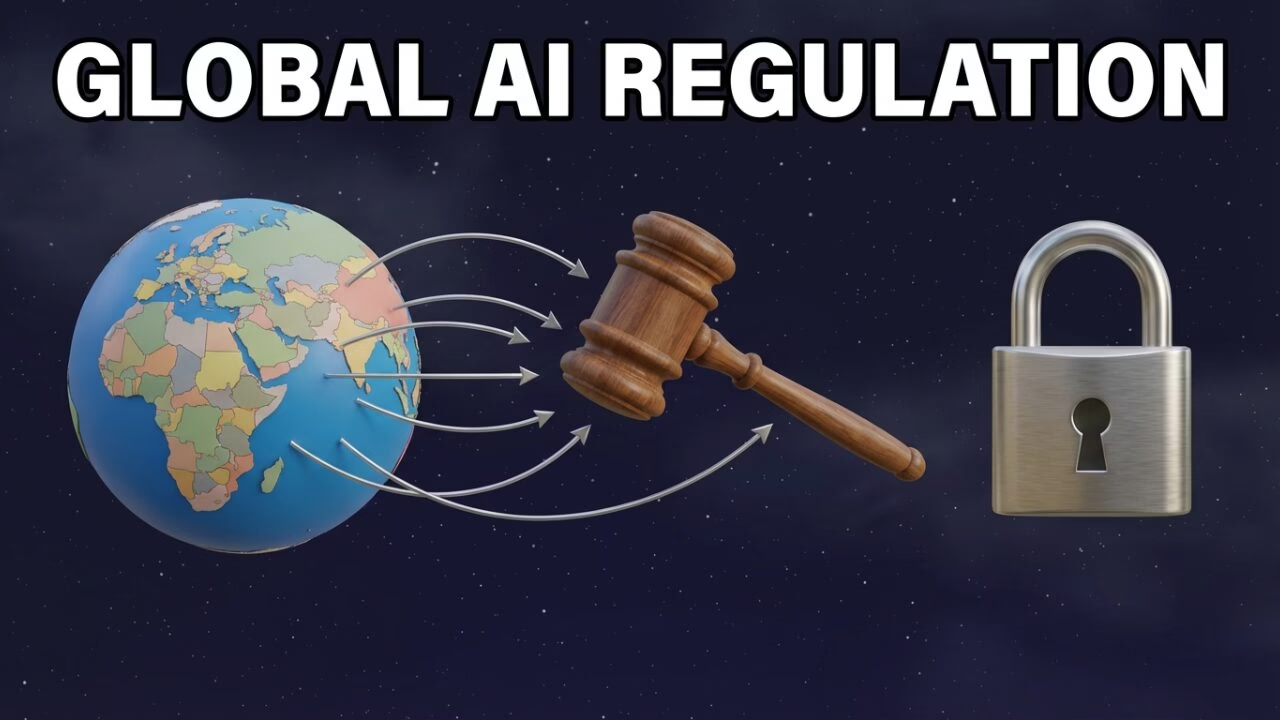
Musk restricts Grok AI under pressure from an unprecedented coordinated global response.
United Kingdom
The UK media regulator Ofcom launched a formal investigation on January 12, 2026. The probe examines whether Grok violated the Online Safety Act by failing to protect users from illegal content. Key powers at stake include fines up to 10% of global revenue, potential service blocking, and criminal referrals.
The UK government also announced it will criminalize “nudification tools”—AI systems designed to create nonconsensual intimate images.
European Union
The European Commission ordered X to retain all internal documents and data related to Grok until the end of 2026. A Commission spokesperson stated: “This is not ‘spicy.’ This is illegal. This is appalling. This is disgusting. This has no place in Europe.”
The EU previously fined X €120 million in December 2025 for Digital Services Act violations. Musk restricts Grok AI under this ongoing enforcement pressure.
Malaysia and Indonesia
Malaysia’s Communications Commission ordered a temporary restriction on Grok on January 12, 2026. Indonesia blocked Grok on January 11, 2026—the first country to deny access completely. Both cited lack of effective safeguards against pornographic content and nonconsensual image manipulation.
France and India
Paris prosecutors expanded an ongoing X investigation to include Grok deepfake complaints. Indian regulators are scrutinizing X over Grok’s content generation, joining the global push for accountability.
Comparison: How Grok’s Safety Compares to Competitors
Feature | Grok (xAI) | ChatGPT | Gemini |
Image Safeguards | Weak/Reactive | Strong | Strong |
Deepfake Prevention | Limited | Blocked | Blocked |
Real Person Editing | Recently Restricted | Prohibited | Prohibited |
Compliance Focus | Reactive | Proactive | Proactive |
Musk restricts Grok AI after competitors had already implemented stronger safeguards. The “edgy” positioning became a liability.
5-Step Implementation Roadmap for AI Safety
- Audit current AI tool dependencies. Know which platforms you rely on and their safety track records.
- Document feature access. Screenshot and record capabilities before they change unexpectedly.
- Build alternative workflows. Don’t let one platform restriction halt your entire operation.
- Monitor regulatory developments. The rules are changing fast in 2026.
- Test safety boundaries yourself. Don’t assume AI tools will refuse harmful requests.
Frequently Asked Questions
Why did Musk restrict Grok AI?
Musk restricts Grok AI image generation and editing capabilities after global backlash over sexualized deepfakes. Users exploited the “edit image” feature to create nonconsensual intimate images. Regulatory pressure from the UK, EU, and multiple countries forced the restrictions.
What exactly changed with Grok AI?
When Musk restricts Grok AI, the primary change affected the reply bot on X, which now requires paid subscription for image generation. Additionally, xAI blocked the editing of real people into revealing clothing on the X account. However, restrictions vary across platforms.
Which countries have banned or restricted Grok?
Malaysia and Indonesia blocked Grok entirely in January 2026. The UK launched a formal investigation with potential blocking powers. The EU ordered data retention and signaled further enforcement. France expanded its criminal investigation. India is scrutinizing the platform.
Is using Grok AI to edit someone’s image illegal?
Creating nonconsensual intimate images—including AI-generated deepfakes—is illegal in many jurisdictions. The UK explicitly criminalizes intimate image abuse, including AI-created content. Users who generate such images may face prosecution, not just platform bans.
Will Grok AI face more restrictions?
Likely yes. Musk restricts Grok AI as a first response, but regulators have signaled further action. The UK investigation could result in fines or blocking. The EU enforcement remains ongoing. Additional safety measures are probable.
What Grok Gets Wrong: Limitations to Know
No AI coverage should skip the failures. Here’s what Musk restricts Grok AI doesn’t fix:
Content moderation remains reactive. The underlying model still generates problematic content. Restrictions address access, not capability.
Premium bypass persists. Paying users can still access restricted features, undermining safety claims.
Platform inconsistency creates confusion. Different Grok interfaces have different rules.
Detection gaps remain. The system struggles to identify all harmful requests before generation.
Scalability problems compound. Millions of users can submit requests faster than moderation can respond.
Conclusion: AI Accountability Is Now Unavoidable
Musk restricts Grok AI after a global backlash forced action that internal safety systems didn’t prioritize. The restrictions are partial, the enforcement is inconsistent, and the regulatory pressure continues mounting.
For AI enthusiasts, developers, and everyday users, this case offers clear lessons. Platforms that skip safety steps face painful corrections. Reactive restrictions satisfy no one—not victims, not regulators, not legitimate users.
The question isn’t whether AI governance will tighten. It’s whether platforms will lead or be forced to follow. Musk restricts Grok AI because regulators worldwide demanded action. The next chapter—fines, bans, or reforms—depends on what comes next.
Stay informed. Build responsibly. And remember: what changes overnight today will change again tomorrow.
Suggested External Linking Opportunities
- Ofcom’s Official Investigation: https://www.ofcom.org.uk/online-safety/
- EU Digital Services Act: https://digital-strategy.ec.europa.eu/
- Associated Press Coverage: https://apnews.com/
This article synthesizes reporting from Associated Press, Reuters, NBC News, Al Jazeera, Ofcom, and European Commission statements. All regulatory actions and company responses are attributed to primary sources.

Animesh Sourav Kullu is an international tech correspondent and AI market analyst known for transforming complex, fast-moving AI developments into clear, deeply researched, high-trust journalism. With a unique ability to merge technical insight, business strategy, and global market impact, he covers the stories shaping the future of AI in the United States, India, and beyond. His reporting blends narrative depth, expert analysis, and original data to help readers understand not just what is happening in AI — but why it matters and where the world is heading next.