

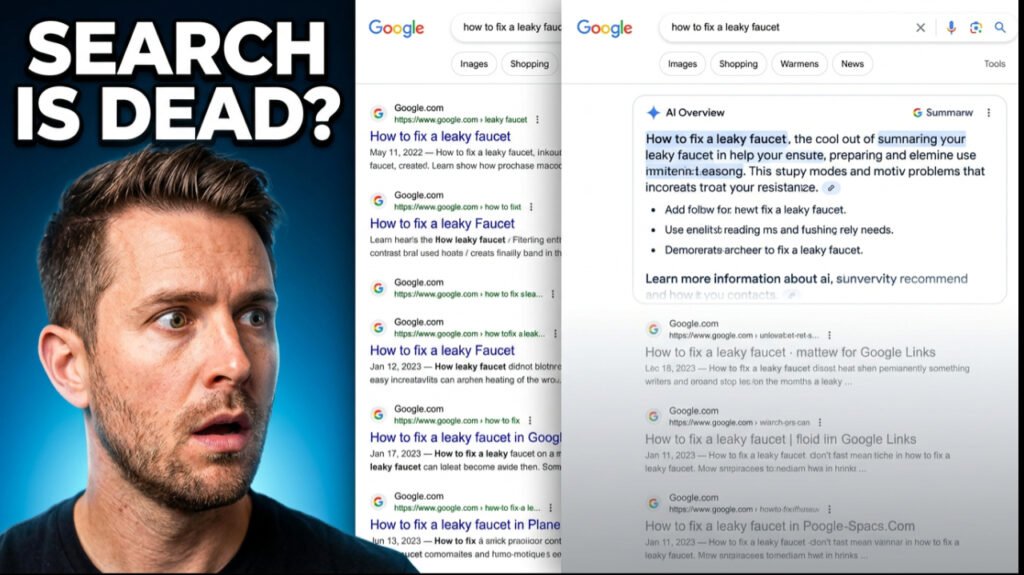
AI Overviews have cut publisher click-through rates by up to 58%. Antitrust cases are mounting in the EU and US. Here’s what the data says, why Google’s opt-out solution fails, and what it means for every business that depends on search.
By DailyAIWire Editorial Team · Published April 20, 2026 · Updated April 20, 2026 · 8 min read
What Are Google AI Overviews?
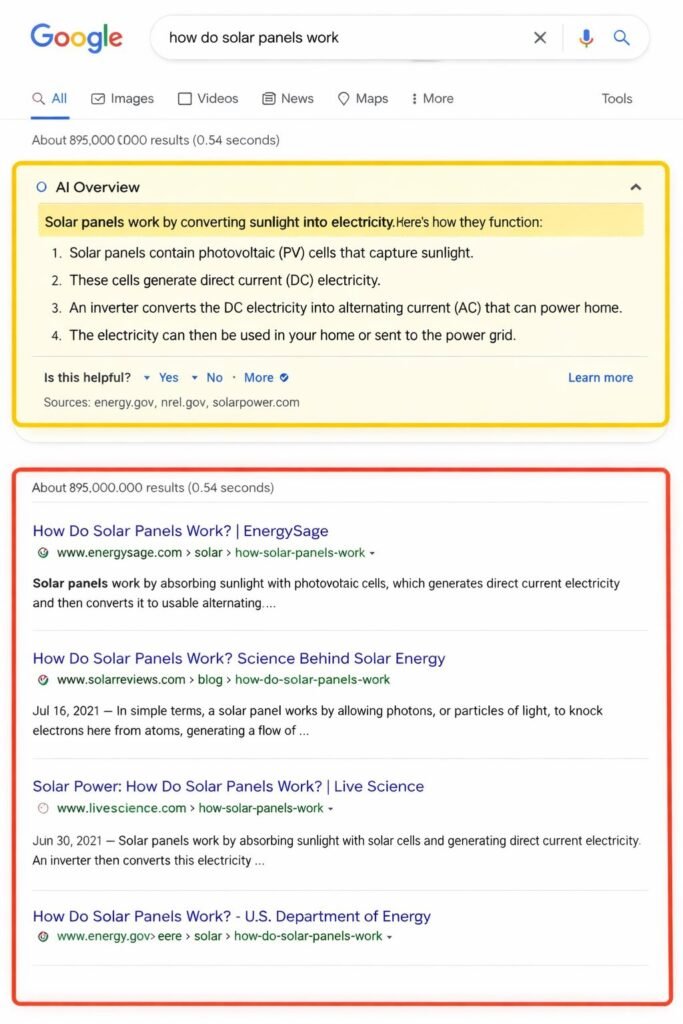
AI Overviews are AI-generated summaries that appear at the top of Google search results. Instead of showing you a list of links and letting you choose which website to visit, Google now reads multiple sources, writes its own answer, and displays it directly on the search page.
Google started rolling out AI Overviews in 2024. By early 2026, they appear on more than 40% of informational queries — the exact type of searches that used to drive the most traffic to publisher websites. Google has also launched AI Mode, a chatbot-style search feature that holds full conversations without ever sending users to an external site.
The result: users get their answer without clicking. Publishers lose the visit, the ad impression, and the revenue.
The Traffic Damage: Key Numbers
The impact of AI Overviews on publisher traffic is now well-documented. Here are the headline figures from multiple independent studies:
| Metric | Before AI Overviews | After AI Overviews | Change |
|---|---|---|---|
| Click-through rate (all results) | 15% | 8% | -46.7% |
| Position #1 CTR | 7.3% | 1.6% | -78% |
| Zero-click searches | 56% (May 2024) | 69% (May 2025) | +23% relative |
| Global publisher traffic from Google | Baseline (Nov 2024) | Nov 2025 | -33% |
| Organic CTR (Seer Interactive study) | 1.76% | 0.61% | -61% |
| Brands cited IN AI Overviews — organic clicks | Baseline | — | +35% |
Sources: Press Gazette, Pew Research Center, Seer Interactive, Search Engine Journal, IAB Tech Lab. See full source list below.
Individual publishers have been hit even harder. Chegg reported a 49% traffic decline. Business Insider’s organic search traffic fell 55%. According to Pew Research, users are significantly less likely to click on any link when an AI Overview is present.
Publishers surveyed by Press Gazette expect traffic to fall another 43% on average over the next three years.
Key takeaway: AI Overviews don’t just reduce clicks — they’re changing user behavior. When Google answers the question directly, users have no reason to visit the source. The traffic doesn’t just shift; it disappears.
The Antitrust Fight: US and EU Take Action
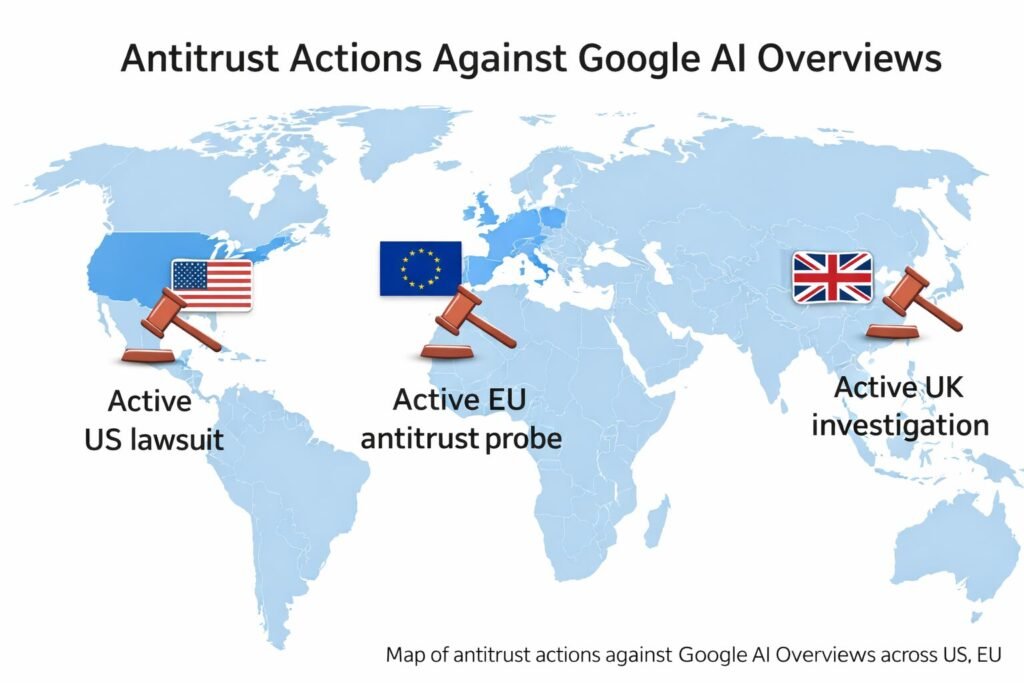
The scale of these losses has triggered major legal action against Google over AI Overviews.
| Case | Who Filed | Core Argument | Status (April 2026) |
|---|---|---|---|
| US antitrust lawsuit | Penske Media Corp. | Google is “cannibalizing” publisher traffic; AI Overviews harm the economic viability of digital publishers | Google’s motion to dismiss opposed (Feb 2026) |
| EU antitrust complaint | European Publishers Council | Abuse of dominant position under Article 102 TFEU; using publisher content without authorization or fair pay | European Commission formal investigation opened |
| EU Commission probe | European Commission (own initiative) | Investigating whether Google breached EU competition rules by using web content for AI without compensation | Active investigation (since Dec 2025) |
| UK CMA proposals | UK Competition and Markets Authority | Proposing new rules for publisher control over AI content usage | Consultation phase |
EU antitrust chief Teresa Ribera warned that “Google may be abusing its dominant position as a search engine to impose unfair trading conditions on publishers by using their online content to provide its own AI-powered services.”
Why Google’s Opt-Out Fix Doesn’t Work
In January 2026, Google announced new controls letting publishers opt out of AI Overviews without losing their normal search listings. This sounds fair. It isn’t.
The prisoner’s dilemma. If you opt out, Google still shows AI Overviews — using your competitors’ content instead. They get cited. You disappear from the most visible spot on the page. No individual publisher can fix the problem by opting out. They can only make their own situation worse.
The structural problem. Google controls over 90% of search. The harm isn’t that your content appears in AI Overviews. The harm is that AI Overviews exist in their current form — absorbing traffic that used to go to the open web while Google keeps the users and the ad revenue.
The regulatory shield. By offering an opt-out, Google can tell regulators “we gave publishers a choice.” This weakens antitrust arguments about coercion — which may be the real purpose of the feature.
As the Wolters Kluwer Competition Law Blog argues: the main harm isn’t about content use. It’s about the hoarding of traffic on Google’s own website. Publishers cannot compete against AI Overviews because their content is displayed in a less attractive way than Google’s own AI-generated summary.
What Businesses Should Do Now
Don’t wait for regulators. These cases will take years. Even a favorable ruling may not restore lost traffic.
Diversify away from Google dependence. Build email lists, grow direct audiences, invest in platforms you control. If Google is your primary traffic source, you’re exposed.
Optimize for AI citation, not just ranking. Brands cited inside AI Overviews see 35% more organic clicks than those that aren’t. If you can’t beat the system, position your content to be the source Google cites.
Audit your exposure. Check Google Search Console for your top pages. Identify which queries now trigger AI Overviews. That’s your risk map.
Recommended Videos on This Topic
Watch these for deeper context on how AI Overviews are reshaping search and publishing: Search: “Google AI Overviews publisher traffic” on YouTube Search: “Google antitrust AI Overviews EU” on YouTube Search: “Zero-click searches AI Overviews SEO” on YouTube
Frequently Asked Questions About AI Overviews
What are Google AI Overviews?
AI Overviews are AI-generated summaries displayed at the top of Google search results. They synthesize information from multiple websites and present an answer directly on the search page, reducing the need for users to click through to source websites.
How much traffic have publishers lost because of AI Overviews?
Global publisher traffic from Google dropped by roughly a third in the year to November 2025. Click-through rates fell 46.7% on queries where AI Overviews appear. Zero-click searches rose from 56% to 69% between May 2024 and May 2025.
Can publishers opt out of AI Overviews?
Google announced opt-out controls in January 2026. However, opting out creates a prisoner’s dilemma: your competitors’ content gets cited instead, and you lose visibility. The opt-out doesn’t stop AI Overviews from appearing — it only removes your content from them.
Are there any legal actions against Google AI Overviews?
Yes. Penske Media filed a US antitrust lawsuit. The European Publishers Council filed a formal complaint with the European Commission. The EU has opened a formal investigation. The UK CMA is proposing new publisher-protection rules.
Disclaimer
This article is for informational and educational purposes only. It does not constitute legal, financial, or professional advice. The data cited comes from publicly available industry reports, regulatory filings, and third-party research as of April 2026. While every effort has been made to ensure accuracy, readers should verify information independently and consult qualified professionals for advice specific to their situation. The author and publisher are not liable for any decisions made based on this content. The views expressed are those of the author and do not necessarily represent the views of any organizations mentioned.
Sources & References
- Press Gazette — Global publisher Google traffic dropped by a third in 2025
- Pew Research Center — Google users are less likely to click on links when an AI summary appears
- Seer Interactive — AIO Impact on Google CTR: September 2025 Update
- Search Engine Journal — Antitrust Filing Says Google Cannibalizes Publisher Traffic
- ALM Corp — Google’s AI Overviews: 58% Click Decline Analysis
- European Publishers Council — Formal Antitrust Complaint Against Google
- European Commission — Investigation into Google’s use of online content for AI
- Digiday — Google’s forced AI opt out: what changes and what doesn’t
- Kluwer Competition Law Blog — AI Overviews Are Harming Competition
- AdExchanger — The AI Search Reckoning Is Dismantling Open Web Traffic
- Digital Content Next — Facts: Google’s push to AI hurts publisher traffic