
Google is reportedly preparing a new Gemini model focused on coding—and the interesting part is not just that it may be better. It is what Google appears to be optimizing for: making capable AI cheaper, faster and practical enough to run at scale.
The AI race has spent the last few years obsessed with one question: Which company has the smartest model?
That question may be becoming less important.
According to recent reports, Google DeepMind is preparing an upgraded model in its Gemini Flash family, internally referred to as “Skimaki” and reported to be Gemini 3.8 Flash.
Internal testing reportedly showed progress in coding, an area where Google has faced intense competition from Anthropic and OpenAI.
But the bigger story isn’t simply another benchmark battle.
It may be a sign that the next phase of AI competition will be fought over who can build the most useful AI worker—not just the most impressive AI chatbot.
Software Developer Shortage: Causes, Strategic Risks, and Industry Impact
For Google, coding is no longer just another AI benchmark category.
Software development is rapidly becoming one of the most commercially valuable applications for generative AI.
Developers are using models to write functions, debug errors, understand unfamiliar codebases, test applications and increasingly handle multi-step engineering tasks.
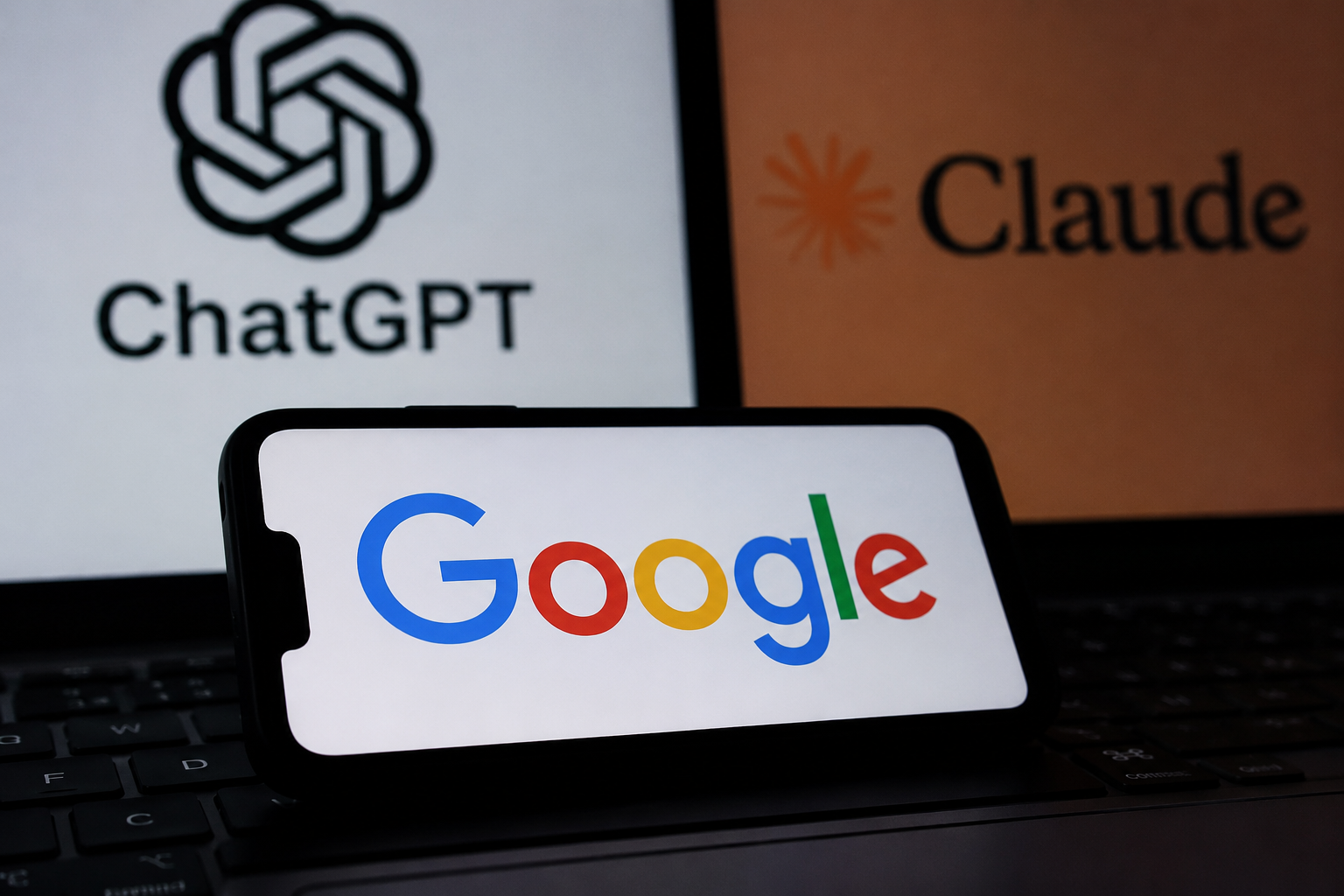
Anthropic has built a particularly strong reputation among developers, while OpenAI continues pushing its models deeper into programming workflows.
Google has enormous advantages: world-class research talent, custom chips, cloud infrastructure and billions of users. Yet having the infrastructure does not automatically mean owning the developer workflow.
That is why reports that Google’s internal coding tests show meaningful progress matter.
The company already describes Gemini 3.7 Flash as a model designed for coding and agentic workflows, emphasizing the Flash family’s role as a practical “workhorse” rather than simply a smaller, cheaper alternative to flagship models.
The potential Gemini 3.8 Flash appears to continue that strategy.
Why Google Gemini Flash Is Quietly Crushing Giant AI Flagship Models
There is an important shift happening beneath the AI industry’s obsession with massive models.
The future may not belong exclusively to the biggest model.
A powerful AI model can be impressive, but businesses also care about:
- How fast it responds
- How much it costs
- How reliably it performs
- Whether it can handle thousands or millions of requests
- Whether it can operate continuously as an AI agent
This is where Google’s Flash strategy becomes interesting.
Imagine two AI systems.
One can solve an extremely difficult problem but takes longer and costs significantly more.
The other solves 90–95% of everyday tasks quickly and cheaply.
For a research lab, the first system may win.
For a company running millions of coding tasks every day, the second system could be far more valuable.
That distinction could reshape the market.
The AI industry’s next winners may not necessarily be the companies with the highest benchmark scores.
They could be the companies that deliver good-enough frontier intelligence at a price and speed businesses can actually deploy everywhere.
Beyond Autocomplete: How Autonomous AI Agents Are Reshaping the Way Software Gets Built
For younger developers and computer science students, this change is particularly important.
AI coding started as sophisticated autocomplete.
You typed a few lines. The model suggested the next few.
That era is fading.
The new competition is increasingly about agentic coding.
Instead of asking:
“Write a Python function.”
A developer can increasingly ask:
“Look through this repository, understand how authentication works, find the bug causing failed logins, fix it, run the tests and explain what changed.”
That requires much more than generating code.
An AI system needs to:
- Understand a large codebase.
- Break a task into smaller steps.
- Use development tools.
- Remember previous actions.
- Detect errors.
- Test its own work.
- Decide when something needs human review.
This is why coding performance has become such a high-stakes battleground.
The competition isn’t really about who can generate prettier JavaScript.
It is about who can build the most capable digital engineering assistant.
DailyAIWire has previously explored the rapid expansion of agentic AI and the growing skills gap around deploying and supervising these systems. Agentic AI is changing workplace skills
Why Google’s Real Monopoly Isn’t Search, It’s the Ecosystem You Can’t Leave
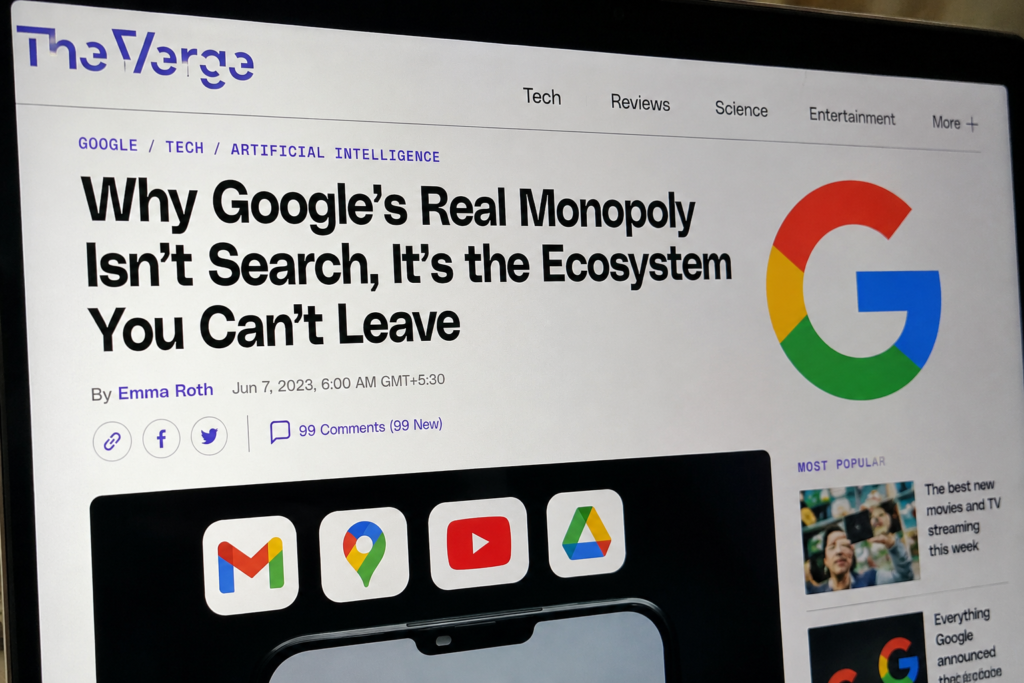
Google does not need to win the AI race in the same way a startup does.
It already owns pieces of the digital infrastructure where AI could eventually operate.
Consider the company’s ecosystem:
- Android
- Chrome
- Google Search
- Google Cloud
- Workspace
- YouTube
- Google Maps
- Developer tools
If Gemini improves significantly at coding and autonomous tasks, Google has numerous places to deploy it.
That creates a strategic advantage.
A strong standalone chatbot is useful.
A capable AI system integrated directly into the tools people already use every day is potentially much more powerful.
We are already seeing Google experiment with AI moving beyond simple answers and toward systems that can perform tasks and monitor information. Google’s push toward AI-powered search agents
The coding model race could be another piece of that larger strategy.
Google Algorithm Update Rollout Speed: Why Rapid Changes Are Shaking Search Rankings
Perhaps the strongest signal from this story is the reported pace of development.
Gemini 3.7 Flash only recently became generally available, according to Google’s API release notes. Reports now suggest employees are already testing a newer iteration.
That reflects a broader change across the AI industry.
The old technology cycle looked something like this:
Research → Product development → Major launch → Long waiting period → Next generation
AI development increasingly looks like this:
Research → Release → Feedback → Improvement → New release → Repeat
The gap between generations is shrinking.
This creates a difficult environment for developers and businesses.
Choosing an AI vendor today doesn’t guarantee that vendor will remain the strongest six months from now.
A company that leads coding benchmarks in September could be surpassed by December.
That volatility is becoming one of the defining characteristics of the generative AI market.
Why No Company Will Win the AI Race: Google, OpenAI, and the Battle for AI Dominance
For much of the AI boom, the industry has tried to identify a clear winner.
Was it OpenAI?
Was it Google?
Was it Anthropic?
The answer increasingly appears to be: it depends on the task.
One model might excel at:
- Long-form reasoning
Another might be stronger at:
- Programming
Another might offer:
- Better speed and pricing
Another might dominate:
- Multimodal tasks
This fragmentation could actually benefit users.
Instead of one company controlling every important AI capability, competition forces companies to improve rapidly.
Google narrowing the coding gap would put additional pressure on Anthropic and OpenAI.
And pressure is exactly what is driving the current pace of innovation.
Google Algorithm Shift: What Developers Must Fix Immediately to Protect Organic Traffic
There is also a personal lesson here for young developers entering the workforce.
The question is no longer simply:
“Will AI replace programmers?”
That framing is becoming outdated.
The more relevant question is:
“What kind of programmer becomes more valuable when AI can write code?”
Basic syntax knowledge remains useful, but the premium is shifting toward higher-level abilities:
- Understanding systems
- Designing software architecture
- Identifying bad AI output
- Writing precise specifications
- Debugging complex problems
- Security awareness
- Product thinking
AI can generate code quickly.
It still needs someone who understands whether that code should exist, fits the system, introduces security risks or solves the right problem.
That distinction matters.
The developers most vulnerable to automation may not simply be those who write code manually.
They may be those whose entire value is limited to translating extremely clear instructions into predictable code.
The developers who understand why something should be built—and can supervise increasingly capable AI agents—could become significantly more productive.
The broader employment implications of this shift are already becoming a major debate across the technology industry. Why the AI jobs debate is becoming impossible to ignore
Why Google’s Real AI Test Begins in the Real World
There is, however, an important reason to remain cautious.
Internal tests are not the same as real-world performance.
AI models can perform brilliantly on controlled benchmarks and still struggle with messy production environments.
Real software development involves:
- Poor documentation
- Legacy code
- Conflicting requirements
- Security vulnerabilities
- Unexpected dependencies
- Business constraints
- Human mistakes
The real question for Google’s next model won’t simply be whether it scores higher on a coding benchmark.
It will be:
Can developers trust it with meaningful work?
That is a much harder standard.
Forget Superintelligence: Why Google’s Next AI War Is All About Accuracy
The industry is approaching an interesting point.
AI models are becoming increasingly capable. The gap between leading systems is narrowing in many areas.
Eventually, raw intelligence may become less differentiating.
The next competitive frontier could involve:
Reliability.
Can the model complete a task without breaking something else?
Cost.
Can companies afford to run millions of AI operations?
Speed.
Can an AI agent work fast enough to feel useful?
Integration.
Can the system operate inside the tools people already use?
Trust.
Can humans confidently hand over increasingly complex tasks?
Google’s reported push with Gemini 3.8 Flash should be viewed through this lens.
This isn’t simply about catching Anthropic or OpenAI on a leaderboard.
It is part of a larger race to determine which company builds the AI systems people actually depend on.
The Bottom Line
Google reportedly closing the coding gap is significant – but the bigger takeaway is the direction of the AI industry.
The race is moving away from chatbots that can answer questions.
It is moving toward AI systems that can do work.
Coding happens to be one of the clearest testing grounds because software development is structured, measurable and economically valuable.
If Google can combine strong coding ability with the speed and cost advantages of its Flash models, the competition could become significantly more difficult for its rivals.
For users, developers and students, that competition is likely good news.
Better AI models are arriving faster.
The challenge now is not finding an AI that can write code.
It is learning how to work effectively in a world where increasingly capable AI systems can do much more than that.
Frequently Asked Questions (FAQs)
1. What is Google’s new Gemini coding model?
Google is reportedly developing an upgraded Gemini Flash model designed to improve coding capabilities. The model is expected to help with tasks such as writing code, debugging, understanding complex codebases, and supporting more advanced AI-powered software development workflows.
2. Why is AI coding becoming so important for companies like Google?
Coding has become one of the most valuable applications of generative AI. Companies are moving beyond simple code autocomplete and developing AI agents capable of handling multi-step tasks, testing software, finding bugs, and assisting developers throughout the engineering process.
3. Will AI coding tools replace software developers?
AI is more likely to change the role of developers than completely replace them. While AI can generate and analyze code, human developers remain essential for system design, problem-solving, security decisions, and ensuring that AI-generated solutions actually meet real-world requirements.











Leave a Reply