

By the DailyAIWire Technology Desk · Last updated: June 10, 2026
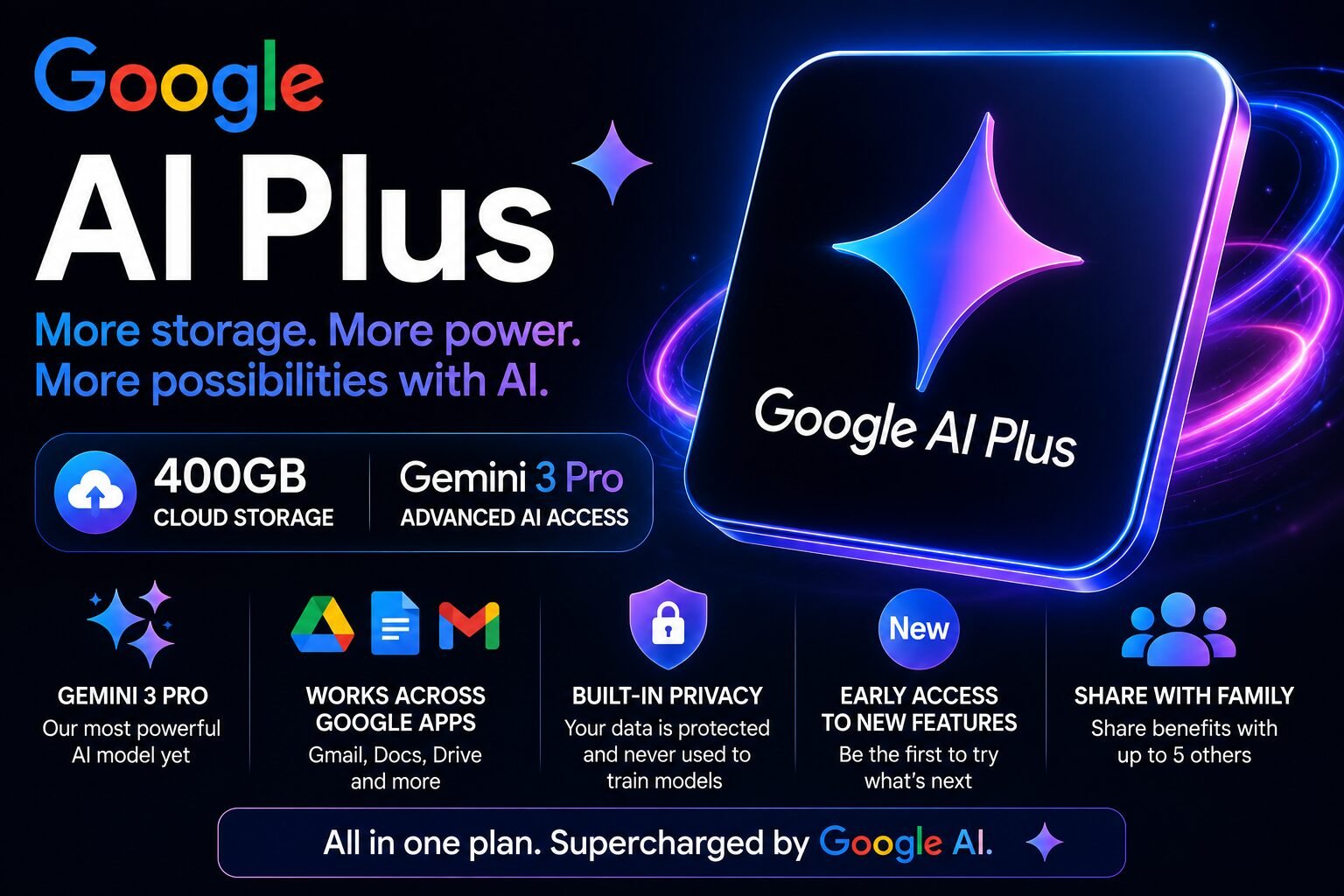
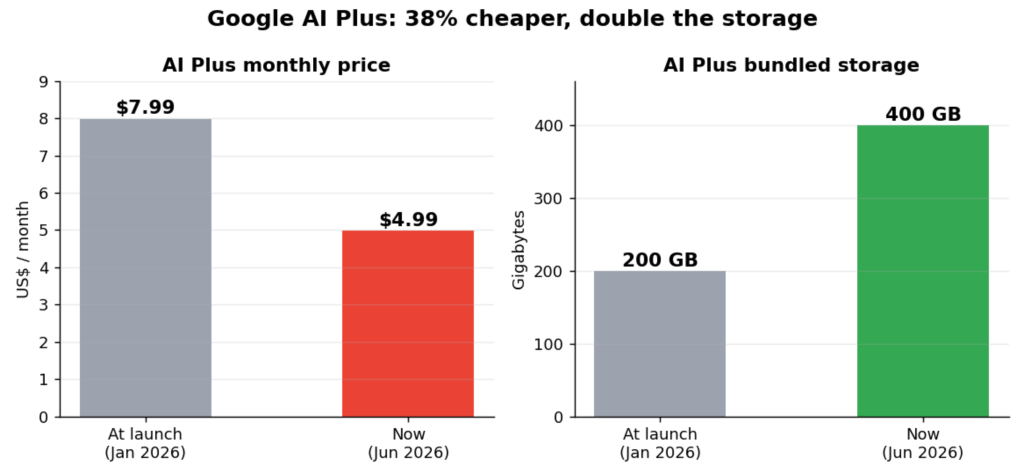
Google has dropped the price of its AI Plus subscription to $4.99 a month, down from $7.99, and doubled the bundled storage to 400 Gigabytes.
The change makes AI Plus the cheapest plan from any major AI provider, and it lands less than 6 months after the tier first appeared.
AI Plus launched in January 2026 as a low-cost way into Google’s Gemini tools.
Back then it cost $7.99 and came with 200 GB.
The new pricing, or the local equivalent in other markets, keeps everything the old plan offered and pairs it with twice the space.
What changed with Google AI Plus
The short version: same features, lower price, Increased storage.
Subscribers get 2x the usage limits inside the Gemini app compared with the free tier, a 128,000-token context window, and tools the free version locks out.
Those include Daily brief, Omni Flash video generation and scheduled actions.
| Feature | Free Gemini | AI Plus ($4.99) |
|---|---|---|
| Monthly price | $0 | $4.99 |
| Bundled storage | 15 GB (shared) | 400 GB |
| Gemini usage limits | Standard | 2x higher |
| Context window | Limited | 128,000 tokens |
| Omni Flash video, Daily brief, scheduled actions | No | Yes |
Beyond Gemini, the plan raises limits in NotebookLM, adds Proofread and AI Inbox in Gmail, and widens access to Google Flow, AI Studio and Antigravity.
It also bundles in Gemini 3 Pro, Nano Banana Pro and Deep Research, the same model access that made the tier worth a look in the first place.
When the changes take effect
This part trips people up, so it is worth being clear.
The 2 changes do not arrive together.
The storage bump is rolling out now, and the full 400 GB should show up for subscribers over the next few days.
The price cut is slower.
It applies from your next billing date rather than right away, so you keep paying $7.99 until your plan renews.
Nothing to cancel, nothing to re-subscribe to.
It just refreshes on its own.
Google also folded its old $9.99 per month 2 TB storage plan under the AI Plus name, lining up the branding across tiers.
If you were on that plan, the label changed more than the contents.

How it fits Google’s wider AI shake-up
The AI Plus cut is one move in a year of constant tinkering with Google’s AI plans.
In April, the company pushed AI Pro up to 5 TB of storage without raising the price.
At Google I/O 2026, it reworked the top end, adding a $100 AI Ultra tier and trimming the most expensive option from $250 to $200.
| Tier | 2026 change |
|---|---|
| AI Plus | Price cut to $4.99; storage doubled to 400 GB |
| AI Pro | Storage raised to 5 TB, no price increase (April) |
| AI Ultra | New $100 entry tier; top tier cut from $250 to $200 (I/O 2026) |
Put together, the pattern is hard to miss.
Google keeps adding value at the bottom and middle while pulling its premium ceiling down.
That usually means one thing: a company trying to win on price and volume rather than wait for people to come around.
A $4.99 entry point with 400 GB attached is the kind of number that makes a casual user stop comparing feature lists and just sign up. Whether the margins survive a price war is Google’s problem, not the subscriber’s.
Is Google AI Plus worth it now?
For anyone already paying for cloud storage and dabbling with Gemini, the math got easier.
You are essentially getting the AI features for the gap between a storage plan and $4.99.
For people who never touch AI tools, 400 GB at this price is still a decent storage deal on its own.
The catch is the usual one with bundles.
The value holds only as long as you actually use Gemini, NotebookLM or the rest. A cheap plan you forget about is not a bargain.
Frequently asked questions
How much does Google AI Plus cost now?
$4.99 a month, down from $7.99, with 400 GB of storage included.
When will my price drop?
At your next plan renewal. The storage increase rolls out within a few days.
What does AI Plus include?
Higher Gemini limits, a 128,000-token context window, 400 GB of storage, plus tools like Omni Flash video, Daily brief, NotebookLM and Deep Research.
Sources: Gizbot, Engadget, 9to5Google, Google blog, Digital Trends.




















Leave a Reply