

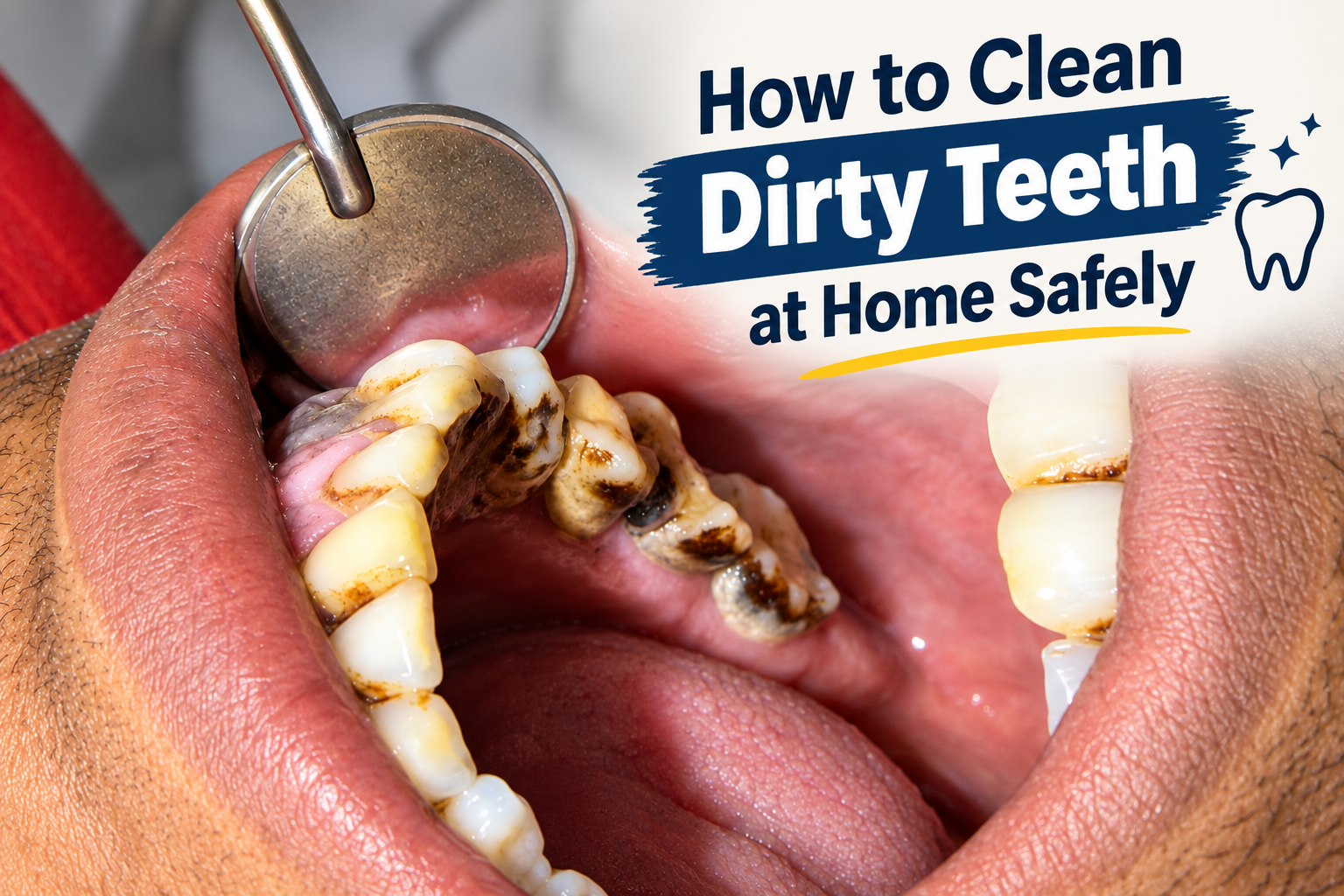
Dirty-looking teeth do not always need stronger toothpaste or a whitening treatment. The right solution depends on what you see: soft plaque, hardened tartar, surface stains, food trapped between teeth, or changes caused by tooth decay.
A safe home routine focuses on removing plaque before it hardens, protecting enamel, cleaning along the gumline, and reaching the spaces a toothbrush misses. Scrubbing harder is not the answer. Aggressive brushing and abrasive home remedies often irritate gums and wear tooth surfaces without solving the underlying problem.
This guide explains how to clean dirty teeth at home, which tools work, which popular remedies to avoid, and when professional cleaning is necessary. It also answers common questions about cleaning time, discoloration, gum inflammation, and foods that support oral health.
First, identify what makes your teeth look dirty

Plaque
Plaque is a soft, sticky film of bacteria and food debris. It collects along the gumline and between teeth. Brushing twice daily and cleaning between teeth once daily help remove it.

Tartar (calculus)
When plaque remains on teeth, minerals in saliva harden it into tartar. Its rough surface attracts more deposits. A toothbrush does not remove established tartar safely. A dental professional needs to scale it away.

Surface stains
Coffee, tea, tobacco, and some foods stain the outer tooth surface. Whitening toothpaste helps reduce some surface stains, but it does not remove tartar or treat decay.

Trapped food or possible tooth damage
Food lodged between teeth often responds to careful flossing or an interdental brush. A dark spot, persistent rough area, hole, or sensitivity needs dental assessment because decay or a damaged filling might be responsible.
The key distinction is simple: home care removes soft deposits and helps control surface staining. Hardened tartar, cavities, and some deep or internal discoloration need professional assessment.
A safe daily routine for cleaner teeth
The most effective approach to how to clean dirty teeth is consistent, gentle cleaning rather than forceful scrubbing. The American Dental Association recommends brushing twice daily for two minutes with fluoride toothpaste and cleaning between teeth every day. Read the ADA’s home oral-care guidance.
Step 1: Brush for two full minutes
Choose a soft-bristled toothbrush with a head small enough to reach your back teeth. Use fluoride toothpaste. Divide your mouth into four sections and spend about 30 seconds on each.
Step 2: Clean along the gumline
Hold the brush at roughly a 45-degree angle toward the gumline. Use small, gentle strokes. Clean the outer, inner, and chewing surfaces of every tooth. Avoid forceful horizontal scrubbing, which irritates gums and contributes to wear.
Step 3: Clean between your teeth once daily
Use dental floss or an appropriately sized interdental brush. Gently guide floss around each tooth in a C-shape and move it up and down. Never snap it into the gums. Interdental brushes often suit wider spaces, while floss works well in tighter spaces.
Step 4: Clean your tongue gently
Use a tongue scraper or toothbrush to remove surface debris. Work from the back toward the front with light pressure. Rinse the scraper after each pass. Tongue cleaning helps reduce some sources of bad breath, but persistent odor needs further assessment.
Step 5: Protect the fluoride after brushing
Spit out excess toothpaste instead of rinsing immediately with water. This leaves more fluoride in contact with the teeth. Use mouthwash at a different time if appropriate for your needs.
Follow this routine in the morning and last thing before bed. The NHS guide to keeping teeth clean provides additional brushing advice.
Which toothbrush and toothpaste should you use?
The right product supports effective cleaning. No special product compensates for missed tooth surfaces or poor technique.
| Product | What it does | What to look for |
|---|---|---|
| Soft-bristled toothbrush | Removes soft plaque | Small head and comfortable grip |
| Electric toothbrush | Helps maintain consistent brushing | Timer and pressure sensor are useful features |
| Fluoride toothpaste | Helps prevent decay and strengthen enamel | A reputable product with an appropriate fluoride concentration |
| Whitening toothpaste | Helps reduce some surface stains | A reputable formula designed for regular use |
| Dental floss | Cleans tight spaces between teeth | Comfortable to handle without shredding |
| Interdental brush | Cleans larger spaces and some dental work | A size suited to each gap |
| Water flosser | Flushes debris from between teeth and around dental work | A model you will use consistently |
For most adults, toothpaste containing around 1,350 to 1,500 parts per million fluoride is a standard choice. Your dentist might recommend a different concentration based on your decay risk. Replace your toothbrush every three to four months, or sooner if its bristles become frayed. See the ADA’s toothbrush recommendations.
Do home remedies remove plaque and stains?
Searches about how to clean dirty teeth often lead to baking soda, oil pulling, charcoal powders, lemon juice, or vinegar. These methods do not all offer the same benefits, and some carry risks.
Fluoride toothpaste
The first choice for routine cleaning. It removes plaque through brushing and helps protect enamel from decay.
Water after meals
Drinking or rinsing with plain water helps clear loose food debris. After acidic drinks or foods, rinse with water and wait about an hour before brushing.
Baking soda used as a homemade scrub
Avoid aggressive scrubbing or relying on loose powders as a replacement for fluoride toothpaste. Formulated dental products have more predictable ingredients and use instructions.
Lemon juice and undiluted vinegar
Do not apply these to teeth as whitening treatments. Their acidity erodes enamel, increasing sensitivity and making teeth appear more yellow as the underlying dentine shows through.
Charcoal powders and sharp scraping tools
Avoid abrasive powders with uncertain effects and never scrape deposits with needles, blades, metal picks, or other household tools. These methods risk damaging enamel, gums, and dental work.
Oil pulling is not a substitute for brushing with fluoride toothpaste or cleaning between teeth. Evidence does not support using it to remove hardened tartar or treat dental disease.
How to clean stained or yellow teeth safely
Yellow teeth do not always indicate poor hygiene. Natural tooth colour varies, and enamel becomes thinner with age, allowing the yellower dentine underneath to show through.
If staining is superficial, brushing properly, cleaning between teeth, and reducing frequent exposure to staining drinks help. After coffee or tea, rinse with water. Avoid repeatedly sipping sugary or acidic drinks throughout the day.
Whitening toothpaste targets surface stains. It does not change the natural colour of dentine in the same way as professional bleaching. If one tooth becomes dark, or discoloration appears suddenly, arrange a dental examination rather than increasing the abrasiveness of your toothpaste.
For more pronounced discoloration, your dentist can distinguish between surface staining, tartar, decay, and internal tooth changes before recommending treatment.
How to clean dirty teeth with braces, aligners, crowns, or bridges
Orthodontic appliances and dental restorations create extra areas where plaque and food collect. A standard toothbrush alone often misses these spaces.
- Braces: Brush above and below each bracket. Use an interdental brush around wires and brackets.
- Clear aligners: Remove them before eating and drinking anything other than water. Clean your teeth before putting them back in.
- Crowns and bridges: Clean carefully around the gumline and beneath bridge sections with suitable floss threaders or interdental aids.
- Dental implants: Use cleaning tools recommended by your dental team. Avoid metal instruments or abrasive products around implant surfaces.
- Sensitive teeth: Use a soft brush and a toothpaste formulated for sensitivity. Persistent sensitivity needs assessment.
A water flosser is useful for some people with braces, bridges, or limited hand mobility. It supplements brushing and does not automatically replace every form of interdental cleaning.
Why professional cleaning still matters
Even a careful daily routine has limits. Tartar adheres firmly to teeth, and deposits beneath the gumline are difficult to assess or remove at home. Professional scaling uses dental instruments designed to remove these deposits while limiting damage to surrounding tissues.
Book a dental appointment if you notice:
- Hard yellow or brown deposits that remain after brushing.
- Gums that bleed repeatedly, appear swollen, or recede.
- Persistent bad breath or an unpleasant taste.
- Toothache, sensitivity that does not settle, or visible holes.
- Loose adult teeth or a change in how your teeth fit together.
Facial swelling, fever with dental pain, or suspected dental infection needs prompt assessment. Difficulty breathing or swallowing, or rapidly spreading swelling, requires emergency medical care.
Professional cleaning is not the same as whitening. Scaling removes deposits, while whitening treatments address tooth colour. Your dentist will recommend the appropriate option after examining your teeth and gums. Learn more from the NHS guidance on gum disease.
Answers to common questions
How to clean dirty teeth at home safely?
Brush for two minutes twice daily with a soft-bristled toothbrush and fluoride toothpaste. Clean between your teeth once a day, gently clean your tongue, and limit frequent sugary snacks and drinks. Arrange professional care for hardened tartar, persistent stains, pain, or bleeding gums.
How long does it take to see cleaner teeth?
Loose debris and soft plaque often improve after thorough brushing and interdental cleaning. Surface stains respond at different rates, depending on their cause and severity. Hardened tartar will not brush away. Bleeding caused by plaque-related gingivitis often improves with consistent cleaning, but persistent bleeding needs a dental examination.
What is the main reason teeth look dirty?
Common causes include plaque, tartar, coffee or tea stains, tobacco use, food trapped between teeth, and tooth decay. The appearance alone does not reliably identify the cause. A dental examination helps distinguish deposits from disease.
What foods help protect teeth and gums?
A balanced diet with vegetables, fruit, whole grains, protein sources, and calcium-rich foods supports general and oral health. Water is a good everyday drink. Limit frequent sugary snacks and acidic beverages. No food removes tartar or replaces brushing and interdental cleaning.
Does brushing harder make teeth cleaner?
No. Excessive pressure does not make brushing more effective and increases the risk of gum irritation and tooth wear. Spend two minutes cleaning all surfaces with gentle, controlled movements.
Is professional cleaning necessary if I brush every day?
It is still important to have regular dental assessments. People form tartar at different rates, and deposits can develop in areas missed during home care. Your dentist or hygienist will recommend a cleaning interval based on your oral health and risk factors.
Related People Also Ask: swollen gums
The attached search screenshot includes questions about swollen gums. These concerns matter because plaque left near the gumline can trigger inflammation, but swollen gums also have other causes.
How do you treat swollen gums?
Brush gently with fluoride toothpaste, clean between teeth, and arrange a dental assessment if swelling or bleeding persists. A dental abscess needs professional treatment rather than home cleaning alone.
How long does gum swelling usually last?
The duration depends on its cause. Mild plaque-related inflammation often improves with better oral hygiene, while an abscess, advanced gum disease, or another condition needs targeted care. Seek prompt advice for worsening pain, pus, fever, or facial swelling.
What causes swollen gums?
Common causes include plaque-related gingivitis, periodontal disease, food trapped under the gumline, irritation, and infection. Medication effects and some systemic conditions are other possibilities.
What foods help reduce gum inflammation?
A balanced diet with vegetables, fruit, protein, and adequate nutrients supports oral health. Food alone does not treat the source of gum inflammation. Gentle plaque removal and appropriate dental care remain essential.
What the future of home dental care looks like
Home oral care is becoming more measurable. Electric toothbrushes with pressure sensors and timers help users track brushing duration and technique. Connected oral-care devices are also beginning to provide feedback about missed surfaces and cleaning habits.
These tools are useful when they improve consistent behaviour, but they do not diagnose cavities, measure every area beneath the gumline, or remove established tartar. Future AI-assisted dental tools might help identify changes in photographs or track oral hygiene patterns over time. Their value will depend on clinical validation, privacy safeguards, and clear referral pathways when signs of disease appear.
The practical lesson remains unchanged: technology should support sound oral hygiene and professional assessment, not replace them.
A routine you can maintain
The safest way to learn how to clean dirty teeth is to build a routine you repeat every day, not to chase a quick whitening trick. Brush twice daily for two minutes, clean between teeth once a day, use fluoride toothpaste, and avoid acidic or abrasive home remedies.
If deposits remain despite good technique, arrange a professional cleaning. If you notice pain, persistent bleeding, swelling, or a dark spot, seek an examination rather than scrubbing harder.
For more oral-health information, visit iDentalFix.
How to Clean Dirty Teeth
1. How can I clean my dirty teeth?
Brush for two minutes twice daily using a soft-bristled toothbrush and fluoride toothpaste. Clean along the gumline and between your teeth once a day with floss or a suitable interdental brush. Gently clean your tongue, too. Hardened tartar requires professional scaling, so avoid scraping deposits off with sharp tools.
2. How can I whiten my teeth at home in 2 minutes?
Two minutes of brushing helps remove soft plaque and some surface debris, but it will not dramatically whiten teeth in a single session. Use fluoride toothpaste and gentle brushing. Whitening toothpaste helps reduce some surface stains over time. Avoid lemon juice, abrasive powders, and harsh scrubbing, which risk enamel damage.
3. How can I deep clean my teeth at home?
For a thorough daily clean, brush every tooth surface for two minutes, angle the bristles toward the gumline, clean between teeth, and gently brush your tongue. If you have braces, bridges, or implants, use cleaning aids suited to your dental work. Home care removes soft plaque, but established tartar and deposits beneath the gums require professional treatment.
4. How to remove yellow stains from teeth naturally?
Start with twice-daily brushing using fluoride toothpaste, daily interdental cleaning, and rinsing with water after coffee or tea. Reduce tobacco use and frequent exposure to staining drinks. Avoid acidic remedies such as lemon juice and vinegar. Yellow teeth are not always stained: natural tooth colour, enamel thinning, and internal discoloration also affect appearance. Consult a dentist if the colour change persists or appears suddenly.






















Leave a Reply