
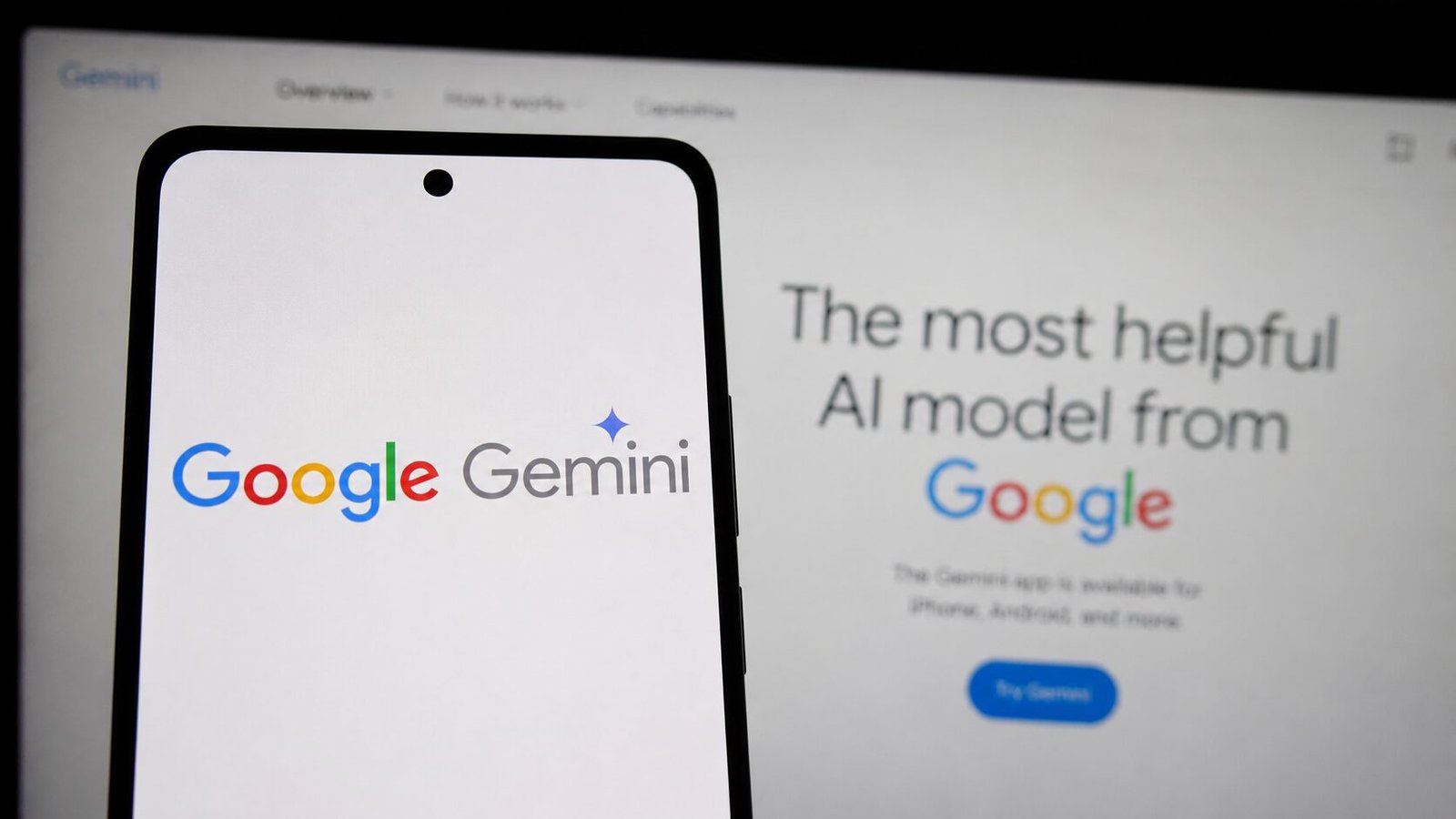
Google is putting Gemini on your face this fall. The company has confirmed that its first consumer smart glasses, built with eyewear brands Warby Parker and Gentle Monster, will go on sale in select markets later this year, setting up a direct fight with Meta’s Ray-Ban line for control of the next personal computing device.
The glasses run on Android XR, Google’s operating system for wearables, and are built around Gemini. Google first signaled the eyewear partnerships at its 2025 developer conference and laid out the fuller plan, including the fall window, at Google I/O in May.
What the glasses do ?
The first models are audio-first. They carry a camera, speakers and microphones but no in-lens display, so information comes through sound rather than visual overlays. Google has said a separate version with an in-lens display, for things like navigation arrows and live translation captions, will follow.
You wake the assistant by saying “Hey Google” or tapping the frame. From there, Gemini can answer questions about what you are looking at, give turn-by-turn directions through Google Maps, translate text and capture photos. In a recent live demo, Google showed the glasses taking action inside phone apps, ordering food or a ride through services like DoorDash and Uber on a paired Android phone without the user touching the screen. UploadVR reported that demo ran on Gemini 3.5 Flash; Google has not published full hardware specifications, pricing or an exact release date.
Why eyewear brands, and why now ?
The partner list is the strategy. Samsung supplies hardware engineering. Warby Parker and Gentle Monster supply something Google cannot build in a lab: frames people actually want to wear.
That matters because Google’s last attempt at this, Google Glass, launched in 2013 and was pulled from consumers in 2015 after a privacy backlash and weak demand. The device became shorthand for creepy, conspicuous technology. Leading with ordinary-looking designer frames, and with audio instead of a camera-forward display, is a deliberate attempt to avoid repeating that.
Google has put money behind the bet. It committed up to $150 million to Warby Parker to develop the products, a sign of how central distribution and style are to the plan. Warby Parker brings more than 270 stores across North America. Gentle Monster, the South Korean brand worn by celebrities including Beyoncé, Rihanna, Kendrick Lamar and Billie Eilish, brings fashion credibility with younger buyers. Google has said more designs, including from Gucci’s parent Kering Eyewear, will come later.
The real contest is with Meta
Meta has a head start. Its Ray-Ban smart glasses, made with eyewear giant EssilorLuxottica, lead the category by a wide margin, with about 2 million pairs sold by early 2025, according to Counterpoint Research, and sales of AI glasses across the market up more than 250 percent in the first half of that year.
EssilorLuxottica, which owns Ray-Ban and Oakley and runs nearly 4,000 stores in the United States, is the largest eyewear company in the world. Against that, Warby Parker and Gentle Monster are small. Google’s argument is that it wins on intelligence and integration rather than retail footprint: Gemini’s tie-ins to Maps, translation and Android apps are meant to do more than Meta’s assistant, especially the agentic, do-it-for-you actions inside other apps.
That is the framing to watch. The glasses are the wedge; the prize is being the default AI assistant people talk to all day. Whoever owns that owns a computing surface that sits in front of the phone, literally.
What this means for India
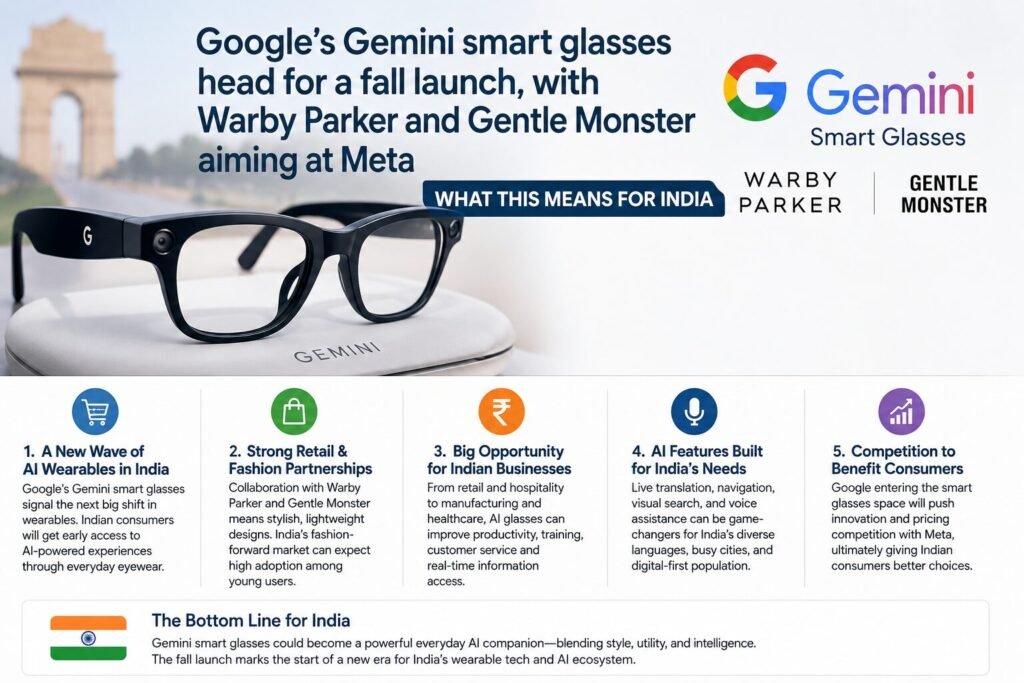
Here is what the global coverage skips. Google’s launch is for “select markets” first, and there is no word on whether India is among them, or on price. Smart glasses are likely to land at a premium, and at that level India is a thin, early-adopter market, not a mass one.
The bigger question for Indian buyers is whether the headline features even work here. Gemini’s value on these glasses comes from deep app integration, and the demos lean on U.S. services. Turn-by-turn directions through Google Maps should travel well. But the agentic “order me a ride” or “order food” actions were shown with DoorDash and Uber, not the apps Indians actually use, Swiggy, Zomato, Ola, or Uber’s India build. Until Google confirms support for local apps and Indian-language voice interaction beyond translation, the most useful parts of these glasses may arrive in India later, or thinner, than the marketing suggests.
The privacy question travels too. A face-worn camera raises the same consent issues everywhere, and India’s data-protection rules are still settling. That is worth tracking before the first pair ships here, not after.
The bottom line
Google has the AI and the operating system. Meta has the lead and the bigger retail machine. The fall launch will not settle the contest, audio-only glasses with no display and no announced price are a first step, not a finished product. But it confirms that the major AI companies now believe the assistant’s natural home is a pair of glasses, and that the fight to own that space has started in earnest.






Leave a Reply