
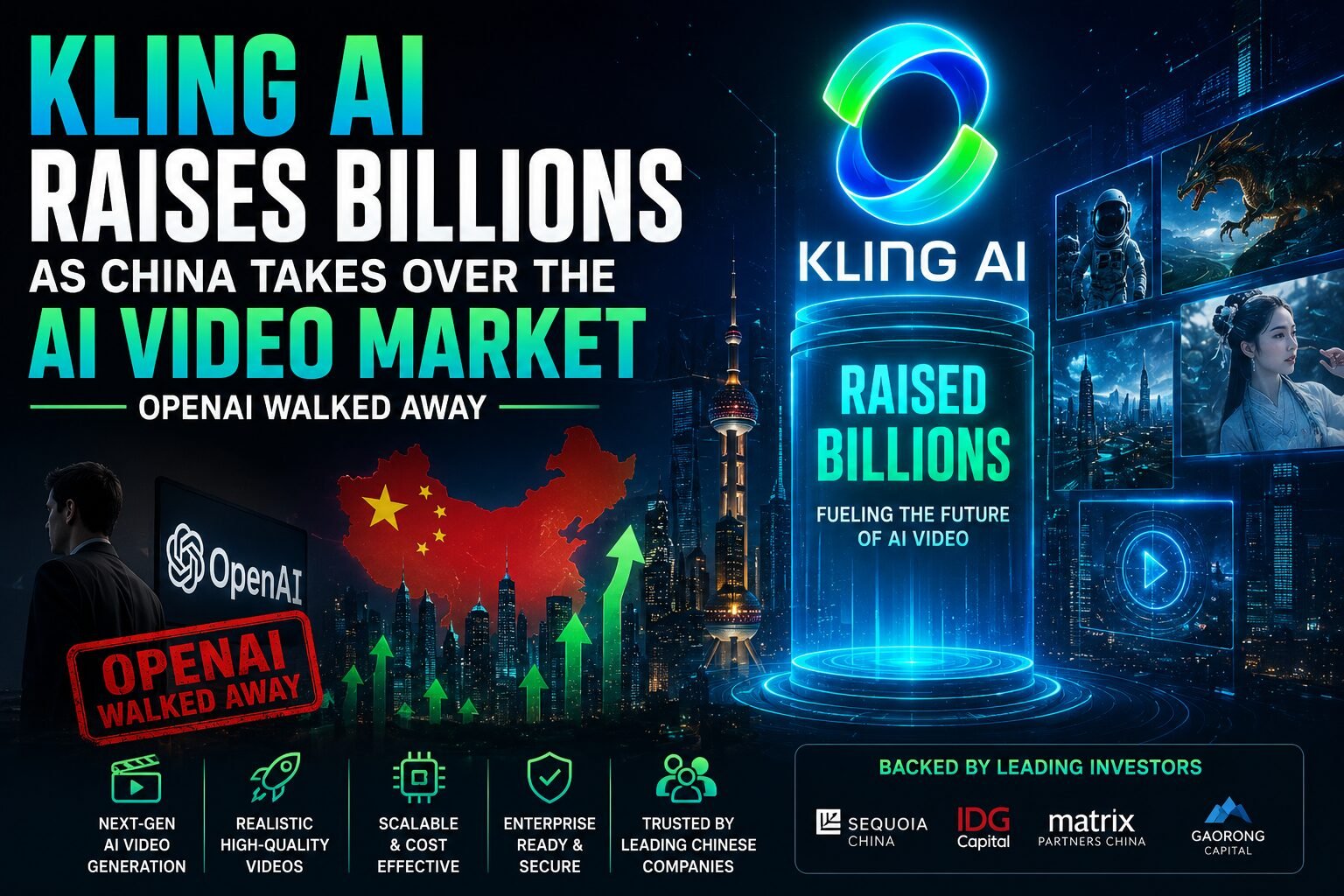
China’s Kling AI has raised up to $3 billion at an $18 billion valuation. The timing tells the whole story. A few weeks earlier, OpenAI shut down Sora, the most hyped AI video tool ever made, because it could not make the money work. Kling walked straight into the gap.
Here is what Kling AI raised, why China’s biggest companies are backing it, and the hard question this money does not answer.
Kling AI funding: the quick facts
- Raised: an initial $2 billion, with the round reaching up to $3 billion
- Valuation: $18 billion after the deal
- Backers: Tencent, Alibaba, Baidu and major Chinese banks
- What it is: Kuaishou’s AI tool that makes video from text and images
- The context: OpenAI killed Sora in April, and Kling took the market
What did Kling AI just raise?
Kling AI pulled in an initial $2 billion, and the full round could reach about $3 billion once the last investors sign. Its parent, Kuaishou, disclosed the deal in a Hong Kong stock exchange filing on July 2, valuing Kling at $15 billion before the money and roughly $18 billion after.
The backer list is a who’s who of Chinese tech and finance. Tencent, Alibaba, Baidu, CITIC Securities and ICBC are all in, across roughly 38 investors. This is the largest funding round an AI video company has ever raised.
The deal cuts Kuaishou’s ownership of Kling from 100 percent to about 68 percent, turning an internal project into a near-independent business. Kuaishou plans to list Kling on the Hong Kong exchange within about a year, and the cash is earmarked for the computing power and data centres that AI video eats through.
What is Kling AI?
Kling AI is Kuaishou’s video generator, and Kuaishou runs one of China’s largest short-video platforms. You type a prompt or feed it an image, and it produces a short clip.
It launched in June 2024 and now runs on Kling 3.0, released in February 2026. That version makes native 4K video at 60 frames a second, in clips up to 15 seconds, with built-in audio and lip-sync in five languages. It also tries to model real physics, so water, cloth and human movement look less broken than they used to.
The reach is already global. Kling has more than 60 million registered users and topped the App Store in 42 markets, including Brazil and Germany, in early 2026. On independent quality rankings it sits among the best tools you can actually access, at roughly $0.84 for a ten-second clip, far cheaper than Western rivals.
The Sora shutdown that handed Kling the market
Kling did not win this market on its own. Its biggest competitor quit.
OpenAI announced in late March 2026 that it would shut Sora, and the consumer app went offline on April 26. The remaining Sora API is set to close on September 24. For a product that once broke the internet with a demo reel, that is a fast, hard fall.
The reason was money. Sora reportedly burned through around $1 million a day in computing costs against only about $2 million in total app revenue. Users lost interest, the bills did not shrink, and Disney reportedly walked away from a large partnership over the risk of realistic fake videos. Runway, another Western player, also stepped back from consumer video around the same time. That left the global market wide open, and Chinese models rushed in.
Why China’s biggest companies are betting on Kling
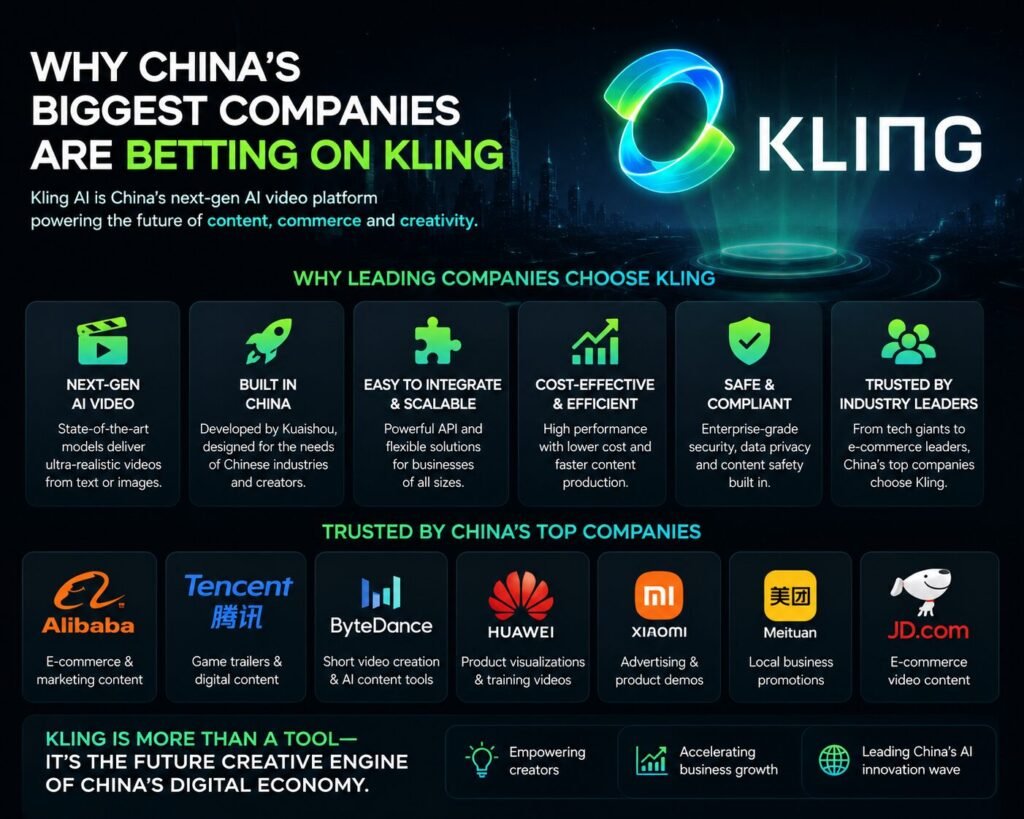
The backers here are not small venture funds taking a flyer. They are China’s largest platforms, and Beijing has been pushing to keep the country’s AI champions funded at home.
What makes Kling different from most AI startups is real revenue. Its first-quarter 2026 sales hit 650 million yuan, about $96 million, up more than 300 percent from a year earlier. Its annual run rate reached $500 million in March, up from $300 million in January. Most AI companies raise on a demo and a dream. Kling raised on a business that is already selling.
It is also one of the few Chinese AI apps making real money from users. When Sora’s shutdown was announced, Kling’s in-app revenue actually rose in the following weeks, according to Sensor Tower. The bet from Tencent, Alibaba and Baidu is simple: own the global AI video market that OpenAI just abandoned.
The catch nobody is answering
Here is the part the celebratory headlines skip, and it matters.
Kling might hit the same wall that killed Sora. Making 4K video at 60 frames a second costs more computing power than the 1080p clips Sora produced, not less. Kling is winning on price today, but nobody outside Kuaishou knows if that price is profitable or if it is being subsidised to grab market share while Chinese capital foots the bill. The question this $3 billion does not answer is whether Kling’s revenue keeps climbing or whether its own costs eventually catch up with it.
There is a second risk, and it is about control. Kling is a Chinese product, and China’s national intelligence law can require Chinese companies to hand data to the government on request. Global filmmakers and advertisers who build their work on Kling are trusting a vendor bound by those rules. Some enterprises already refuse Chinese tools over exactly this, and Disney’s walkout from Sora shows how fast a big client leaves when the risk feels real.
What it means for creators in India
For Indian creators, the appeal is obvious and the risk is real, and both deserve attention.
The appeal first. Kling is available worldwide, including India, and it collapses the cost of making video. A 30-second ad that once needed three days and a production budget can now be generated in under an hour at almost no marginal cost. For India’s huge base of creators, small ad agencies, short-film makers and online sellers, that is a genuine shift in what a small team can produce.
Now the risk. India has form here. It banned TikTok and more than 200 other Chinese apps starting in 2020 over data and security concerns. Building your whole workflow on a Chinese AI tool means accepting that it could face the same scrutiny, or a ban, in India. If you use Kling for client work, have a backup plan that does not depend on it.
Kling AI at a glance
| Detail | Information |
|---|---|
| Company | Kuaishou’s AI video unit |
| Funding raised | Initial $2 billion, up to $3 billion |
| Valuation | $18 billion (post-deal) |
| Key backers | Tencent, Alibaba, Baidu, CITIC, ICBC |
| Current model | Kling 3.0 (4K, 60fps, up to 15-second clips) |
| Users | More than 60 million |
| Q1 2026 revenue | About $96 million (up 300%) |
| Annual run rate | $500 million (March 2026) |
| IPO plan | Hong Kong listing within about a year |
Kling AI vs the competition
| Tool | Company | Status in 2026 |
|---|---|---|
| Kling 3.0 | Kuaishou (China) | Live, market leader on value |
| Seedance | ByteDance (China) | Live, strong rival |
| Veo 3.1 | Google (US) | Live, enterprise choice |
| Runway Gen-4.5 | Runway (US) | Live, pivoting toward other uses |
| Sora | OpenAI (US) | Consumer app shut down; API closing Sept 24 |
What people are asking about Kling AI
How much did Kling AI raise? An initial $2 billion, with the round reaching up to $3 billion, at an $18 billion valuation.
Who owns Kling AI? Kuaishou, which now holds about 68 percent after selling stakes to Tencent, Alibaba, Baidu and others.
What happened to OpenAI’s Sora? OpenAI shut the consumer app on April 26, 2026, after high costs and falling usage. The API closes September 24.
Is Kling AI available in India? Yes, it is accessible worldwide, though relying on a Chinese app in India carries regulatory risk.
What can Kling AI do? Make short 4K videos from text or images, with sound, at a low cost per clip.
Is Kling AI profitable? Its revenue is growing fast, but Kuaishou has not confirmed whether the business is profitable at this scale.
What to watch next
A few things will decide whether this valuation holds:
- The Hong Kong IPO, expected within about a year.
- Whether Kling’s revenue doubles in 2026, as Kuaishou’s CEO predicts.
- Whether its computing costs stay under control as it scales 4K video.
- How regulators in India, the US and Europe treat a Chinese AI tool used worldwide.






Leave a Reply