

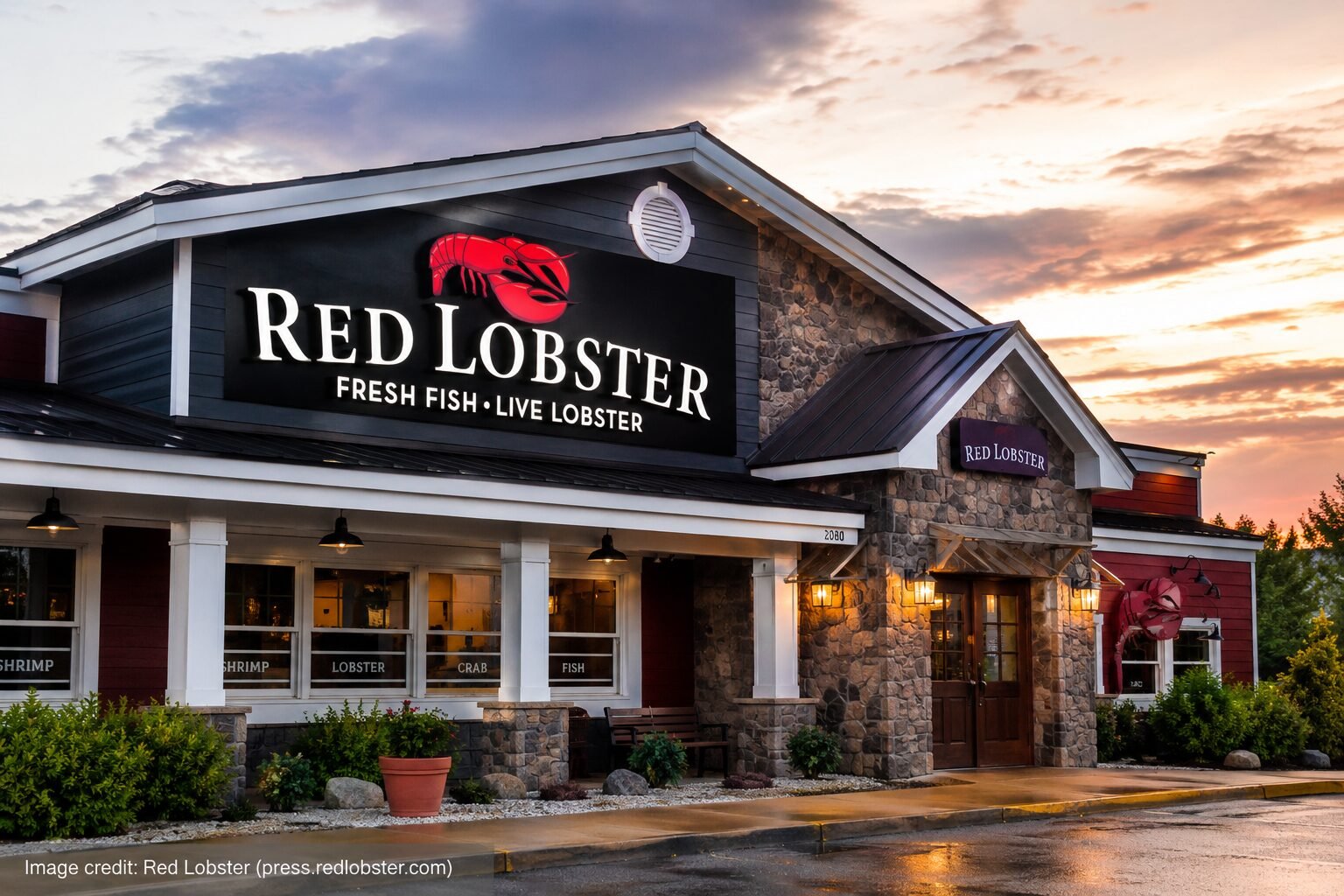
Red Lobster’s chief executive says he wants to build “the most AI-forward restaurant company that exists.” The more revealing detail, for anyone tracking who is winning enterprise AI, is the tool he picked to do it: Anthropic’s Claude.
Speaking on The Black Money Tree Podcast, CEO Damola Adamolekun said the seafood chain is putting AI to work on sales forecasting, staff scheduling, inventory and routine reporting as it claws back from its 2024 bankruptcy.
“AI is important,” he told host Jerome D. Love. “It’s changing the game in a tremendous way.”
The Anthropic angle
The choice of vendor is the part worth slowing down on.
Adamolekun said his chief of staff vetted the available models before the company settled on Claude, which he described as the most capable option for now while noting that the lead among AI labs keeps changing.
That is a small but real data point in a fight Anthropic cares about.
The company has been pushing to win business customers against OpenAI and Google, and most of its visible wins are with software firms and developers.
A 550-restaurant casual-dining chain choosing Claude for back-office work is the kind of mainstream, non-tech adoption that AI vendors are now competing hardest for. Adamolekun’s own hedge, that the lead “changes constantly,” is also the honest description of a market where switching costs are low and today’s best model is rarely next year’s.
What Claude is actually being asked to do is narrow. Adamolekun is not deploying a single company-wide platform. He is letting each department find its own uses, and the concrete examples are unglamorous: forecasting how much food to order, writing weekly schedules, and pulling store metrics into a report.
Chief Operating Officer Larry Konecny, he said, wanted AI to assemble each restaurant’s key numbers into a deck before he visits, so his team no longer builds those by hand. Useful, but a long way from reinventing the restaurant.
Who is running Red Lobster?
Adamolekun, 37, is the youngest CEO in Red Lobster’s history. Born in Nigeria and raised partly in Zimbabwe and the Netherlands before his family settled in Springfield, Illinois, he worked at Goldman Sachs and ran P.F. Chang’s, where he was credited with driving the chain past $1 billion in annual revenue, before taking over Red Lobster in 2024.
He inherited a company in poor shape. Red Lobster filed for Chapter 11 in 2024 carrying more than $1 billion in debt and less than $30 million in cash, and emerged later that year under the ownership of Fortress Investment Group. According to Fortune, it now runs about 550 restaurants, down from roughly 700 a few years ago, and Adamolekun has told The Wall Street Journal that more underperforming locations will close.
The real turnaround lever is shrimp, not software
The AI push lands alongside a decision that has far more direct effect on Red Lobster’s finances: the return of Endless Shrimp.
The all-you-can-eat promotion is the same one widely blamed for the chain’s collapse. When the previous owners made it a permanent menu item in 2023, demand overwhelmed shrimp costs, and the deal accounted for about $11 million of a $76 million net loss that year, Reuters reported. Adamolekun had ruled out bringing it back, saying in a 2024 interview that he knew “how to do math.”
He brought it back anyway in April, with the math changed. The 2026 version starts at $24.99 in most locations and runs up to $29.99 in higher-cost markets, against the old $20 price, a roughly 25 percent increase designed to stop the promotion from bleeding money. The menu is also tighter, with five shrimp dishes rather than the wider spread regulars remember. To draw attention, the company is running a sweepstakes through June 17 for an “Endless Endless Shrimp Card,” one free Endless Shrimp meal a month for 25 years, with a cash alternative reported by the Deseret News.
That pricing reset, plus closing weak stores, is what actually moves Red Lobster’s unit economics. The AI work trims overhead at the edges. Both can be true, but they are not the same size.
The bottom line
Adamolekun is not wrong that legacy chains cannot ignore AI, and he is ahead of many casual-dining peers in saying so plainly. He has suggested his relative youth is an edge over rivals such as Texas Roadhouse’s Jerry Morgan and Darden’s Rick Cardenas, who have spent decades in the business, according to the Deseret News.
But the “most AI-forward restaurant company” framing is as much turnaround narrative as operating reality. The hard problems, food costs, lease obligations and changing dining habits, are not the kind a forecasting model solves. For now, the most concrete AI story at Red Lobster is a vendor win for Anthropic, and the most concrete turnaround story is the price of a plate of shrimp.


















Leave a Reply