

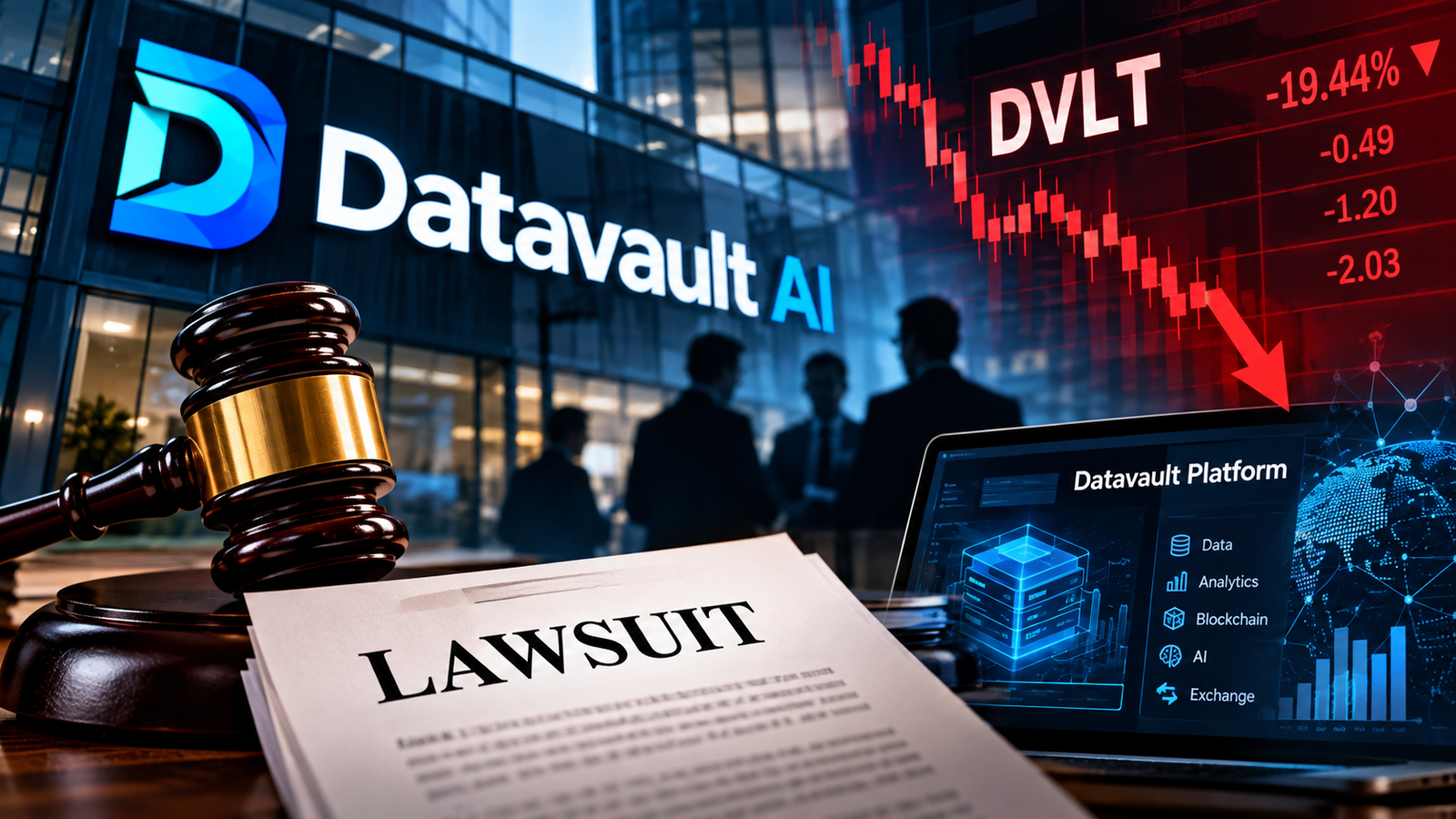
Datavault AI Inc. is facing a federal securities class action involving allegations about how the company presented the value of several business partnerships, the activity on its data platform, and other information to investors.
The latest investor notice from Levi & Korsinsky, issued September 30, 2026, highlights an October 5 deadline for investors who want to ask the court to appoint them as lead plaintiff. The proposed class covers investors who purchased or acquired Datavault AI securities between September 4, 2024 and October 30, 2025.
The lawsuit does not establish that Datavault AI committed securities fraud. Those claims remain allegations that will be addressed through the federal court process.
Why Is Datavault AI Being Sued?
The central issue is whether Datavault AI gave investors a materially misleading picture of its business prospects and commercial relationships.
According to the complaint described in the investor notices, plaintiffs allege the company overstated the economic value of partnerships involving Burke Products, Scilex Holding Company and Nature’s Miracle Holding Inc.
The complaint also challenges statements concerning activity on the Datavault Platform. Plaintiffs allege the platform had limited trading activity despite the importance attributed to it in the company’s broader business strategy.
These allegations matter because public companies have disclosure obligations toward investors. When a company makes major announcements about partnerships, technology platforms or commercial opportunities, investors use those statements when assessing the company’s prospects and valuation.
What Happened to DVLT Stock?
A major event identified in the lawsuit occurred on October 31, 2025.
Wolfpack Research published a short-seller report questioning several aspects of Datavault AI’s business narrative. The complaint alleges the report served as a corrective disclosure by challenging statements about partnerships, platform activity and other aspects of the company’s operations.
Datavault AI shares fell $0.49, or 19.44%, on October 31, 2025, closing at $2.03, according to the litigation materials.
The stock decline itself does not prove that the company’s earlier statements were false. In securities litigation, plaintiffs generally need to establish much more than a price decline. The court will ultimately determine the legal issues.
What Does the Lawsuit Say About Datavault AI’s Partnerships?
One of the most important areas of the case involves the economic value of announced partnerships.
The complaint questions whether certain counterparties had sufficient financial resources to support the transactions as they were presented to investors.
The Levi & Korsinsky notice points to a reported $150 million strategic investment and a $2 million non-refundable license fee. It also cites allegations concerning the financial resources of counterparties at the time of the announcements.
The legal question is more specific than whether these partnerships existed.
The key issue is whether Datavault AI’s public descriptions created a materially misleading impression about their economic significance, funding capacity or expected commercial value.
Why Is the Datavault Platform Important?
Datavault AI has positioned its platform around data monetization and related digital technologies.
For investors, a marketplace or exchange only becomes commercially meaningful when users actually transact, generate fees and create repeat economic activity.
The lawsuit alleges the level of activity on the Datavault Platform was substantially lower than investors were led to believe. Litigation materials also question the commercial value of some data assets available through the platform.
This distinction matters for technology companies.
A platform announcement describes potential. Trading volume, paying customers, recurring revenue and transaction economics demonstrate commercial adoption.
That is why investors following the case will likely focus on evidence concerning actual platform usage, transaction volume, revenue generation and customer activity rather than promotional descriptions alone.
What Did Datavault AI Say About the Lawsuit?
Datavault AI has rejected the allegations and said it intends to defend itself.
In September, the company said it stood behind its public disclosures and would address the allegations through the legal process. Datavault AI also said its operational priorities remained focused on commercializing its technology platform, expanding exchange infrastructure, scaling SanQtum, integrating acquired assets and converting contracted opportunities into revenue.
The company’s position is important because the current litigation involves competing accounts of what investors were told and what the underlying business activity represented.
Datavault AI also disclosed in its 2025 annual filing that it had brought separate litigation against the short seller behind the October 31, 2025 report. The company characterized the report’s allegations as unfounded and said its lawsuit remained pending.
What Is the Datavault AI Class Action Lawsuit About?
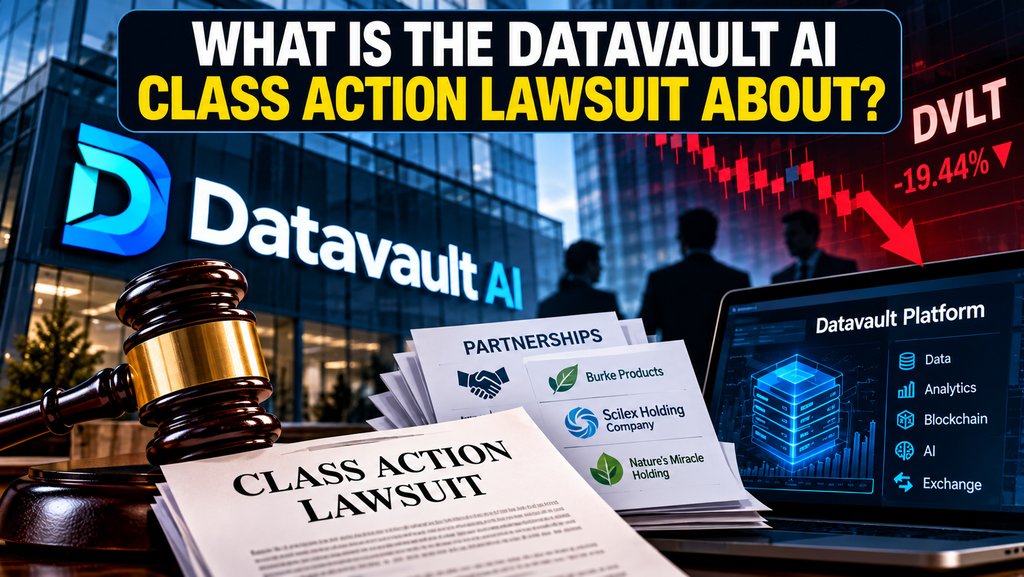
At its core, the lawsuit raises four investor-disclosure questions:
- Were the economic benefits of announced partnerships accurately represented?
- Did Datavault AI accurately describe activity on its data platform?
- Were relevant information and risks disclosed to shareholders?
- Did the alleged disclosures or omissions cause investors to purchase securities at inflated prices and suffer losses when additional information entered the market?
Those questions will require evidence and legal analysis. The existence of a lawsuit does not resolve them.
Who Is Eligible for the DVLT Investor Lawsuit?
The proposed class described in the current investor notices covers people who purchased or acquired Datavault AI securities between September 4, 2024 and October 30, 2025.
Eligibility depends on the circumstances of the individual investment and the eventual definition of the class approved by the court. Investors generally need records showing their purchase dates, transaction quantities and prices.
Investors who sold their shares are not automatically excluded simply because they no longer own DVLT stock. The relevant issue involves the timing and circumstances of the transactions.
What Is the October 5, 2026 DVLT Deadline?
October 5, 2026 is the deadline for investors who want to seek appointment as lead plaintiff in the federal securities case.
A lead plaintiff represents the proposed class and works with court-approved counsel in directing the litigation.
This deadline does not mean every investor must become the lead plaintiff to remain part of a potential class. The litigation materials distinguish between seeking a leadership role and remaining a potential absent class member.
Investors considering their legal position should review the court filings and obtain advice from a qualified securities attorney.
Where Was the DVLT Lawsuit Filed?
The case is pending in the United States District Court for the Eastern District of Pennsylvania.
One litigation listing identifies the case as Carla Aramouni v. DataVault AI Inc., et al., No. 2:26-cv-05548. The court will determine the next stages of the proceeding after the lead plaintiff process.
What Happens After the Lead Plaintiff Deadline?
The October 5 deadline is an early procedural stage, not the end of the lawsuit.
After lead plaintiff applications are submitted, the court will consider who should represent the proposed class and which counsel should lead the case.
Depending on the court’s decisions, the defendants could seek dismissal. If the claims survive the early stages, the case could move into further litigation, including discovery and later consideration of class certification.
A settlement is also possible in securities litigation, but there is no basis to assume a settlement or predict the eventual outcome of this case.
What Should Investors Watch Next?
The most important developments will involve court filings and evidence rather than additional investor-alert headlines.
Investors following DVLT should watch for:
Court decisions concerning the lead plaintiff and lead counsel
Motions to dismiss and the court’s response
Arguments concerning the alleged corrective disclosure
Evidence regarding the Datavault Platform’s transaction activity
Evidence concerning the disputed partnerships
Datavault AI’s future revenue and commercial execution
Updates involving the company’s separate litigation against Wolfpack Research
These developments will provide more information about the strength and scope of the competing claims.
Why This Lawsuit Matters Beyond Datavault AI
The case raises a broader issue for technology investors.
Companies operating around AI, blockchain, tokenization and data monetization often communicate through partnerships, platform launches and projected commercial opportunities before those businesses generate substantial recurring revenue.
For investors, the distinction between an announcement and measurable commercial performance is important.
A $150 million announced investment, for example, does not necessarily represent $150 million of revenue, cash or realized economic value for the company. The underlying terms, funding capacity, conditions and actual execution determine the economic significance.
The Datavault AI litigation therefore provides another example of why investors need to examine the underlying economics behind technology-company announcements.
The Bigger Question for DVLT Investors
The most important question is not whether Datavault AI issued ambitious announcements.
Technology companies routinely promote future opportunities.
The harder question is whether the information available to investors accurately represented the company’s actual commercial position at the time.
That distinction will ultimately be tested through the court process.
For now, the Datavault AI securities case remains unresolved. The October 5, 2026 lead plaintiff deadline marks the next major procedural date, while the allegations concerning partnerships, platform activity and investor losses remain disputed.
Frequently Asked Questions
Is Datavault AI being sued?
Yes. A federal securities class action has been filed against Datavault AI and certain individuals. The plaintiffs allege misleading statements and omissions involving partnerships, platform activity and other matters. The allegations have not been proven in court.
What is the Datavault AI lawsuit deadline?
October 5, 2026 is the deadline for investors seeking appointment as lead plaintiff in the proposed securities class action.
Why did DVLT stock fall in October 2025?
DVLT shares fell $0.49, or 19.44%, on October 31, 2025, closing at $2.03. The complaint links the decline to information published in a Wolfpack Research short-seller report.
Who is eligible for the Datavault AI class action?
The proposed class described in the litigation materials includes investors who purchased or acquired Datavault AI securities between September 4, 2024 and October 30, 2025, subject to the court’s decisions concerning the class.
Is Datavault AI admitting wrongdoing?
No. Datavault AI has said it stands behind its public disclosures and intends to defend itself against the claims.






















Leave a Reply